Installing new sod is a significant step toward achieving a greener, healthier lawn. Whether you’re replacing old grass or starting from bare soil, knowing what to expect on sod delivery day in California helps your project go smoothly. Fresh sod is living turfgrass, so good timing and simple prep help the roots grab hold and last.
Across California, from San Diego to Sacramento, people rely on sod farms for quality grass like fescue and bermudagrass. Sod delivery moves fast, and with a simple plan, your new lawn can start rooting the same day.
Before delivery, prep your yard, tools, and sprinklers. This guide covers what happens on sod delivery day, how to handle rolls, and how to install sod correctly.
Key Takeaways
- Fresh sod should be installed the same day it’s delivered for best results.
- Clear your yard and prep the topsoil before the pallets arrive.
- Check your sprinkler system ahead of time to ensure even watering.
- Use a lawn roller and starter fertilizer to help new sod take root quickly.
Preparing Your Yard Before Sod Delivery
Preparation is the foundation of a healthy new sod lawn. A clean, level surface allows roots to grow evenly and prevents air pockets beneath the sod.
Before your sod delivery, remove weeds, debris, and rocks. If you’re replacing old grass, a sod cutter is the easiest way to clear the area. Then loosen the top 3-4 inches of soil and slope it away from buildings to stop water from pooling.
If the soil is compacted, mix in 1-3 inches of compost or topsoil to improve structure, drainage, and water retention. For new sod, test your soil and apply a phosphorus-rich starter fertilizer (such as 10-20-10) to support rapid root development.
At SodLawn, we offer sod delivery across California.
What Happens on Sod Delivery Day in California
If you’re curious how sod delivery works, the process is simple.
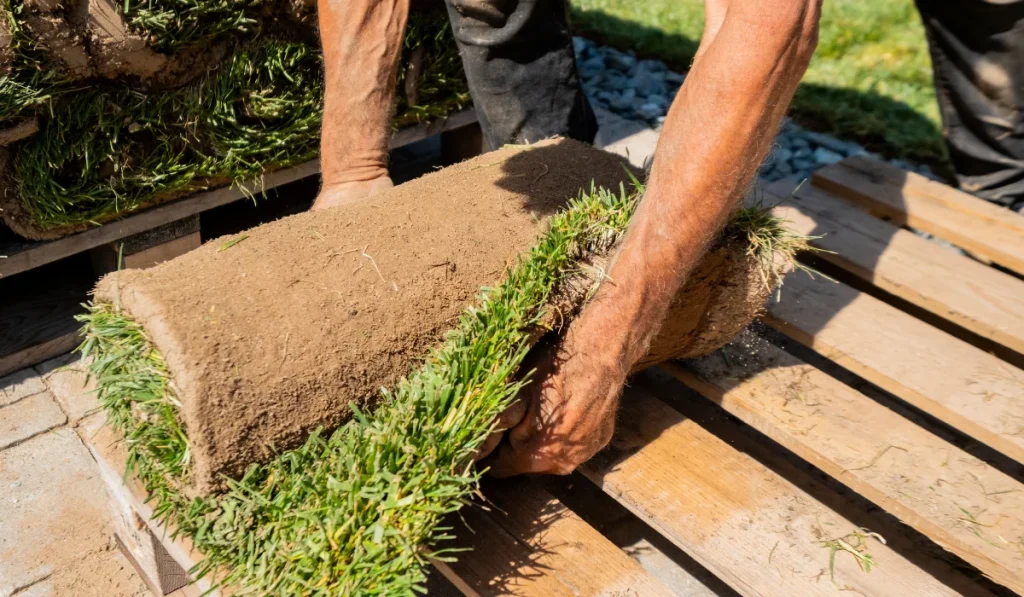
On delivery day, expect your sod to arrive stacked neatly on wooden pallets. A standard pallet of sod covers roughly 450 to 500 square feet, so you can easily plan how much space it will fill.
Understanding sod ordering in California is crucial, as accurate measurement is essential for successful sod installation. Delivery trucks use forklifts to place the pallets as close as possible to your installation area, whether that’s your front yard or a backyard walkway. If you request placement on a driveway, over a curb, or into tighter areas, the driver may require a delivery waiver to avoid liability for possible surface or property damage.
In California’s warm climate, timing matters. Sod delivery usually happens early in the morning to keep the sod rolls cool and moist. Once they arrive, install sod immediately to avoid drying out. Sod can begin to overheat and dry out within 12 to 24 hours if left rolled, especially during hot California afternoons.
Once the sod is laid on the ground, do not allow it to dry out. Begin watering right away to supply consistent moisture not only to the sod itself, but also deep into the soil profile below. This helps the root system knit into the topsoil and reduces stress during establishment, which is especially important in California’s warm and dry conditions.
How to Install Sod the Right Way
Start along the longest straight edge, such as a driveway or a fence. Stagger the seams like bricks to avoid lines in the grass. Press each piece into the soil to expel air and achieve tight root-to-soil contact.
Once you’ve laid your sod, lightly roll the surface with a lawn roller to smooth out the seams. This is an optional step, but it can help the sod connect with the soil faster and improve the lawn’s appearance right away. Then water your new lawn immediately. Follow a four-week watering plan: water 2–3 times per day for the first two weeks, once daily on the third week, and every other day on week four as you transition toward a deeper schedule.
If you’re installing fescue or Bermuda grass, ensure your sprinkler heads cover all areas evenly. Head-to-head coverage is very important, even if you’re using a sprinkler system. Adjust your irrigation system to water deep enough that moisture reaches about 6–8 inches into the soil, which trains roots to grow deeper. Deep roots hold up better during the heat of the summer and help your new sod lawn stay stronger between watering cycles.
Caring For Your New Sod In The First Two Weeks
The first two weeks matter most. Keep the soil moist, but not soggy, to encourage deep root growth. Avoid foot traffic and keep pets off the lawn to allow the sod to bond with the soil.
After 10–14 days, gently lift a corner to check for new roots. If it resists, roots have started to establish. Once the roots have taken hold, reduce watering and begin mowing.
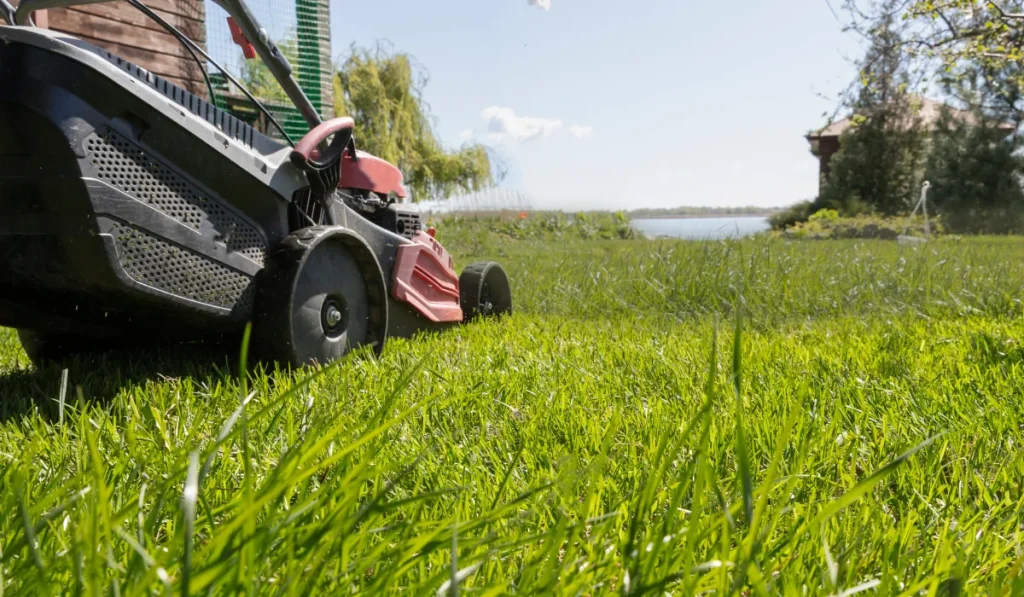
Use sharp blades and a high setting to trim only the tips of the grass. Mowing this way helps the sod grow stronger without stressing the roots. Keep in mind that proper mowing height varies by sod type, so fescue, bermudagrass, and other turfgrass varieties should be cut at their recommended heights. Wait 4-6 weeks before applying a balanced lawn fertilizer to promote long-term turf health.
Mowing height varies by sod type, so always follow the recommended height for your specific grass to support healthy growth and root development.
Equipment and Tools You’ll Need
Having the right tools makes installation faster and more efficient. For most California yards, you’ll need:
- A shovel and rake for soil prep
- A sod cutter (for removing an existing lawn)
- A sod knife to cut sod while installing
- A lawn roller to press the sod into place
- A properly designed irrigation system to keep the sod moist and watered evenly
- A mower for your first trim once roots establish, ideally bagging clippings the first few times you mow.
If you’re working with larger areas or multiple pallets, renting a sod cutter and roller from a local landscaping supplier can save time and effort.
Choosing the Right Sod for Your California Lawn
Different regions of California favor different grass types. Fescue sod is the most common grass used throughout California and works well in most regions when watered and maintained properly. It’s a reliable choice for many homeowners because it stays green, handles regular use, and fits a wide range of landscapes.
In areas with extreme heat, desert conditions, or strict water restrictions, bermudagrass can be a better option due to its heat tolerance. When choosing sod, focus on sun exposure, watering availability, and how you plan to use your lawn, rather than assuming climate alone determines what will work.
Local sod farms often grow blends tailored to California’s varied conditions, providing homeowners with a range of durable options for both residential and commercial lawns. For homes with shady lawns, we offer a special shade blend that performs well in partial shade.
Making the Most of Your Sod Delivery Day in California
Your sod delivery day is when preparation turns into action. Having your soil ready, tools staged, and irrigation system set up allows you to install sod quickly and protect it from drying out. The goal is to move from delivery to watering as efficiently as possible so the sod can begin rooting right away.
By staying organized and following proper installation and watering steps on delivery day, you set your lawn up for smoother establishment and fewer issues during the first few weeks. That early attention makes ongoing lawn care easier and helps your sod lawn adjust to California conditions from day one.
At SodLawn, we’re proud to help California homeowners create lawns that stay green and healthy all year long.
Contact us today to schedule your sod delivery or get personalized advice for your yard.
FAQs
How soon should I lay sod after delivery?
Install your sod the same day it arrives. Leaving cut sod on pallets for more than 24 hours can cause heat buildup and root damage.
Can I install sod myself, or should I hire a professional?
You can install sod yourself if you prepare the soil properly and work quickly. For larger lawns or tight timelines, hiring a professional sod installation team ensures even results.
How much water does new sod need?
New sod requires frequent, light watering, two to three times daily, for the first week. Gradually reduce watering as roots develop to avoid soggy soil.