Fresh sod gives an Anaheim yard an immediate upgrade, but the first few weeks matter. New turf needs enough moisture to develop roots without leaving the soil saturated. It also needs time to settle before mowing, fertilizing, or applying weed-control products.
Learning how to prevent weeds in new sod starts before installation. Removing existing weeds, preparing the soil correctly, selecting a turf variety suited to the property, and following a careful establishment routine can help the grass form a dense surface. Once the lawn fills in, weeds have fewer openings where they can take hold.
Key Takeaways
- Clear existing weeds and roots before installing sod.
- Use clean soil and inspect the area for recurring weed problems.
- Keep new sod moist during establishment without oversaturating the soil.
- Pull isolated weeds by hand before they produce seeds.
- Wait until the roots have anchored before mowing for the first time.
- Avoid applying herbicides to new sod unless the product label confirms that it is safe for the turf type and stage of establishment.
- Shift to deeper, less frequent irrigation after the lawn develops a stronger root system.
- Repair gaps and thin areas early so weeds do not fill the open soil.
Why Weeds Can Appear in New Sod
Sod creates a faster, denser lawn than seed, plugs, or stolons. It covers the soil immediately and can outcompete many weeds from the start. However, sod does not eliminate every potential weed problem.
Weed seeds may already be present in the soil before installation. Roots or underground plant structures may remain after an old lawn is removed. Additional seeds can arrive through wind, foot traffic, landscaping equipment, or nearby planting areas.
Weeds may also appear when the new sod has trouble establishing itself. Gaps between rolls, uneven watering, compacted soil, and damage caused by mowing too early can leave open areas where unwanted plants can grow.
The UC IPM guide to weed management in lawns explains that even a carefully prepared lawn may develop some weeds after planting. Early removal and proper lawn care can prevent those weeds from spreading.
Start With Weed Control Before Installation
The best time to reduce weed pressure is before the sod arrives.
Installing turf over an untreated weed problem may hide the issue temporarily, but persistent weeds can return through seams or thin sections of the new lawn. Proper preparation gives the sod a cleaner surface where roots can establish.
Remove Existing Weeds and Roots
Clear visible weeds before laying sod. Pull small weeds by hand and remove as much of the root system as possible.
Pay extra attention to weeds that return after repeated removal. Some perennial weeds can spread from roots, rhizomes, tubers, or other underground structures. Cutting the visible growth without addressing the root system may not solve the problem.
UC IPM recommends checking the site for weeds before planting and treating persistent issues during the preparation stage. Its preplant weed-control guide explains that annual weeds are generally easier to manage than perennial weeds.
Inspect Imported Topsoil
If the project requires new soil, use material from a reputable source. Topsoil can introduce weed seeds or underground plant material when its origin and condition are unclear.
UC IPM recommends checking imported soil for rocks, weed propagules, and herbicide residues before using it in a lawn project. Clean soil supports better root development and reduces the chance of avoidable weed problems.
Level the Surface Before the Sod Arrives
Uneven soil can create low spots where water collects and raised areas that dry out too quickly. Both conditions can weaken new turf.
Prepare a smooth surface so the sod makes close contact with the soil beneath it. Good soil contact helps roots develop more evenly and reduces gaps where weeds may grow.
Inspect the edges near sidewalks, driveways, garden beds, and irrigation heads. These areas often receive uneven watering and may need extra attention during installation.
Choose a Sod Variety That Fits the Property
A well-matched turf variety is easier to maintain and more competitive against weeds.
Anaheim lawns may receive full sun, partial shade, heavy foot traffic, or different levels of irrigation. A grass type that performs well in one yard may struggle in another.
UC IPM notes that poorly adapted turf species require more maintenance and are more susceptible to weed invasion. Warm-season grasses generally fit hot, dry Southern California conditions better than some cool-season options, although the best choice still depends on the property.
SodLawn provides sod delivery and installation across California. Enter your ZIP code to compare sod varieties available for your Anaheim property before choosing a turf type.
Water New Sod Carefully During the First Few Weeks
New sod needs a different watering routine than an established lawn.
During the first few weeks, the roots remain close to the surface. The soil needs to stay moist enough to support root development, but excess water can create soft, saturated conditions that weaken the lawn and encourage weed growth.
The UC IPM guide to irrigating new lawns recommends watering sod daily during the first few weeks while the roots become established. Hot conditions may require more frequent watering. The same guide warns against saturating the soil beneath the turf because excess water can prevent roots from growing deeper.
Check Moisture Instead of Guessing
Do not assume that every area receives the same amount of water.
Walk through the yard and look for:
- Dry edges near sidewalks or walls
- Water pooling in low areas
- Runoff moving onto pavement
- Sod sections that feel unusually soft
- Corners missed by sprinkler coverage
- Gaps that dry faster than the center of the lawn
- Bluish-gray grass blades, which can signal insufficient water
A screwdriver can help you check how deeply moisture has reached the soil. UC IPM recommends deeper irrigation every second or third day during establishment so the soil beneath the turf becomes moist to a depth of around six inches.
Avoid Runoff
Anaheim encourages residents to use water efficiently. The city’s water conservation guidance prohibits watering in a way that causes runoff and restricts irrigation within 48 hours after measurable precipitation.
New sod needs consistent moisture, but water should remain on the lawn. If runoff appears before the soil absorbs enough moisture, divide the irrigation time into shorter cycles with breaks between them.
Check the current local guidance before changing the watering schedule, especially during dry periods or after rain.
Shift the Watering Routine as Roots Develop
Frequent, light irrigation is appropriate during early establishment. It should not become the permanent routine.
Once the roots have anchored into the soil, transition toward deeper and less frequent watering. This encourages the lawn to develop a stronger root system.
UC IPM explains that shallow, frequent watering on established lawns can create weak roots and give shallow-rooted weeds an advantage. Established turf should generally receive water deeply enough to moisten the soil to a depth of six to eight inches.
Test whether the sod has rooted by gently lifting a corner. If the turf resists and remains attached to the soil, the roots have started to establish.
Pull Young Weeds Before They Spread
Some weeds may still appear even after careful site preparation. A few isolated weeds do not mean the sod installation has failed.
Pull them by hand while they are young. Remove the root when possible and avoid disturbing the surrounding sod.
Early removal matters because mature weeds can produce seeds and spread into nearby sections of the lawn. UC IPM recommends hand-pulling weeds as they appear in newly planted turf to prevent a small issue from becoming a larger invasion.
Pay close attention to:
- Sod seams
- Lawn edges
- Areas near sidewalks
- Spots with weak sprinkler coverage
- Low areas that stay wet longer
- Sections damaged by foot traffic
- Bare soil around trees or planting beds
A weekly inspection during the establishment period can prevent minor problems from spreading.
Repair Gaps Between Sod Rolls
Small gaps can appear when sod dries out, shifts after installation, or does not make full contact with the soil.
These openings expose soil and create space for weeds to germinate. They can also dry faster than the surrounding turf.
Inspect the lawn during the first few weeks and correct gaps early. Add clean soil where needed and keep the area moist enough to support root growth. Larger bare sections may require patching with fresh sod.
Avoid filling gaps with soil from an unknown source because it may contain weed seeds or underground plant material.
Wait Before Mowing New Sod
Mowing too early can pull sod away from the soil and damage the developing roots. Damaged turf leaves thin spots where weeds can grow.
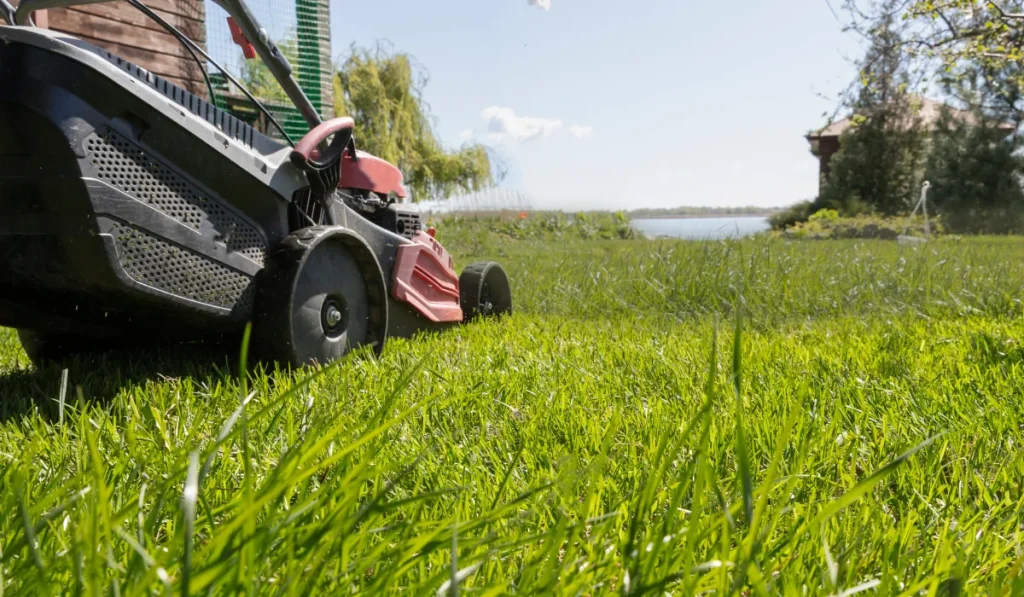
The UC IPM guide to mowing new lawns notes that sod may be ready for its first mowing within two to three weeks after installation. The exact timing depends on root development.
Before mowing:
- Check that the roots have anchored into the soil
- Let the lawn surface dry enough to support the mower
- Confirm the recommended mowing height for the turf type
- Use sharp mower blades
- Avoid removing more than one-third of the grass blade
- Turn the mower carefully to avoid tearing the sod
Do not scalp the new lawn to create a shorter appearance. Cutting too low can weaken the turf and give weeds more room to establish.
Wait Before Starting a Regular Fertilizer Routine
Fertilizer can support healthy turf growth, but applying it too early or too heavily can create uneven growth and unnecessary stress.
UC IPM recommends beginning a regular fertilization program around six weeks after planting. The correct timing still depends on the turf variety, season, soil condition, and installation instructions.
Avoid treating pale grass automatically with extra nitrogen. Discoloration may result from uneven irrigation, poor soil contact, excessive watering, or damaged roots.
Before fertilizing, check whether the lawn has rooted evenly and whether the irrigation system reaches the full area.
Use Caution With Herbicides on New Sod
A newly installed lawn is still developing. Applying the wrong weed-control product can damage the turf.
UC IPM explains that herbicide selection depends on the weed species, the turfgrass species, and whether the weeds have already emerged. Products labeled for one grass type may not be appropriate for another.
Before applying any herbicide:
- Identify the weed
- Confirm the turf type
- Read the full product label
- Check whether the product is approved for newly installed sod
- Follow the waiting period listed on the label
- Avoid applying a general weed killer without confirming that it is safe for the lawn
Do not assume that a product suitable for an established lawn is appropriate during the first weeks after installation. When the infestation is widespread or the weed type is difficult to identify, professional guidance may be the safer option.
The UC IPM weed identification key can help narrow down common weeds found in California lawns.
Keep Foot Traffic Off the Lawn During Establishment
New sod needs time to form a stronger connection with the soil.
Frequent walking, pet activity, lawn furniture, and heavy equipment can shift the turf and compact the soil beneath it. Compacted sections may drain unevenly, root more slowly, and become more vulnerable to weeds.
Limit foot traffic during the early establishment period. Use sidewalks and hard surfaces whenever possible. If you need to inspect irrigation coverage, step carefully and avoid walking across soft, saturated areas.
Clean Mowing and Landscaping Equipment
Weed seeds can move from one section of the yard to another on mower decks, trimmers, and landscaping tools.
UC IPM recommends mowing the least weedy areas first and cleaning the underside of the mower after working in areas with visible weeds. This simple step can reduce the spread of seeds and plant material.
If landscaping equipment was used on an older weedy lawn before installation, clean it before using it on fresh sod.
Common Mistakes That Encourage Weeds
A new lawn can develop avoidable problems when maintenance becomes too aggressive or inconsistent.
Watch for these common mistakes:
- Installing sod without removing existing weeds
- Using topsoil from an unreliable source
- Leaving gaps between sod rolls
- Overwatering until the soil becomes saturated
- Allowing dry patches to develop near lawn edges
- Mowing before roots have anchored
- Cutting off too much grass during the first mow
- Applying fertilizer before diagnosing discoloration
- Using herbicides without checking the label
- Walking across soft sod repeatedly
- Ignoring weeds until they produce seeds
Prevention is easier than restoring a lawn after weeds have spread across multiple sections.
When a Few Weeds Signal a Larger Problem
One or two weeds can usually be pulled by hand. Repeated growth across the lawn may point to a wider issue.
Inspect the yard more closely when:
- Weeds keep returning in the same places
- Several sod rolls begin separating
- Large sections stay wet after irrigation
- The grass becomes thin near sprinklers or edges
- The lawn develops bare patches
- Weeds spread through soil imported during installation
- The turf does not anchor evenly
- The grass variety appears poorly suited to the site
Correct the underlying cause before treating the visible weeds. A lawn with healthy roots and consistent coverage is better equipped to compete with unwanted growth.
Build a Simple New Sod Maintenance Routine
A short weekly routine can help the lawn establish itself more evenly.
During the first few weeks:
- Check soil moisture across the full lawn.
- Inspect sprinkler coverage and correct runoff.
- Look for gaps between sod rolls.
- Pull young weeds before they spread.
- Limit foot traffic.
- Wait until the roots anchor before mowing.
- Monitor thin sections near sidewalks and planting beds.
- Adjust watering as the root system develops.
Once the lawn becomes established, move toward deeper irrigation, regular mowing at the appropriate height, and a fertilizer schedule suited to the turf variety.
Start With the Right Sod for Your Anaheim Lawn
Preventing weeds becomes easier when the lawn starts with proper soil preparation, a well-matched turf variety, and consistent care during establishment.
SodLawn provides sod delivery and installation for residential and commercial properties across California. Enter your ZIP code to view sod varieties available near your Anaheim property and compare options for your lawn project.
Frequently Asked Questions
Is It Normal to See Weeds in New Sod?
A few weeds can appear even after careful soil preparation. Pull them by hand while they are young so they do not produce seeds or spread through the lawn.
How Often Should I Water New Sod in Anaheim?
New sod generally needs daily watering during the first few weeks while roots develop. Hot weather may require additional watering. Keep the root zone moist without saturating the soil, avoid runoff, and follow current Anaheim water guidance.
Can I Apply Weed Killer to New Sod?
Do not apply a weed-control product unless the label confirms that it is safe for the turf species and the stage of establishment. Newly installed sod can be more sensitive than an established lawn.
When Can I Mow New Sod for the First Time?
Sod may be ready for mowing within two to three weeks, but root development matters more than the calendar. Wait until the turf has anchored into the soil and the lawn surface is fairly dry.
Why Are Weeds Growing Between Sod Rolls?
Weeds often grow in seams when gaps expose the soil. Drying, shifting, uneven installation, or weak soil contact can create openings. Repair gaps early with clean soil or fresh sod when needed.
Does New Sod Need Fertilizer Immediately?
Not always. UC IPM recommends starting a regular fertilizer routine around six weeks after planting. Confirm that the turf has established itself and diagnose irrigation problems before adding fertilizer.