A few ants moving through an Orange County lawn do not always signal a serious problem. Ants can feed on other insects, remove organic debris, and form part of the outdoor ecosystem. However, repeated mounds, trails near the home, and activity in thin or damaged turf may need attention.
If you want to know how to prevent lawn ants without killing grass, avoid aggressive treatments that can damage the turf or create runoff. Start by identifying the type of ant activity, reducing the conditions that attract colonies, and improving the health of the lawn. In Orange County, suspected red imported fire ants require a separate response through the local vector control district.
Key Takeaways
- A few ants in a lawn may not require treatment.
- Identify the source of the activity before taking action.
- Improve thin turf, dry patches, and irrigation problems that can make parts of the lawn easier to colonize.
- Clean up outdoor food sources, fallen fruit, and pet food.
- Check shrubs and trees for aphids or other insects that produce honeydew.
- Avoid boiling water, salt, bleach, vinegar, and homemade mixtures on the lawn because they can damage grass or soil.
- Do not apply broad sprays automatically. They may kill visible ants without addressing the colony.
- Report suspected red imported fire ant activity to Orange County Mosquito and Vector Control District.
Are Ants Bad for Your Lawn?
Ants do not usually feed on healthy grass. In many cases, their presence is more of a nuisance than a direct threat to the lawn.
The UC IPM guide to ants explains that ants perform useful functions outdoors, including feeding on other pests, dead insects, and decomposing organic material. Attempting to eliminate every ant from an outdoor area is unrealistic and unnecessary.
Problems can still develop when colonies become concentrated in one part of the yard. Excavated soil may create visible mounds. Heavy activity can make mowing harder, expose bare patches, or leave the lawn surface uneven. Ant trails may also lead toward patios, exterior walls, irrigation equipment, or indoor spaces.
The goal is not to remove every ant. Focus on reducing disruptive activity while protecting the grass.
Identify the Type of Ant Activity First
Before changing your lawn-care routine, inspect where the ants are moving and where the soil appears disturbed.
Look for:
- Fine soil collecting around small openings
- Trails running across sidewalks or edging
- Mounds near hardscape features
- Activity around sprinkler heads
- Ants gathering beneath shrubs or trees
- Ants moving toward the foundation
- Repeated activity in dry or thinning sections of turf
Different patterns can point to different causes.
Ant Trails Across the Lawn
Ants may cross the lawn while searching for water or food. A visible trail does not always mean the colony is located beneath the grass.
Follow the trail from a safe distance. Check whether it leads toward a tree, a shrub, a planting bed, a trash area, a pet-feeding station, or an exterior wall.
Soil Mounds in Turf
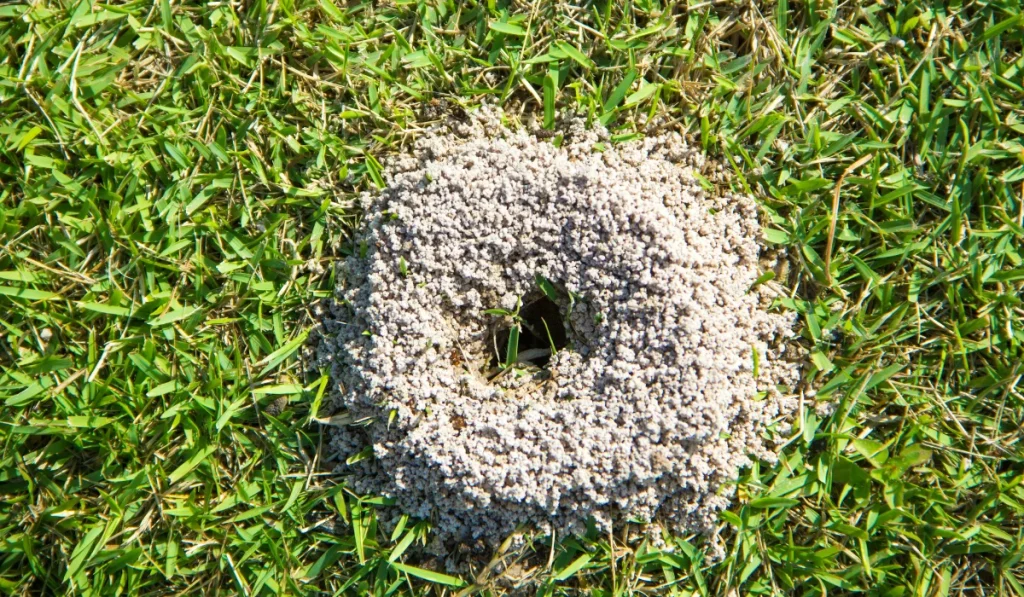
Small mounds may appear when ants excavate soil from underground nests. Mounds can be easier to notice after irrigation or mowing.
Do not disturb a mound until you have ruled out red imported fire ants. Some species respond defensively when their nests are disrupted.
Activity Near Sidewalks or Concrete
Ants may nest near sidewalks, rocks, patios, and other hardscape features. These surfaces can create sheltered nesting areas and retain warmth.
Orange County Mosquito and Vector Control District notes that red imported fire ant colonies may appear beside concrete walkways, rocks, irrigated turf, and landscaped areas. This makes careful identification especially important in Orange County.
Know the Red Imported Fire Ant Warning Signs
Most lawn ants are not red imported fire ants. However, Orange County residents should take suspicious activity seriously because the county has an established reporting and inspection process.
The Orange County Mosquito and Vector Control District red imported fire ant guide describes these ants as aggressive insects that defend their nests and sting when disturbed.
Southern California colonies may not build the large, obvious mounds commonly associated with fire ants in other parts of the country. Local activity may appear as a patch of fine granular soil in irrigated turf, near a shrub, or beside a concrete walkway.
If you suspect red imported fire ants:
- Do not disturb the nest.
- Keep children and pets away from the area.
- Avoid attempting a DIY treatment.
- Report the location to Orange County Mosquito and Vector Control District.
The district’s fire ant treatment guidance asks homeowners to call in a report rather than treat a suspected colony independently. District inspectors can determine whether the ants are RIFA and handle the next steps.
How to Prevent Lawn Ants Without Killing Grass
For ordinary lawn-ant activity, focus first on the conditions that make the property attractive to ants.
Improve Thin or Bare Turf
Thin grass leaves more exposed soil around the lawn. Bare sections may become easier places for ants to nest, especially when the soil remains relatively dry and undisturbed.
Walk through the yard and note where the turf has lost density. Common causes include:
- Uneven sprinkler coverage
- Mowing too low
- Heavy foot traffic
- Soil compaction
- Pet activity
- Poor soil contact after sod installation
- Gaps between sod pieces
- Repeated drought stress
Repairing weak turf helps the lawn cover the soil more evenly.
Small patches may improve after irrigation and mowing habits are corrected. Larger bare areas may need patching with fresh sod once the source of the damage has been addressed.
Check Irrigation Coverage
Ant activity can sometimes become more noticeable in dry lawn areas. At the same time, overwatering creates other lawn problems and wastes water.
Run the irrigation system and watch how the full yard receives water. Inspect corners, sidewalk edges, narrow strips, and areas around sprinkler heads.
Look for:
- Dry patches
- Overspray onto pavement
- Water pooling in low spots
- Broken or tilted sprinkler heads
- Runoff moving toward the street
- Sections that remain soggy longer than the rest of the lawn
Fix uneven coverage before increasing watering time across the full yard. A targeted adjustment is usually more effective than soaking the lawn repeatedly.
UC IPM’s lawn irrigation guidance recommends deep, less frequent irrigation for established lawns rather than constant shallow watering.
Maintain the Right Mowing Height
A lawn cut too short becomes stressed and may develop bare patches. Those openings make the surface less uniform and can encourage recurring pest and weed problems.
Use the recommended mowing height for the turf variety. Avoid removing more than one-third of the grass blade in a single mowing session.
Sharp mower blades also matter. Dull blades tear the grass and leave ragged edges that increase stress. When mowing over areas with loose soil mounds, move carefully and avoid spreading excavated soil across the lawn.
Remove Outdoor Food Sources
Ants often search for food around patios, trash bins, outdoor kitchens, compost areas, fruit trees, and pet-feeding stations.
Reduce attractants by:
- Cleaning up outdoor spills
- Removing fallen fruit
- Storing pet food indoors after feeding
- Keeping trash bins closed
- Rinsing sticky recyclable containers
- Clearing food scraps from patios and outdoor dining areas
These steps may not remove a colony immediately, but they make the property less attractive to foraging ants.
Check Trees and Shrubs for Honeydew-Producing Insects
Ants frequently visit shrubs and trees that host aphids, soft scales, whiteflies, or mealybugs. These insects produce a sweet substance called honeydew that attracts ants.
UC IPM recommends managing honeydew-producing insects when ant activity becomes concentrated around plants.
Inspect leaves, stems, and branches near the lawn. Look for:
- Sticky residue
- Clusters of small insects
- Curled or distorted leaves
- Black sooty growth on leaves
- Ant trails moving up tree trunks or shrubs
Addressing the source of the honeydew can reduce ant traffic through the yard.
Fix Leaks and Moisture Sources Near the Home
Ants need water as well as food. Leaky outdoor faucets, dripping irrigation lines, and damaged sprinkler heads can attract activity near lawns and foundations.
Inspect the perimeter of the property for:
- Leaky hose bibs
- Dripping irrigation valves
- Broken sprinkler heads
- Water collecting beneath planters
- Damp areas near exterior walls
- Irrigation runoff around patios
Repairing leaks supports lawn health and reduces unnecessary water sources.
Avoid DIY Remedies That Can Harm Grass
Many online lawn-ant remedies create a new problem while trying to solve the first one.
Avoid pouring boiling water onto ant mounds in the lawn. It can burn nearby grass and damage roots. Salt, bleach, concentrated vinegar, and homemade chemical mixtures can also injure turf, alter soil conditions, or create runoff.
Flooding a mound repeatedly is not a reliable long-term solution either. Excess water may weaken the surrounding grass, encourage shallow roots, and wash soil across the lawn.
The safest approach is to improve lawn conditions, reduce attractants, identify the ant species, and use professional guidance when the activity continues.
Why Broad Sprays May Not Solve the Problem
Spraying visible ants may provide a temporary reduction in activity, but the colony can remain underground.
UC IPM explains that ant colonies include workers, larvae, and queens. Killing only the ants moving across the lawn does not necessarily address the full colony.
Broad pesticide applications can also affect areas that do not need treatment. When ants remain persistent, a licensed pest-control professional can identify the species and recommend a targeted approach that fits the property.
For suspected red imported fire ants, contact Orange County Mosquito and Vector Control District instead of treating the area independently.
Protect New Sod From Ant Problems
Recently installed sod requires careful maintenance because the roots are still developing. Avoid aggressive lawn treatments during establishment.
Check new sod for:
- Gaps between rolls
- Dry seams
- Uneven rooting
- Loose soil near edges
- Irrigation overspray
- Soft, soggy areas
- Ant activity near hardscape borders
New turf should stay moist enough to root without remaining saturated. As the roots develop, move gradually toward deeper and less frequent irrigation.
Do not apply a lawn product to new sod unless the label confirms that it is appropriate for the turf variety and stage of establishment. When in doubt, ask a lawn-care or pest-control professional for guidance.
When Lawn Repair Makes More Sense
Ant activity may draw attention to an existing turf problem rather than cause the original damage.
A section of lawn may need repair when:
- Bare patches keep expanding
- Grass no longer fills thin areas
- Soil remains exposed after irrigation improves
- Mower damage has created uneven sections
- Sod seams have opened
- Foot traffic has compacted the soil
- The turf variety struggles in the site conditions
Before installing replacement sod, correct the source of the damage. New grass can thin again if sprinkler coverage remains uneven or the area continues to receive heavy wear.
SodLawn provides sod delivery and installation for residential and commercial properties across California. Available varieties depend on the ZIP code and site conditions.
Build a Simple Lawn-Ant Prevention Routine
A short maintenance routine can help reduce recurring activity without damaging the grass.
Each week:
- Inspect the lawn for new mounds or trails.
- Check irrigation coverage and repair leaks.
- Remove outdoor food sources.
- Clean up fallen fruit.
- Inspect shrubs and trees for aphids and other honeydew-producing insects.
- Monitor bare or thinning turf.
- Keep pets and children away from suspicious mounds.
- Report possible fire-ant activity to Orange County Mosquito and Vector Control District.
Small adjustments can make the lawn less attractive to ants while improving the condition of the turf.
Refresh Damaged Turf With SodLawn
Routine lawn-ant prevention starts with healthy grass, consistent irrigation, and early attention to bare spots.
If repeated ant activity has revealed thin or damaged sections of lawn, fresh sod can help restore more even coverage after you correct the underlying issue. Enter your ZIP code to compare sod varieties available for your Orange County property.
Frequently Asked Questions
Do Ants Kill Grass?
Most ants do not feed on grass. However, concentrated nesting activity can create loose soil, visible mounds, and uneven areas in the lawn. Thin or bare turf may also make ant activity easier to notice.
How Do I Get Rid of Ant Hills Without Damaging My Lawn?
Do not pour boiling water, bleach, salt, or concentrated vinegar onto the grass. Identify the ant species first, improve lawn density, correct irrigation problems, remove food sources, and seek professional guidance when mounds persist.
Should I Spray Ants in My Lawn?
Broad sprays may kill visible ants without addressing the colony. A targeted approach based on the ant species is usually more appropriate. Suspected red imported fire ants should be reported to Orange County Mosquito and Vector Control District.
Why Are Ants Appearing Near My Sprinkler Heads?
Ants may be attracted to water from leaks or damaged sprinkler heads. Inspect the irrigation system and repair moisture problems near the lawn and foundation.
Are Fire Ants Found in Orange County?
Yes. Red imported fire ants have been found in Orange County. Report suspicious mounds or aggressive ant activity to Orange County Mosquito and Vector Control District rather than disturbing the area.
Can New Sod Help With Lawn-Ant Problems?
Fresh sod can help cover thin or bare soil after the underlying issue has been addressed. Correct irrigation problems, soil compaction, and lawn damage before installing replacement turf.