A Palm Springs lawn needs a different care routine during the hottest months of the year. Long irrigation cycles, aggressive mowing, heavy fertilizer applications, and delayed sprinkler repairs can place additional stress on grass that is already working harder to stay hydrated.
A practical summer heat lawn survival plan starts with the basics: water deeply without creating runoff, inspect the irrigation system regularly, mow according to the turf variety, and avoid pushing rapid growth during stressful conditions. The goal is not to force the lawn into a perfect appearance during every week of summer. The goal is to protect the root system, reduce avoidable damage, and help the turf recover when conditions improve.
Key Takeaways
- Adjust the irrigation schedule as summer conditions change.
- Water during low-evaporation hours and avoid daytime sprinkler use.
- Use shorter irrigation cycles when water begins running off the lawn.
- Check sprinkler heads, pressure, leaks, and overspray regularly.
- Let established turf dry partially between watering sessions.
- Mow according to growth rate rather than a rigid weekly schedule.
- Remove no more than one-third of the grass blade during a single mowing session.
- Use nitrogen lightly and infrequently during drought conditions.
- Delay aeration and other disruptive maintenance during extreme summer heat.
- Replace severely damaged turf only after correcting irrigation and soil problems.
Why Palm Springs Lawns Need a Summer Plan
Summer lawn care in Palm Springs is not only a matter of adding more water.
A lawn may receive regular irrigation and still develop brown edges, dry patches, runoff, or uneven growth. The problem often comes from how water reaches the soil, how quickly the soil absorbs it, and whether the grass type fits the property.
A sprinkler head may send water onto the sidewalk instead of the turf. A compacted section may puddle before moisture reaches the roots. A lawn cut too short may lose leaf area when it needs that surface to support recovery. Heavy fertilizer can push new growth that requires even more irrigation.
The Desert Water Agency watering guide recommends adjusting irrigation monthly because landscape needs change throughout the year. A schedule that worked during spring may need to be reviewed before the hottest part of summer.
Start by Identifying the Grass Type
A summer plan works better when it reflects the turf variety.
Warm-season grasses and cool-season grasses respond differently to heat. Some turf varieties remain more active during warm weather, while others struggle as temperatures rise.
Common lawn types in Southern California may include:
- Bermudagrass
- Hybrid Bermudagrass
- St. Augustinegrass
- Tall fescue
- Bluegrass blends
- Ryegrass used for seasonal overseeding
SodLawn’s Palm Springs sod delivery and installation page allows customers to enter a ZIP code and compare sod varieties currently available near the property.
Do not assume that every grass type needs the same mowing height, irrigation routine, or fertilizer schedule. Identify the turf before making major adjustments.
Build the Irrigation Routine Around Soil Moisture
A stressed lawn does not always need more frequent watering.
The UC IPM lawn-watering guide recommends deep, infrequent watering for established turf. Water should penetrate the top six to eight inches of soil so roots can grow deeper.
Shallow watering keeps moisture close to the surface. That can encourage shallow roots and create conditions that favor weeds and disease.
Before running the sprinklers again, check the soil. Push a screwdriver or similar tool into the ground. If the top layer has dried but moisture remains deeper in the soil, the lawn may not need another full irrigation cycle yet.
A strong routine should help the root zone without keeping the surface constantly wet.
Follow Desert Water Agency Guidance
Palm Springs properties may receive service from Desert Water Agency or another local provider. Confirm the rules for the address before adjusting the controller.
The Desert Water Agency drought page states that spray and sprinkler irrigation should not run during daylight hours. Leak checks are allowed when completed carefully.
DWA also recommends:
- Turning sprinklers off for at least 48 hours after rain
- Adjusting irrigation monthly
- Preventing runoff
- Checking outdoor watering regularly
- Repairing wasteful irrigation problems
The agency’s water-saving tips recommend watering between 4:00 and 6:00 a.m. when evaporation is low and the ground has time to absorb moisture before the heat of the day.
Check the latest local guidance before changing the schedule because restrictions can change.
Use Cycle-and-Soak Irrigation
One long watering cycle may not be the best approach for a Palm Springs lawn.
When water reaches the soil faster than the ground can absorb it, runoff begins. The lawn may still have a dry root zone even while water flows onto pavement.
DWA recommends applying water at a rate the soil can absorb. Its water-saving guide gives a practical example: instead of watering once for ten minutes, run five shorter two-minute cycles.
Use this process:
- Run one irrigation zone.
- Watch how long it takes before water begins pooling or moving toward pavement.
- Stop the zone at the first sign of runoff.
- Allow time for the water to soak into the soil.
- Run another short cycle later within the permitted watering window.
- Stop when the root zone has received enough moisture.
The right timing depends on the soil, slope, sprinkler type, turf variety, and weather.
Check Sprinklers Regularly
A controller cannot compensate for broken equipment.
DWA recommends testing, adjusting, and repairing sprinkler heads and drip emitters weekly. A small irrigation problem can become more noticeable during summer because turf has less room for error.
Run each zone separately and look for:
- Broken sprinkler heads
- Clogged nozzles
- Tilted heads
- Weak pressure
- Misting
- Water bubbling from below the soil
- Overspray onto pavement
- Water hitting walls or fences
- Dry corners
- Low areas that stay wet
- Runoff moving toward the street
Correct the problem before increasing the watering time for the entire lawn.
A brown patch may need a sprinkler adjustment rather than more irrigation across the yard.
Watch for Misting
Fine mist can drift away before it reaches the root zone.
DWA notes that excessive pressure can cause spray heads to mist. Smaller water particles are more likely to move with the wind and may not penetrate the soil effectively.
If sprinkler output looks foggy rather than consistent:
- Check the system pressure.
- Inspect the nozzle.
- Look for damaged heads.
- Confirm that the equipment matches the irrigation zone.
- Ask an irrigation professional whether pressure regulation is needed.
Water that disappears into the air does not help the lawn survive summer.
Aim for Even Coverage
Uniform irrigation matters as much as total irrigation time.
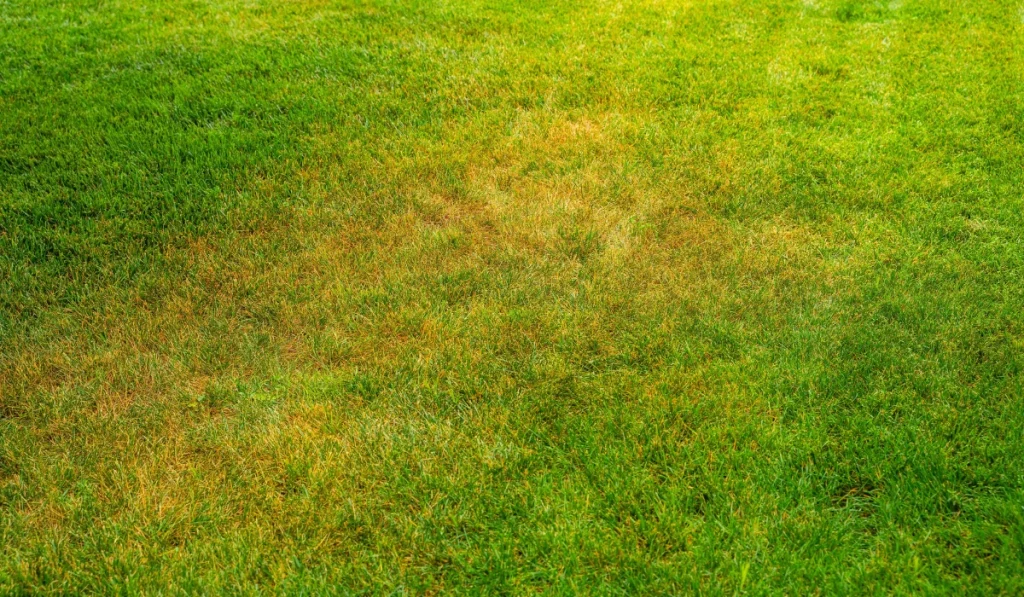
UC IPM notes that brown spots often result from uneven sprinkler coverage. One part of the lawn may receive too much water while another stays dry.
Check whether each head reaches the next sprinkler head. DWA identifies head-to-head coverage as the ideal pattern for uniform watering.
A simple can test can help:
- Place several shallow containers across one irrigation zone.
- Run the system for a measured amount of time.
- Compare the water collected in each container.
- Look for major differences.
- Adjust the sprinkler heads or irrigation layout as needed.
Do not increase the runtime across the entire yard because one container collected less water.
Stop Runoff Early
Runoff wastes water and can carry soil, fertilizer, and yard debris toward streets and storm drains.
Stop irrigation when:
- Water reaches the sidewalk
- Puddles form
- Water moves downhill
- The lawn surface remains saturated
- A low spot begins filling
- Water reaches the curb
DWA continues to issue citations for water waste and encourages residents to inspect irrigation systems proactively.
Shorter cycles, repaired sprinkler heads, pressure adjustments, and soil aeration during the appropriate season can help reduce repeat runoff.
Adjust the Schedule Each Month
A set-it-and-forget-it controller can create problems.
DWA’s monthly watering guide recommends adjusting irrigation as conditions change. Turf does not need the same schedule during every month of the year.
Review the controller when:
- Temperatures rise
- Rain occurs
- The lawn enters a new growth stage
- New sod is installed
- A sprinkler head is repaired
- A dry patch appears
- Runoff begins sooner than expected
- The lawn changes color
- Seasonal overseeding ends
- The turf becomes dormant
A smart irrigation controller may help when the property needs more frequent adjustments. DWA offers incentives and programs for some water-efficiency upgrades.
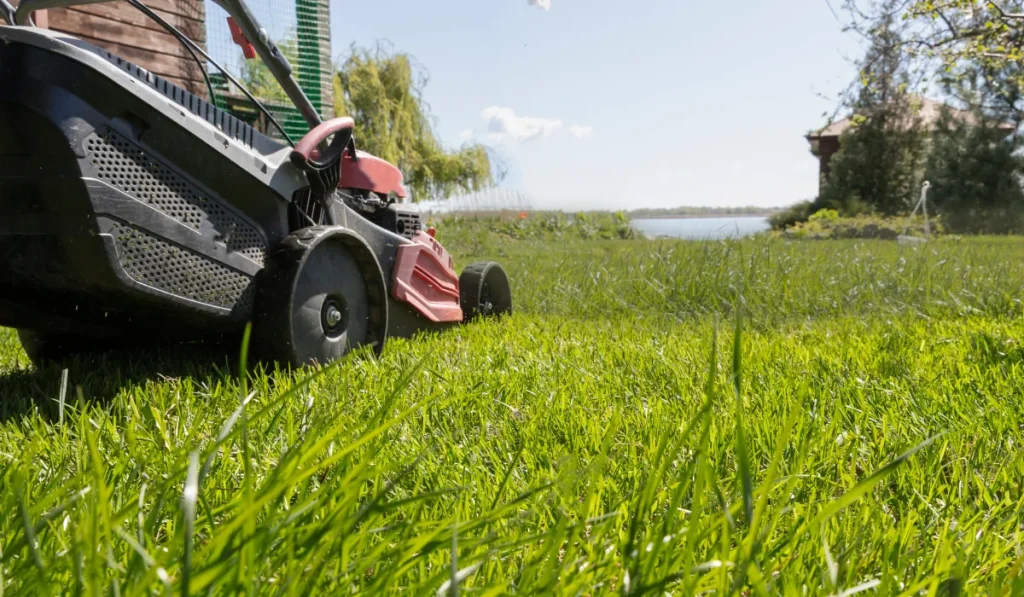
Mow Based on Growth, Not Habit
A lawn does not need mowing simply because the weekend arrived.
The UC IPM mowing guide explains that mowing frequency should reflect the growth rate of the turf during the season.
During stressful summer conditions:
- Delay mowing if the lawn is wilted or brittle.
- Mow when the grass is dry.
- Use the correct height for the turf variety.
- Avoid cutting simply to follow a fixed schedule.
- Raise the mower when the lawn is under stress.
A lawn that grows slowly may need less frequent mowing.
Follow the One-Third Rule
Never remove too much grass in one pass.
The UC IPM one-third mowing rule recommends removing no more than one-third of the grass blade during a single mowing session.
Cutting more than one-third reduces the leaf surface available for photosynthesis and can temporarily slow root growth. Repeatedly mowing too low weakens roots and makes the lawn more vulnerable to drought injury.
If the lawn becomes taller than usual:
- Raise the mower.
- Remove a small amount.
- Wait for the next mowing session.
- Lower the height gradually when appropriate.
Do not scalp the turf to restore a shorter appearance quickly.
Keep Mower Blades Sharp
A dull blade tears grass instead of cutting it cleanly.
Shredded tips may turn yellow or brown and can make a summer-stressed lawn look worse. Torn blades may also lose moisture more easily than cleanly cut grass.
Inspect the lawn after mowing. If the tips look frayed, ragged, or uneven, sharpen or replace the blade according to the mower manufacturer’s instructions.
A clean cut helps the lawn recover more efficiently.
Leave Short Clippings When Practical
Grass clippings can stay on the lawn when they are short, dry, and distributed evenly.
This practice, often called grasscycling, returns organic material to the turf and reduces the need to collect yard waste.
Leave clippings in place when:
- The grass is dry
- The lawn is mowed regularly
- No more than one-third of the blade is removed
- The mower spreads the clippings evenly
- Heavy piles do not remain
Collect or redistribute clippings when they form thick rows or cover the turf surface.
Use Fertilizer Carefully During Drought
A pale lawn does not always need more nitrogen.
The UC IPM fertilizer guide recommends applying nitrogen lightly and infrequently under drought conditions to avoid lush growth and reduce water use.
Heavy nitrogen applications can create rapid top growth. That may increase mowing and irrigation demands during the time of year when the lawn is already under pressure.
Before fertilizing, check:
- The grass type
- Recent fertilizer history
- Soil moisture
- Irrigation coverage
- Mowing height
- Lawn color
- Signs of heat stress
- The product label
Slow-release nitrogen may be easier to manage than a heavy quick-release application. Use only the amount recommended for the turf variety and season.
Avoid Aggressive Maintenance During Extreme Heat
Summer is not the best time for every lawn project.
The UC IPM aeration-timing guide recommends avoiding aeration during summer months when high temperatures may be detrimental to the lawn.
Delay disruptive work when the turf is stressed, including:
- Heavy aeration
- Aggressive dethatching
- Major grading
- Large fertilizer applications
- Repeated equipment traffic
- Unnecessary herbicide treatments
- Lawn replacement without an irrigation plan
Complete major corrective work during an appropriate growth period whenever possible.
Reduce Foot Traffic
A stressed lawn can thin quickly along common walking routes.
Look for wear near:
- Gates
- Patios
- Side yards
- Pool areas
- Outdoor seating
- Trash-bin routes
- Pet paths
- Driveways
Redirect traffic with stepping stones or a defined walkway where possible.
Avoid moving heavy equipment across wet or stressed turf. Compaction can make irrigation problems worse by reducing water penetration.
Watch Lawn Edges Closely
Grass near sidewalks, driveways, patios, and walls may show stress before the center of the yard.
These sections can receive more reflected heat, more trimming, and less even irrigation.
Inspect edges for:
- Brown strips
- Bare soil
- Dry corners
- Overspray
- Scalping
- Soil compaction
- Raised concrete
- Runoff
Adjust sprinkler heads and use careful trimming. A clean edge should not look scraped or brown.
Decide Whether Every Turf Area Still Makes Sense
Not every patch of grass needs to be preserved at all costs.
DWA encourages residents to keep turf where it is practical and consider drought-tolerant landscaping where grass serves little functional purpose.
Review narrow strips, steep slopes, and sections used only during mowing.
A different landscape treatment may make sense when:
- The area is difficult to irrigate without overspray
- Runoff returns repeatedly
- The strip is too narrow for efficient sprinkler coverage
- The turf receives little use
- Maintenance demands remain high
- A drought-tolerant planting plan would fit the property better
Keep functional lawn areas where they support the way the yard is used. Reduce turf where it creates repeated water waste.
Protect New Sod During Summer
New sod needs a different routine than an established lawn.
Fresh turf has a shallow root system and needs consistent moisture while roots grow into the prepared soil. Palm Springs heat can make edges, seams, and sunny sections dry faster.
During establishment:
- Follow the watering instructions for the sod variety.
- Check the lawn several times per day during the earliest stage when required.
- Keep the root zone moist without creating runoff.
- Inspect seams and edges.
- Limit foot traffic.
- Delay mowing until the sod has rooted.
- Use a sharp mower blade.
- Avoid heavy equipment.
- Reduce irrigation frequency gradually as roots develop.
Do not apply the established-lawn routine immediately to new turf.
Check New Sod for Uneven Moisture
A new lawn can dry unevenly.
Pay extra attention to:
- Sidewalk edges
- Corners
- Slopes
- Sections near walls
- Narrow strips
- Areas between sprinkler patterns
- Seams between sod rolls
- Spots with reflected heat
If one area dries more quickly, correct the sprinkler coverage or use targeted hand-watering rather than increasing water across the entire lawn.
Avoid leaving the soil saturated. New sod needs moisture and oxygen around the roots.
Choose Sod That Fits the Property
A lawn is easier to manage when the turf variety suits the site.
Before ordering replacement sod, consider:
- Sun exposure
- Shade
- Foot traffic
- Pets
- Irrigation coverage
- Soil type
- Mowing preferences
- Seasonal color expectations
- Heat exposure
- The amount of lawn the property genuinely needs
SodLawn provides sod delivery and installation in Palm Springs for residential and commercial properties.
Enter the ZIP code to compare locally available varieties and confirm which options fit the project.
Repair Summer Damage After Correcting the Cause
A better maintenance routine can help stressed turf recover, but it will not restore every dead patch.
Repair may be appropriate when:
- Bare areas keep expanding
- Grass no longer fills thin sections
- Sprinkler coverage remains uneven
- Scalping exposed the soil
- The lawn has severe compaction
- Runoff continues
- The turf variety does not fit the site
- The same section fails repeatedly
Before installing replacement sod:
- Repair irrigation problems.
- Check soil compaction.
- Improve drainage.
- Remove weeds and debris.
- Review the grade.
- Choose a suitable turf variety.
- Install the sod promptly.
- Follow the establishment watering plan.
- Wait for rooting before mowing.
- Monitor the lawn during the first summer.
New grass can fail again when the original cause remains unresolved.
Avoid Common Summer Lawn Mistakes
Avoid these shortcuts:
- Running the same irrigation schedule every month
- Watering during daylight hours
- Ignoring runoff
- Increasing the full lawn runtime because one area looks dry
- Mowing on a rigid calendar
- Cutting more than one-third of the grass blade
- Using a dull mower blade
- Applying heavy nitrogen during drought
- Aerating during extreme summer heat
- Leaving broken sprinkler heads unrepaired
- Installing sod before testing irrigation coverage
- Trying to preserve turf in areas that cannot be watered efficiently
A summer survival plan works best when it reduces unnecessary work and protects the root zone.
Build a Simple Summer Lawn Checklist
Use this routine during the hottest months:
- Check the current water-provider rules.
- Adjust the controller monthly.
- Water during low-evaporation hours.
- Turn sprinklers off for at least 48 hours after rain.
- Inspect irrigation zones weekly.
- Repair leaks, clogs, and overspray.
- Use shorter cycles when runoff begins.
- Check soil moisture before watering again.
- Mow based on growth.
- Follow the one-third rule.
- Keep mower blades sharp.
- Use fertilizer lightly and infrequently during drought.
- Delay disruptive maintenance during extreme heat.
- Monitor edges, seams, and high-traffic areas.
- Repair dead turf only after correcting the cause.
Know When To Call a Professional
Professional support may help when:
- Runoff continues after shorter irrigation cycles
- Several sprinkler zones have uneven coverage
- Water bubbles from below the soil
- The lawn remains dry despite regular irrigation
- Soil compaction is severe
- The turf has large dead sections
- New sod installation is planned during hot weather
- The grass variety is unclear
- Narrow strips or slopes remain difficult to manage
- The property needs a broader landscape redesign
An irrigation or lawn-care professional can help determine whether the issue comes from equipment, soil, turf selection, or the landscape layout.
Refresh Your Palm Springs Lawn With SodLawn
A summer heat lawn survival plan should protect the roots, prevent runoff, and keep maintenance realistic during Palm Springs heat.
If an older lawn has developed large bare or damaged sections, correct the irrigation and soil problems before replacing the turf. SodLawn offers sod delivery and professional installation in Palm Springs. Enter your ZIP code to compare sod varieties available near your property and plan your lawn project.
Frequently Asked Questions
How Often Should I Water My Lawn During Summer in Palm Springs?
There is no single schedule for every property. Use the Desert Water Agency monthly watering guide, check the soil moisture, and adjust the controller based on the turf type, sprinkler system, soil, and current conditions.
What Time Should I Water My Lawn in Palm Springs?
Desert Water Agency advises avoiding daylight sprinkler irrigation and recommends watering between 4:00 and 6:00 a.m. when evaporation is low. Confirm the current rules for the property’s water provider.
Should I Water My Lawn Every Day During Extreme Heat?
Not automatically. Established turf generally benefits from deep, infrequent irrigation. Check the root-zone moisture, sprinkler coverage, and runoff before increasing the schedule.
What Is Cycle-and-Soak Irrigation?
Cycle-and-soak irrigation divides one long watering session into shorter cycles with pauses between them. This gives the soil time to absorb moisture and can reduce runoff.
Why Does My Lawn Have Brown Spots Even Though I Water Regularly?
Brown spots may result from uneven sprinkler coverage, clogged nozzles, overspray, low pressure, soil compaction, scalping, or turf stress. Run each irrigation zone separately before increasing the full lawn runtime.
Should I Raise the Mower Height During Summer?
Use the upper end of the recommended height range for the turf variety when the lawn is stressed. Avoid removing more than one-third of the grass blade at once.
Should I Fertilize My Lawn During a Palm Springs Heat Wave?
Avoid heavy nitrogen applications during drought stress. UC IPM recommends applying nitrogen lightly and infrequently under drought conditions to prevent lush growth and reduce water use.
Can I Aerate My Lawn During Summer?
Avoid aeration during high summer temperatures. UC IPM recommends aerating during spring when grass is actively growing and delaying the project when heat could add stress.
Can New Sod Survive Palm Springs Summer Heat?
Yes, but new sod needs careful irrigation, even coverage, limited traffic, and close monitoring while roots develop. Follow the care plan for the turf variety and prevent runoff.
Should I Replace Turf in Narrow Strips?
Consider whether the strip can be watered efficiently and whether it serves a practical purpose. DWA encourages keeping turf where it is functional and considering lower-water landscape options where grass creates repeated waste.
When Should I Replace Summer-Damaged Grass?
Replace turf after correcting the cause. Large bare areas, repeated irrigation problems, compaction, runoff, and a poorly matched turf variety may justify a larger repair.