Clay-heavy soil can hold water long after an irrigation cycle ends. The surface may stay muddy, runoff may reach the sidewalk, and sections of the lawn may thin out even when the sprinklers run regularly. These symptoms can make it tempting to water more often, add sand, or install new sod immediately.
If you want to know how to improve clay soil drainage, start by identifying the cause. Clay texture may contribute to slow absorption, but compaction, poor grading, thatch, uneven irrigation, and layered soil can create similar problems. For an established lawn, core aeration and better watering habits are often the best first steps. For a larger lawn renovation, incorporating compost into the prepared soil before installing sod can improve structure and root development.
Key Takeaways
- Test the soil before assuming clay is the only cause of poor drainage.
- Check sprinkler coverage, grading, compaction, and thatch before adding amendments.
- Use shorter irrigation cycles with pauses between them when runoff begins quickly.
- Core aeration can improve water movement in an established lawn.
- Add compost during soil preparation before installing new sod.
- Incorporate amendments into the soil rather than leaving them in a separate surface layer.
- Do not add a small amount of sand to clay soil as a shortcut.
- Avoid working clay-heavy soil when it is saturated.
- Repair grading, hardpan, or drainage problems before installing replacement turf.
- Contact USA North 811 before any project that requires digging.
Why Clay Soil Drains Slowly
Clay soil contains very small particles and small pore spaces. Those pores can hold water and nutrients, but they do not always allow water and air to move freely through the root zone.
The UC Master Gardener guide to using sand in soil explains that clay soils tend to hold water longer and provide less aeration than sandy soils. This can make clay soil feel heavy, sticky, and difficult to work with when wet.
Clay is not automatically bad soil. It can retain useful nutrients and support healthy turf when the structure, drainage, and irrigation routine are managed correctly.
The problem begins when water stays near the surface, pools in low areas, or cannot move through compacted soil quickly enough to reach the roots evenly.
Do Not Assume Clay Is the Only Problem
A lawn can drain poorly for several reasons.
Before adding compost, topsoil, or drainage features, walk through the yard and look for patterns.
The UC Master Gardener drainage guide recommends checking grading, irrigation output, and thatch before blaming the soil alone.
Look for:
- Water pooling in the same low area
- Runoff reaching sidewalks or driveways
- Dry patches beside soggy sections
- Soil that feels hard underfoot
- Sprinklers aimed toward pavement
- Broken or tilted sprinkler heads
- A thick thatch layer
- Water collecting near the foundation
- Turf thinning along heavily used paths
- Soil added in layers during a previous landscaping project
A clay-heavy lawn may need soil improvement. A lawn with a broken sprinkler head or poor grade needs a different repair.
Test How Quickly the Soil Drains
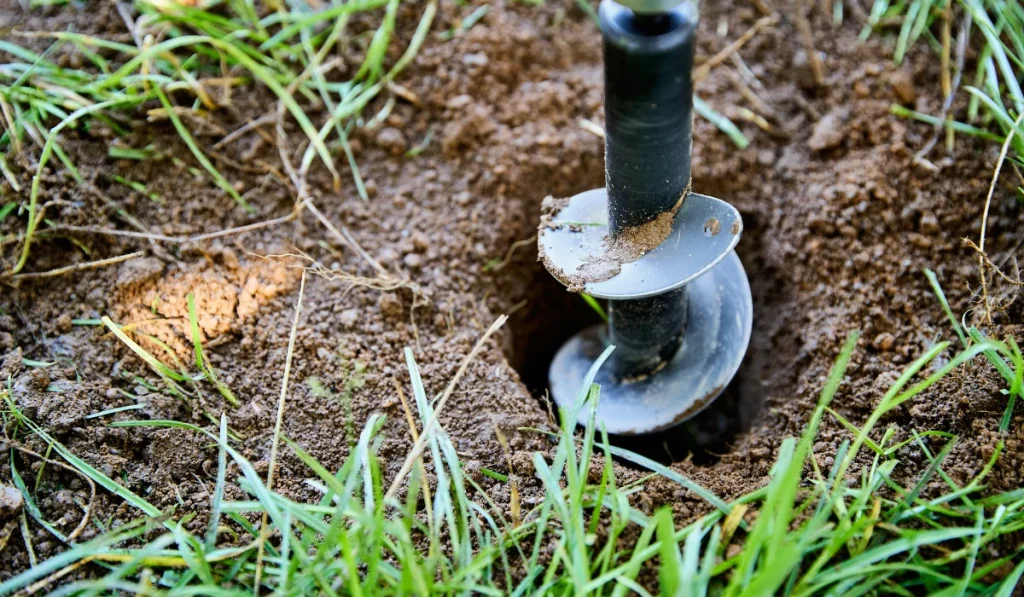
A simple drainage test can help you understand whether water is moving through the soil slowly.
The UC Master Gardener drainage guide recommends this basic test:
- Dig a hole approximately one foot deep.
- Fill the hole with water.
- Let the water drain completely.
- Fill the hole again.
- Measure how much water drains during one hour.
The guide identifies drainage of less than two inches per hour as poor drainage.
Use the result as a starting point rather than a complete diagnosis. A drainage test cannot tell you whether the problem comes from compaction, a clay layer, poor grading, or another condition below the surface.
Call a landscaping or drainage professional when:
- Water remains in the hole for an extended period
- The lawn stays soggy after irrigation stops
- Water collects close to the home
- The same section floods repeatedly
- The yard contains a steep slope
- The soil appears layered
- A lower hardpan or clay-pan layer may be present
Check the Irrigation System Before Changing the Soil
A lawn may appear to have a drainage problem when it receives too much water in one section.
Run each sprinkler zone separately and inspect the yard.
Look for:
- Water reaching the sidewalk
- Overspray onto the driveway
- Water pooling around one sprinkler head
- A head that sprays farther than the others
- Clogged nozzles
- Weak coverage
- Broken components
- Water bubbling from below the soil
- Dry corners
- Areas where several sprinkler patterns overlap
The UC IPM guide to watering lawns recommends avoiding runoff and puddling by cycling irrigation. On compacted or heavy clay soils, aeration can also help water move into the soil more effectively.
Do not increase the full lawn runtime because one area looks dry. Repair the sprinkler problem first.
Use Cycle-and-Soak Irrigation
Clay-heavy soil may absorb water too slowly for one long sprinkler cycle.
Cycle-and-soak irrigation divides the watering time into shorter periods. The pause between cycles gives water time to move into the soil.
Use this process:
- Turn on one sprinkler zone.
- Note how long it takes before water begins pooling or running off.
- Stop the zone at the first sign of runoff.
- Allow the water to soak into the soil.
- Run another short cycle later within the permitted watering window.
- Stop when the lawn has received the required amount of moisture.
For example, if runoff begins after four minutes, two shorter four-minute cycles with a pause between them may work better than one continuous eight-minute cycle.
The UC IPM lawn-disease prevention guide explains that lawns with slow infiltration may need irrigation cycling. The system should run until runoff begins, stop, and restart after the surface has had time to absorb the water.
The right schedule depends on the soil, turf variety, weather, slope, and sprinkler output.
Follow Bakersfield Watering Guidance
Watering rules can change, so check current local guidance before updating the sprinkler controller.
The City of Bakersfield Water Department currently states that no outdoor watering is permitted on Mondays. The city also highly recommends limiting outdoor landscape and turf watering to two days per week:
- Odd-numbered addresses: Tuesdays and Saturdays
- Even-numbered addresses: Wednesdays and Sundays
Some Bakersfield properties may receive service from a different water provider. Confirm the provider and current rules for the address before changing the irrigation schedule.
A clay-heavy lawn does not automatically need more watering days. Better timing, shorter cycles, and improved infiltration may be more effective than additional irrigation.
Aerate an Established Lawn
Core aeration can help water move into compacted soil.
The UC IPM aeration guide explains that aerating removes small cores of soil from a lawn. These openings allow air, water, and nutrients to penetrate the root zone more easily.
Aeration may help when:
- Water runs off before soaking in
- The soil feels hard
- The lawn receives heavy foot traffic
- Grass thins along frequently used paths
- Water pools after irrigation
- Roots appear shallow
- The lawn struggles despite even sprinkler coverage
Use a core aerator that removes plugs of soil rather than a tool that only pushes spikes into the ground.
The UC IPM aeration-methods guide recommends leaving the cores on the lawn. They will gradually break apart through watering and mowing.
Choose the Right Time To Aerate
UC IPM recommends aerating during spring when grass is actively growing and avoiding aeration during high summer temperatures that may add stress to the lawn.
Timing also depends on the turf variety. Warm-season and cool-season grasses follow different growth patterns.
Before aerating:
- Identify the grass type.
- Mark sprinkler heads.
- Water the lawn lightly a few days in advance if the soil is too hard.
- Avoid aerating saturated soil.
- Remove excess thatch if needed.
- Leave the soil cores on the surface afterward.
- Water according to the lawn’s needs and local rules.
Do not aerate newly installed sod until the turf has rooted firmly.
Check for Thatch Buildup
Thatch is the layer of roots, stems, and organic material that develops between green grass and the soil surface.
A thin layer can be normal. A thick layer may interfere with water movement.
The UC Master Gardener drainage guide notes that a heavily thatched lawn may not absorb water efficiently. The UC IPM lawn-insect guide recommends removing thatch when it exceeds half an inch.
Inspect the lawn before dethatching.
Dethatching may help when:
- Water stays on the turf surface
- The lawn feels spongy
- Roots remain shallow
- The grass dries unevenly
- Water does not reach the soil easily
- The thatch layer exceeds half an inch
Use care during hot weather or drought stress. Aggressive dethatching can temporarily stress the lawn.
Add Organic Matter Before Installing New Sod
For a larger lawn renovation, soil preparation creates the best opportunity to improve clay-heavy soil.
The UC IPM soil-amendment guide explains that organic material can help loosen clay soils and improve aeration and drainage. Compost is one of the easiest organic amendments to use.
UC IPM recommends:
- Spreading one to two inches of organic material over the site
- Incorporating it into the top three to six inches of soil
- Completing the final grading
- Preparing the surface before planting
Do not leave the compost in a separate layer beneath the new sod. Mix it into the existing soil so the roots can move through a more consistent soil profile.
Organic amendments improve soil structure. They do not replace fertilizer automatically. The lawn may still need starter fertilizer and an ongoing feeding plan based on the grass variety and soil conditions.
Do Not Add a Small Amount of Sand
Adding sand to clay soil may sound like a quick way to create more drainage space. In practice, a small amount of sand can make the soil denser.
The UC Master Gardener guide explains that clay particles can fill the spaces between sand particles, creating a compact mixture with limited room for air and water.
Avoid mixing a small amount of sand into clay-heavy lawn soil.
Use organic matter such as finished compost instead. It can help improve soil structure gradually without creating a dense, cement-like mixture.
Avoid Creating Soil Layers
Adding topsoil can help raise the grade or improve a lawn site, but it needs to be incorporated correctly.
UC IPM warns against placing new topsoil directly over old soil without mixing the two layers. A sudden change in soil texture can make it harder for water to move through the profile and harder for roots to penetrate.
If the project needs additional soil:
- Use a loamy topsoil
- Choose material free of rocks and debris
- Avoid soil containing weed seeds or plant fragments
- Mix the new material into the existing soil
- Check the finished grade
- Confirm that water moves away from structures
- Test irrigation coverage before installing sod
Layered soil can create a hidden drainage problem even when the surface looks level.
Avoid Working Wet Clay Soil
Clay soil can become compacted when it is worked while saturated.
The UC Master Gardener soil-management guide recommends working soil when it is moderately moist: dry enough not to stick to tools but moist enough to form a loose ball.
Avoid:
- Tilling saturated soil
- Driving heavy equipment across wet soil
- Walking repeatedly over a muddy lawn
- Installing sod on a soft, unstable surface
- Adding topsoil without checking moisture
- Grading while the soil is waterlogged
Working wet clay soil can compress the pore spaces that water and roots need.
Inspect the Grade
Water follows the shape of the yard.
If the lawn slopes toward the home, sidewalk, or a low corner with no outlet, soil amendments alone may not solve the problem.
Inspect the property after irrigation or rain.
Look for:
- Water moving toward the foundation
- A low spot that stays wet
- Runoff crossing the sidewalk
- Soil washing toward the curb
- Grass thinning at the bottom of a slope
- Water collecting near patios
- An area that remains soggy longer than the rest of the lawn
Minor grading corrections may help water spread more evenly. Larger drainage issues may require a landscaping or drainage professional.
Do not raise the soil level against the home without professional guidance.
Know When a Drainage Feature May Be Needed
Some yards need more than aeration and compost.
A French drain, surface drain, swale, or other drainage feature may be appropriate when:
- Water collects in the same area repeatedly
- The grade directs water toward the home
- A low area has no practical outlet
- A clay-pan or hardpan layer blocks drainage
- Soil amendments do not improve infiltration
- Runoff continues after irrigation adjustments
- The property has a larger landscaping or renovation plan
A drainage professional can evaluate the slope, soil profile, outlet, and project requirements.
If the project requires digging, contact USA North 811 before excavation. USA North 811 advises homeowners to premark the planned area and call at least two working days before digging.
Utility markings do not replace a private irrigation map. Mark sprinkler heads and private irrigation components separately.
Improve Drainage Before Installing Sod
New sod should not be installed over an unresolved drainage problem.
Fresh turf needs consistent moisture while roots develop, but the soil should not remain waterlogged.
Before sod installation:
- Remove old turf, weeds, roots, and debris.
- Inspect the grade.
- Test drainage.
- Check for compaction.
- Aerate or loosen the soil as appropriate.
- Add compost when needed.
- Incorporate amendments into the root zone.
- Add loamy topsoil only when necessary.
- Mix added soil into the existing profile.
- Complete the final grading.
- Test every irrigation zone.
- Fix overspray and runoff.
- Choose a sod variety suited to the property.
- Install the sod promptly.
- Follow the establishment watering plan.
SodLawn’s Bakersfield sod delivery and installation page lists locally available sod varieties and allows customers to enter a ZIP code to compare options for the property.
The page also notes that professional installation is available for Bakersfield projects, including soil preparation and starter-fertilizer application.
Water New Sod Carefully
New sod needs more frequent moisture than established turf while roots grow into the soil.
Clay-heavy soil requires closer observation because the surface may stay wet longer in some sections.
During establishment, check for:
- Dry edges
- Open seams
- Water pooling
- Soft soil
- Muddy sections
- Runoff
- Overspray
- Uneven sprinkler coverage
- Sod that shifts underfoot
- Grass that does not root evenly
Do not maintain a frequent shallow-watering schedule forever.
As the sod becomes established, shift gradually toward deeper and less frequent irrigation suited to the grass variety, soil, and local watering rules.
Reduce Compaction After the Lawn Is Installed
A repaired lawn can develop the same drainage problem again when the soil is compressed repeatedly.
Reduce future compaction by:
- Keeping heavy equipment off wet soil
- Using designated walking paths
- Moving lawn furniture periodically
- Avoiding repeated mower passes over saturated areas
- Limiting heavy pet traffic on soft turf
- Marking sprinkler heads before aeration
- Aerating established turf when needed
- Monitoring high-traffic sections
The lawn may need periodic maintenance rather than a one-time fix.
Watch for Weeds in Poorly Drained Areas
Drainage problems can create conditions that favor weeds.
The UC IPM turfgrass weed-management guide explains that poor drainage can favor weeds such as annual bluegrass, broadleaf plantain, crabgrass, curly dock, nutsedge, and red sorrel.
Do not treat the weeds without addressing the soil and irrigation conditions.
A better routine may include:
- Improving drainage
- Repairing bare turf
- Reducing runoff
- Correcting sprinkler coverage
- Aerating compacted areas
- Removing young weeds before they spread
- Installing sod only after the site is prepared
Healthy turf can cover the soil more evenly and leave fewer openings for weeds.
Avoid Common Clay-Soil Drainage Mistakes
Avoid these shortcuts:
- Assuming every wet patch comes from clay soil
- Adding more irrigation time without checking sprinkler coverage
- Watering until runoff reaches the sidewalk
- Adding a small amount of sand
- Installing sod over compacted soil
- Leaving compost in a separate surface layer
- Laying topsoil directly over old soil without mixing
- Tilling saturated clay soil
- Ignoring grading problems
- Aerating during extreme summer heat
- Aerating new sod before it has rooted
- Digging for a drainage system without contacting 811
- Replacing turf before correcting the cause
A careful diagnosis saves time and reduces repeat lawn damage.
Build a Clay-Soil Drainage Checklist
Use this checklist:
- Run each sprinkler zone separately.
- Look for runoff, overspray, and pooling.
- Check the current Bakersfield watering guidance.
- Test how quickly the soil drains.
- Inspect the grade.
- Measure the thatch layer.
- Check for compaction.
- Core-aerate established turf when appropriate.
- Avoid working saturated soil.
- Use cycle-and-soak irrigation.
- Add compost during larger renovation projects.
- Incorporate amendments into the root zone.
- Avoid adding a small amount of sand.
- Mix added topsoil into the existing soil.
- Contact a professional for persistent flooding or hardpan.
- Contact USA North 811 before digging.
- Test irrigation before installing new sod.
- Monitor drainage after the project is complete.
Know When To Call a Professional
Professional support may be useful when:
- Water collects near the foundation
- The yard needs significant grading
- Drainage remains poor after aeration
- A lower hardpan layer may be blocking infiltration
- The property needs a French drain or another drainage feature
- The lawn requires excavation
- The irrigation system has buried leaks
- New sod installation requires extensive soil preparation
- Several previous lawn repairs have failed
- You are unsure which sod variety fits the site
Clay-heavy soil can often be improved. The right fix depends on whether the issue is near the surface or deeper in the soil profile.
Refresh Your Bakersfield Lawn With SodLawn
Improving clay soil drainage starts below the grass. Aeration, compost, better irrigation timing, and careful grading can help create a healthier root zone before new turf goes down.
If an older lawn has developed large bare or damaged sections, SodLawn offers sod delivery and professional installation in Bakersfield. Enter your ZIP code to compare sod varieties available near your property and plan your lawn project.
Frequently Asked Questions
How Do I Improve Clay Soil Drainage in an Existing Lawn?
Start by checking sprinkler coverage, runoff, grading, compaction, and thatch. Core aeration can improve water movement in an established lawn. Use shorter irrigation cycles with pauses between them when runoff begins quickly.
Should I Add Sand to Clay Soil?
Do not add a small amount of sand as a shortcut. UC Master Gardener guidance warns that mixing sand into clay soil can create a denser mixture with less space for water and oxygen. Compost is usually a better amendment.
Can Compost Improve Clay Soil Drainage?
Yes. UC IPM explains that organic material can help loosen clay soil and improve aeration and drainage. During a lawn renovation, spread one to two inches of compost and incorporate it into the top three to six inches of soil.
Can I Put Topsoil Directly Over Clay Soil?
Do not leave new topsoil as a separate layer. UC IPM recommends mixing added loamy topsoil into the existing soil to avoid a layered profile that restricts water movement and root penetration.
Does Aeration Help Clay Soil?
Core aeration can help water, air, and nutrients move into compacted soil. It is most useful for established lawns with pooling, runoff, hard soil, or heavy foot traffic.
When Should I Aerate My Bakersfield Lawn?
UC IPM recommends aerating during spring while grass is actively growing and avoiding aeration during high summer temperatures that may stress the lawn. Match the timing to the turf variety and current weather conditions.
Why Does My Lawn Have Runoff and Dry Patches at the Same Time?
The irrigation system may be applying too much water in one area and too little in another. Run each zone separately, check sprinkler coverage, and repair misaligned, clogged, or damaged heads before increasing the runtime.
Can I Install New Sod Over Clay Soil?
Yes, but prepare the site first. Improve drainage, correct compaction, incorporate compost when needed, check grading, and test irrigation coverage before laying sod.
How Often Should I Water a Clay-Heavy Lawn?
There is no single schedule for every property. Use shorter irrigation cycles with pauses between them when water absorbs slowly. Follow current Bakersfield watering guidance and adjust the routine based on the turf variety, season, soil moisture, and runoff.
Do I Need To Contact 811 Before Installing a Drainage System?
Yes. Contact USA North 811 before excavation. Premark the planned dig area and call at least two working days before digging.