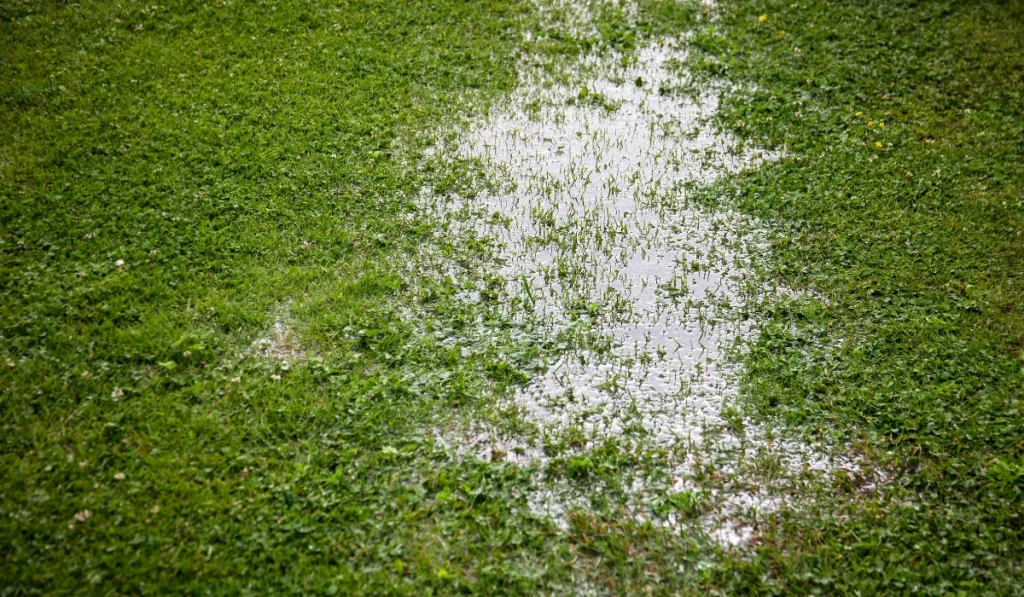
Water running from a lawn onto the sidewalk is more than a sign that the sprinklers have been left on too long. It may point to compacted soil, uneven irrigation coverage, damaged sprinkler heads, poor scheduling, or a lawn that cannot absorb water as quickly as the system applies it.
If you want to know how to reduce runoff when watering, start by watching the lawn during an irrigation cycle. Stop the system when water begins to pool or move toward pavement. Then divide the watering time into shorter cycles, repair sprinkler problems, and improve the soil where needed.
In Long Beach, runoff prevention also matters because local rules limit landscape watering and prohibit water from flowing onto sidewalks, streets, and neighboring properties.
Key Takeaways
- Stop watering as soon as water begins pooling or moving onto pavement.
- Divide the allowed irrigation time into shorter cycles with pauses between them.
- Check sprinkler heads for leaks, clogs, overspray, and poor alignment.
- Follow the current Long Beach landscape-watering schedule.
- Do not water during or within 48 hours after rainfall.
- Test the soil before increasing watering time.
- Aerate compacted soil so water can move into the root zone more effectively.
- Adjust watering based on the season, turf type, shade, and soil conditions.
- Inspect new sod more frequently because its roots are still developing.
- Repair persistent drainage or grading problems before replacing damaged turf.
Why Lawn Runoff Happens
Runoff begins when the lawn receives water faster than the soil can absorb it.
The cause may be simple. A sprinkler head may be tilted toward the sidewalk. A valve may run longer than necessary. A low spot may hold water while the rest of the lawn remains dry.
Other problems develop gradually. Foot traffic can compact the soil. Heavy clay soil may absorb water slowly. Sloped lawn areas can lose water before it reaches the roots. Thatch buildup may also interfere with even irrigation.
The UC IPM lawn-watering guide explains that poor watering practices are a common cause of dead and dying areas in lawns and a source of urban runoff. Runoff can also carry fertilizer, pesticides, and other materials into storm drains and waterways.
Before increasing the watering time, identify where the water is going.
Follow Long Beach Watering Rules
Long Beach has specific outdoor watering restrictions.
The Long Beach Utilities water-use restrictions page states that landscape watering is currently allowed on Tuesdays, Thursdays, and Saturdays only.
The city also requires residents to:
- Water for no more than ten minutes per station per watering day, or until runoff begins, whichever happens first
- Water before 9:00 a.m. or after 4:00 p.m.
- Avoid landscape watering during rainfall or within 48 hours after rain
- Prevent runoff from flowing onto sidewalks, streets, parking lots, structures, or neighboring properties
- Repair leaks and other water-wasting malfunctions
Check the city page before changing your routine because local requirements can change.
The ten-minute limit does not mean every lawn needs a continuous ten-minute cycle. If runoff begins after three minutes, stop earlier and use a cycle-and-soak schedule.
Use Cycle-and-Soak Irrigation
Cycle-and-soak irrigation is one of the most practical ways to reduce runoff.
Instead of running a sprinkler station continuously, split the permitted watering time into shorter intervals. Pause between cycles so the soil has time to absorb the water.
The UC IPM landscape water-conservation guide recommends cycling irrigation systems on and off in several short periods rather than watering continuously for one long period.
For example, if a station can run for only three minutes before runoff begins:
- Run the station for three minutes.
- Stop the system.
- Allow time for the water to soak into the soil.
- Run another short cycle later within the permitted watering window.
- Stop when the lawn has received the needed amount or when the local daily limit has been reached.
The right interval depends on the soil, slope, sprinkler type, turf variety, and weather. Watch the lawn instead of relying on a timer alone.
Find the Point Where Runoff Begins
You can learn a lot by observing one complete watering cycle.
Run a sprinkler station and note how long it takes before:
- Water reaches the sidewalk
- A puddle forms
- Water moves downhill
- The soil surface becomes saturated
- A low area begins holding water
- Runoff reaches the curb or driveway
Stop the system at the first sign of runoff.
That observation gives you the maximum continuous run time for the station. If runoff begins quickly, shorter cycles may work better than a single long cycle.
Repeat the test for each irrigation zone. One part of the lawn may absorb water more slowly than another.
Check the Sprinkler System Regularly
A watering schedule can only work when the irrigation system applies water evenly.
The UC IPM lawn-watering guide recommends checking for leaks, broken heads, misdirected sprinklers, faulty valves, and other malfunctions.
Run each zone and look for:
- Water spraying onto sidewalks
- Heads tilted toward the street
- Water bubbling from the ground
- Broken sprinkler heads
- Clogged nozzles
- Weak spray patterns
- Overlapping coverage in one area
- Dry corners
- Low spots with standing water
- Overspray onto walls, patios, and driveways
Correct the pattern before increasing the watering time.
A dry patch does not always mean the full lawn needs more water. One sprinkler head may be blocked or misaligned.
Use a Simple Can Test
A can test can show whether the lawn receives water evenly.
Place several shallow, straight-sided containers across one irrigation zone. Empty tuna cans or similar containers can work.
Then:
- Run the sprinklers for a set amount of time.
- Measure the water collected in each container.
- Compare the results.
- Look for sections receiving too much or too little water.
- Adjust the sprinkler heads or irrigation layout as needed.
UC IPM recommends using a can test to evaluate sprinkler output and estimate how long to water.
If one side of the lawn receives twice as much water as another, increasing the runtime can make the wet area worse without solving the dry patch.
Check the Soil Before Watering Again
The top of the lawn may look dry while the soil below still contains moisture.
UC IPM recommends watering most established lawns when the top two inches of soil have dried out. A screwdriver or similar tool can help you check the moisture depth.
Push the tool into the soil:
- If it slides into moist soil easily, the lawn may not need water yet.
- If the top layer is dry and the tool becomes difficult to insert, irrigation may be appropriate.
- If the soil remains wet for a long time, reduce the watering time and check for drainage problems.
Established turf generally benefits from deeper, less frequent watering that reaches the top six to eight inches of soil.
Constant shallow watering can encourage roots to remain near the surface, which makes the lawn more vulnerable to stress.
Aerate Compacted Soil
Compacted soil absorbs water slowly.
This can happen in areas with:
- Heavy foot traffic
- Pet activity
- Repeated mower passes
- Lawn furniture
- Construction activity
- Clay-heavy soil
- Soil disturbed during landscaping work
When soil becomes compacted, water may remain on the surface and flow toward pavement before it reaches the roots.
The UC IPM lawn-watering guidance recommends aerating heavy or compacted soils so water can move into the root zone more effectively.
Aeration may help when:
- Water pools quickly
- Runoff begins within a few minutes
- The lawn feels hard underfoot
- Grass thins in high-traffic areas
- The soil stays dry below the surface
- Irrigation coverage looks even, but the lawn still struggles
Mark sprinkler heads before aerating so the equipment does not damage the irrigation system.
Pay Attention to Slopes
Sloped lawn areas lose water more quickly than flat sections.
Gravity moves water downhill before it has time to soak into the soil. A long sprinkler cycle can leave the upper part of the slope dry while the lower area becomes saturated.
For sloped lawns:
- Use shorter watering cycles
- Pause between cycles
- Inspect the bottom of the slope for pooling
- Reduce sprinkler pressure if water sprays too far
- Avoid watering when the soil is already saturated
- Consider a nonirrigated buffer beside sidewalks or driveways
UC IPM recommends using water-efficient plants or permeable features near sidewalks and slopes to reduce runoff.
A narrow strip of turf beside a slope or sidewalk may need a different irrigation zone or a different landscape treatment.
Adjust Watering by Zone
Not every part of a yard needs the same schedule.
A sunny lawn area may dry faster than a shaded section. A slope may need shorter cycles than a flat backyard. Clay soil may absorb water more slowly than sandy soil.
UC IPM recommends grouping plants with similar water needs into hydrozones so they receive an appropriate amount of irrigation.
For a lawn, this may mean separating:
- Sunny and shaded sections
- Sloped and flat areas
- Narrow strips and broad lawn sections
- New sod and established turf
- Grass and planting beds
Avoid using one long runtime for every section of the property.
Avoid Watering During the Hottest Part of the Day
Long Beach Utilities requires landscape watering before 9:00 a.m. or after 4:00 p.m.
Morning watering is usually the better option for turf because wind and evaporation tend to be lower. The lawn has time to absorb water before the warmer part of the day.
Avoid watering at midday. More water may evaporate before it reaches the root zone, and wind can push sprinkler spray onto sidewalks or streets.
If you water later in the day, make sure the irrigation schedule still follows the current local rules.
Stop Watering After Rain
Long Beach prohibits landscape watering during rain and for 48 hours afterward.
Turn off the irrigation system when rain is expected. A rain sensor or smart irrigation controller can help prevent unnecessary watering.
UC IPM also recommends adjusting irrigation schedules as the weather and seasons change.
A schedule that works during a dry month may waste water after cooler weather or rainfall.
Do Not Wash Runoff Into the Street
If water, soil, or clippings collect on a sidewalk, avoid washing them into the gutter with a hose.
Long Beach restricts the use of hoses for washing hardscape unless an approved pressurized cleaning device is used.
Sweep:
- Grass clippings
- Soil
- Fertilizer granules
- Leaves
- Yard debris
Keep landscape materials away from storm drains.
Runoff prevention starts with irrigation, but cleanup practices matter too.
Apply Fertilizer Carefully
Fertilizer should stay on the lawn.
Runoff can move fertilizer from the yard into gutters and storm drains. Avoid fertilizing immediately before heavy rain or when the irrigation system produces runoff.
Use these precautions:
- Measure the lawn area.
- Apply only the amount recommended on the label.
- Use a spreader for even coverage.
- Turn the spreader off when crossing pavement.
- Sweep spilled granules back onto the lawn.
- Water only enough to support the application instructions.
- Stop before runoff begins.
Do not wash fertilizer from sidewalks into the street.
If the lawn receives more fertilizer than it needs, it may grow faster and require more watering and mowing.
Water New Sod Differently
New sod needs more frequent moisture than an established lawn while roots develop.
This does not mean the soil should stay saturated.
Check the sod frequently during the establishment period. Look for:
- Dry edges
- Open seams
- Wilting
- Water pooling
- Soft soil
- Runoff
- Overspray
- Uneven sprinkler coverage
SodLawn provides farm-fresh sod delivery and installation in Long Beach and lets customers enter a ZIP code to compare sod varieties available in their neighborhood.
Follow the care instructions for the specific sod variety and confirm how local watering rules apply to the installation project.
As the sod roots into the soil, reduce the watering frequency gradually and move toward deeper irrigation.
Watch for Signs of Overwatering
Runoff is one sign that a lawn may be receiving too much water.
Other signs include:
- Standing water
- Soft soil
- Muddy areas
- Rapid top growth
- Frequent mowing needs
- Weeds appearing in wet areas
- Grass that feels weak underfoot
- Water reaching sidewalks
- A lawn that stays wet long after irrigation ends
UC IPM notes that saturated soil can reduce soil aeration and weaken turf, leaving it more vulnerable to weeds and disease.
Before adding more water, check the soil moisture and inspect the irrigation system.
Watch for Signs of Uneven Watering
A lawn can have runoff and dry patches at the same time.
One section may receive too much water while another receives too little.
Look for:
- Brown corners
- Dry strips near sidewalks
- Green patches around leaking heads
- Puddles in low areas
- Water flowing downhill
- Grass thinning near driveways
- Overspray onto pavement
Uneven coverage requires an irrigation adjustment, not a longer runtime across the entire yard.
Improve Lawn Edges
Sidewalk edges often create runoff problems.
The soil near pavement may become compacted. Sprinkler heads may spray beyond the turf. Narrow strips may be difficult to water evenly.
Inspect lawn edges for:
- Dry grass
- Bare soil
- Overspray
- Compaction
- Raised concrete
- Low spots
- Excess trimming
- Water moving toward the curb
Adjust the irrigation pattern and repair damaged turf.
UC IPM also recommends installing nonirrigated buffer areas beside sidewalks or slopes when appropriate. These may include water-efficient plants or permeable surfaces.
Avoid Common Runoff Mistakes
Avoid these watering mistakes:
- Running every station for the same amount of time
- Continuing to water after runoff begins
- Ignoring overspray
- Increasing the runtime without checking soil moisture
- Watering during or soon after rain
- Watering outside the permitted Long Beach schedule
- Using one irrigation zone for sun and shade areas
- Ignoring compacted soil
- Washing fertilizer or clippings into the street
- Installing new sod without testing sprinkler coverage
- Assuming a dry patch means the full lawn needs more water
- Forgetting to adjust the schedule as seasons change
A few targeted changes usually work better than adding more water.
Build a Simple Runoff-Prevention Routine
Use this checklist:
- Review the current Long Beach watering rules.
- Run each irrigation zone separately.
- Stop the timer when runoff begins.
- Divide the allowed runtime into shorter cycles.
- Pause between cycles.
- Check sprinkler heads for leaks and overspray.
- Use a can test to compare coverage.
- Probe the soil before watering again.
- Aerate compacted areas when appropriate.
- Reduce watering after rain.
- Sweep debris and fertilizer from pavement.
- Review the schedule seasonally.
This routine helps the lawn receive the water it needs without sending excess water toward sidewalks and storm drains.
Know When the Lawn Needs More Than an Irrigation Adjustment
A better watering routine can solve many lawn problems, but not all of them.
A lawn may need broader repair when:
- Bare areas keep expanding
- Soil remains compacted after aeration
- Drainage problems persist
- The grade directs water toward pavement
- Sprinkler coverage cannot be corrected easily
- Old turf no longer fills thin areas
- The grass type does not suit the property
- New sod installation is already planned
Correct the runoff problem before installing replacement turf.
New sod can struggle if water still pools, flows onto pavement, or fails to reach the root zone evenly.
Refresh Your Long Beach Lawn With SodLawn
A healthy lawn needs more than a long sprinkler cycle. Soil condition, irrigation coverage, mowing habits, and the turf variety all affect how efficiently the yard uses water.
If runoff problems have left your lawn thin or damaged, SodLawn offers sod delivery and optional installation in Long Beach. Enter your ZIP code to compare sod varieties available near your Long Beach property and plan your lawn repair.
Frequently Asked Questions
How Do I Reduce Runoff When Watering My Lawn?
Stop watering when runoff begins. Divide the total permitted watering time into shorter cycles with pauses between them so the soil has time to absorb the water.
How Long Can I Water My Lawn in Long Beach?
Long Beach Utilities currently allows landscape watering for no more than ten minutes per station per watering day, or until runoff begins, whichever happens first. Check the city’s current rules before changing your schedule.
What Days Can I Water My Lawn in Long Beach?
Long Beach Utilities currently allows landscape watering on Tuesdays, Thursdays, and Saturdays. Water before 9:00 a.m. or after 4:00 p.m.
Should I Water My Lawn After Rain?
No. Long Beach prohibits landscape watering during rainfall and within 48 hours afterward.
Why Does Water Run Off My Lawn So Quickly?
Runoff can result from compacted soil, clay-heavy soil, slopes, damaged sprinkler heads, overspray, long watering cycles, poor grading, or saturated soil.
Can Aeration Help Reduce Lawn Runoff?
Yes. Aeration can help water move into heavy or compacted soil more effectively. Mark sprinkler heads before aerating to avoid irrigation damage.
How Do I Know Whether My Sprinklers Water Evenly?
Use a can test. Place several shallow containers across the irrigation zone, run the sprinklers for a set time, and compare the amount of water collected in each one.
Should New Sod Be Watered More Frequently?
New sod usually needs more frequent moisture while roots establish. Avoid saturated soil and runoff, follow the sod-care instructions, and confirm how Long Beach watering rules apply to the project.