A new lawn can look finished as soon as the sod is installed, but the grass still needs time to connect with the soil underneath it. Walking, pet activity, lawn furniture, and repeated trips across the yard can shift sod pieces, compact moist soil, and interrupt early root development.
If you want to know how to protect new lawn from foot traffic, treat the first few weeks as an establishment period. Limit unnecessary use, create temporary walking routes, keep people and pets away from soft areas, and check whether the sod has rooted before reopening the lawn gradually. A little planning can prevent seams, depressions, bare spots, and uneven growth.
Key Takeaways
- Limit foot traffic during the first few weeks after installing a new lawn.
- Check whether sod has rooted before allowing regular use.
- Use temporary paths, signs, or lightweight barriers to redirect people and pets.
- Avoid walking on saturated soil because footprints can create depressions and compaction.
- Use plywood when essential access is needed during installation.
- Wait until sod has anchored before mowing for the first time.
- Keep children, pets, furniture, and heavy equipment off soft turf during establishment.
- Inspect seams, edges, and high-traffic areas regularly.
- Repair shifted sod and thin patches before the damage spreads.
- Choose a turf variety suited to the expected level of lawn use.
Why Foot Traffic Can Damage a New Lawn
New turf needs time to establish roots.
Fresh sod already has a layer of grass and roots, but those roots still need to grow into the prepared soil below. A seeded lawn needs even more time because the plants must germinate, develop roots, and fill the surface gradually.
The UC IPM guide to caring for new lawns recommends limiting traffic for the first few weeks. This protects the growing root system while the lawn becomes established.
Foot traffic can create several problems:
- Sod pieces may shift out of place
- Seams may open
- Soft soil may develop footprints or depressions
- Roots may lose contact with the prepared soil
- Wet soil may become compacted
- Grass blades may be crushed
- Bare areas may develop along common walking routes
- Sprinkler heads may be damaged or buried
- Lawn edges may become uneven
A new lawn does not need to remain untouched forever. The goal is to avoid unnecessary pressure while the roots are still developing.
Understand the Difference Between New Sod and Seeded Grass
The right protection plan depends on how the lawn was established.
New Sod
Sod gives a yard an immediate green surface. However, it is not ready for everyday use on installation day.
The UC IPM sod-installation guide recommends keeping sod moist until it becomes well rooted, which often takes around ten to fourteen days. Root development still varies with the grass type, soil, weather, irrigation coverage, and installation quality.
Use the calendar as a general reference, not as the only test.
Seeded Lawns
Seeded grass needs a longer protection period.
The UC IPM mowing guide for new lawns notes that seeded lawns may take up to two months before they are ready for mowing. Germination, soil moisture, weather, and turf variety affect the timeline.
Avoid walking across seeded areas unless access is necessary. Footprints can disturb the soil, displace seed, and create thin patches.
Plugs, Sprigs, and Stolons
Lawns established from plugs, sprigs, or stolons also need protection while the grass spreads and roots develop.
UC IPM notes that these planting methods may need three to six weeks before they are ready for mowing. Limit traffic until the surface becomes more stable.
How Long Should You Stay Off New Sod?
There is no single date that works for every California lawn.
A common starting point is to limit traffic during the first few weeks. Sod may begin rooting within ten to fourteen days, but that does not mean it is ready for a party, daily play, or repeated pet activity immediately.
Check the turf itself.
Use a Gentle Root Test
Choose a corner or edge of the sod and lift it gently.
- If the sod lifts easily, the roots have not anchored fully.
- If the turf resists lifting, the roots have begun connecting with the soil.
- If some sections resist while others move, continue limiting traffic and inspect irrigation coverage.
Do not pull hard enough to tear the roots.
Repeat the test in several areas, especially:
- Along seams
- Near sidewalks
- In sunny sections
- In shaded sections
- Near sprinkler heads
- In corners
- Along slopes
- In areas where the soil stays wetter
A lawn can root unevenly. One section may be ready before another.
Protect the Lawn Immediately After Installation
The first day matters.
Sod pieces should sit firmly against the prepared soil without unnecessary impressions or shifting.
UC IPM recommends kneeling on a piece of plywood while laying sod so the installer does not crush the turf or make impressions in the soil.
After installation:
- Keep people away from the lawn.
- Direct children and pets toward another part of the property.
- Move hoses carefully.
- Avoid placing furniture on the sod.
- Use temporary markers or signs.
- Keep delivery carts and wheelbarrows off the finished turf.
- Start the watering routine promptly.
- Inspect seams and edges.
A simple barrier can prevent accidental shortcuts across the lawn.
Create Temporary Walking Routes
People often step onto new grass because the yard still needs watering, inspection, cleanup, or access to another area.
Instead of allowing random paths across the turf, create one controlled route.
Possible options include:
- Existing sidewalks
- Patios
- Driveways
- Stepping stones
- A side-yard path
- A temporary plywood walkway
- A route around the edge of the lawn
Use the lightest option that works for the property.
Do not leave plywood or boards sitting on the grass for long periods. They can block sunlight, trap moisture, and flatten the turf. Use them only when needed, then remove them.
Use Simple Barriers and Signs
A new lawn may need a visual reminder.
Temporary barriers can help prevent visitors, delivery workers, children, and pets from crossing the turf without realizing that it is still establishing.
Use:
- Small landscape flags
- Lightweight garden stakes
- String between stakes
- Temporary lawn signs
- Planters placed near common entry points
- A visible note near a gate
Avoid heavy barriers that sit directly on the grass.
The goal is to redirect traffic, not compress the lawn.
Keep Children Off the Lawn During Establishment
Children may see a new lawn as an inviting play area. Running, jumping, and repeated movement can damage turf before the roots have anchored.
During the early establishment period:
- Explain that the lawn is still growing roots
- Move outdoor games to a patio or another area
- Use a temporary boundary
- Keep toys off the sod
- Avoid placing play equipment on the lawn
- Delay gatherings that would bring repeated traffic
Once the lawn is rooted, reopen it gradually rather than moving directly from zero traffic to heavy use.
Manage Pet Traffic Carefully
Pets can create repeated wear in a short time.
Dogs may follow the same route to a gate, patio, or bathroom spot each day. That repeated pressure can shift sod, compact wet soil, and create narrow worn paths.
Pet urine can also stress new turf when the same small area receives repeated exposure.
During establishment:
- Guide pets to a designated temporary area
- Use a side yard, gravel section, or mulched zone when available
- Keep pets on a leash for short bathroom trips if necessary
- Avoid letting dogs run across wet sod
- Rinse accidental urine spots with a small amount of clean water
- Check common routes for footprints or open seams
- Keep pet toys and water bowls off the grass
Do not restrict a pet’s access to drinking water. Pet hydration remains the priority.
Avoid Walking on Saturated Soil
New sod needs moisture, but saturated soil is vulnerable to compaction.
The UC IPM irrigation guide for new lawns recommends keeping turf moist while roots develop without saturating the soil below it. Too much water can prevent roots from growing deeper.
Before stepping onto the lawn, check the surface.
Avoid walking when:
- Water pools around your shoes
- The soil feels soft or muddy
- Footprints remain visible
- Sod pieces slide
- Water rises around the edges
- The lawn feels unstable
If essential access is needed, use a temporary plywood route and remove it afterward.
Water New Sod Without Creating Soft Spots
A strong watering routine helps the lawn root evenly.
UC IPM recommends daily watering during the first few weeks while sod roots establish. During hot periods, more frequent watering may be needed. The soil should remain moist without becoming saturated.
Inspect the lawn during irrigation.
Look for:
- Dry seams
- Wilted edges
- Water pooling
- Runoff
- Muddy sections
- Overspray
- Sprinkler heads blocked by sod
- Low areas that remain wet longer than the rest of the lawn
- Corners that dry faster
- Slopes losing water too quickly
Every second or third day, UC IPM recommends checking that moisture reaches the soil below the turf. A screwdriver can help you probe the soil and assess moisture depth.
Follow the watering instructions for the sod variety and check the current rules from your local California water provider. Watering restrictions and establishment exceptions can vary by service area.
Prevent Runoff
Water should stay on the lawn.
Runoff can carry soil, fertilizer, and other materials toward sidewalks, streets, and storm drains. It can also indicate that the soil is saturated or absorbing water too slowly.
Stop irrigation when:
- Water reaches the sidewalk
- Puddles form
- Water moves downhill
- A low spot becomes saturated
- The lawn surface remains wet long after irrigation stops
Use shorter cycles with pauses between them when the soil absorbs water slowly.
A lawn that stays soggy is more likely to develop footprints and compaction damage.
Check Sod Seams Frequently
Seams are vulnerable during establishment.
Sod pieces can shrink slightly as they dry, shift after foot traffic, or separate when irrigation coverage is uneven.
Inspect seams every few days.
Look for:
- Open gaps
- Dry edges
- Raised corners
- Pieces sliding downhill
- Soil exposed between rolls
- Thin grass along the joints
Correct small issues early.
Press shifted pieces back into place gently when appropriate. Use clean soil only when a minor gap needs leveling. Larger bare areas may require a patch of matching sod.
Avoid walking along the seams repeatedly.
Protect Lawn Edges
The edges of a new lawn often dry out faster and receive more accidental traffic.
Common problem areas include:
- Sidewalk borders
- Driveway edges
- Patio borders
- Garden-bed edges
- Gate entrances
- Narrow side yards
- Areas near trash bins
- Paths leading to outdoor faucets
Check these areas during each inspection.
A simple barrier or temporary path can protect the lawn where people naturally tend to walk.
Wait Before Moving Furniture Onto the Lawn
New sod is not ready for chairs, tables, grills, storage bins, planters, or play equipment immediately after installation.
Heavy objects can compress the soil and leave visible depressions.
Wait until the lawn has rooted and the surface feels stable.
When furniture returns:
- Add items gradually
- Avoid leaving heavy objects in one place for long periods
- Move furniture periodically
- Check the grass underneath
- Avoid placing furniture on wet soil
- Use patios and hardscape for heavier items when possible
A lawn can tolerate normal use better once the root system develops.
Delay Parties and High-Traffic Events
A few careful steps across rooted sod are different from a gathering with many people.
Delay events that create repeated foot traffic until the lawn has established.
Examples include:
- Outdoor parties
- Sports
- Children’s games
- Large pet gatherings
- Equipment staging
- Landscaping projects
- Furniture installation
- Moving-day shortcuts
If an event cannot be moved, route people through hardscape areas and use temporary barriers to protect the turf.
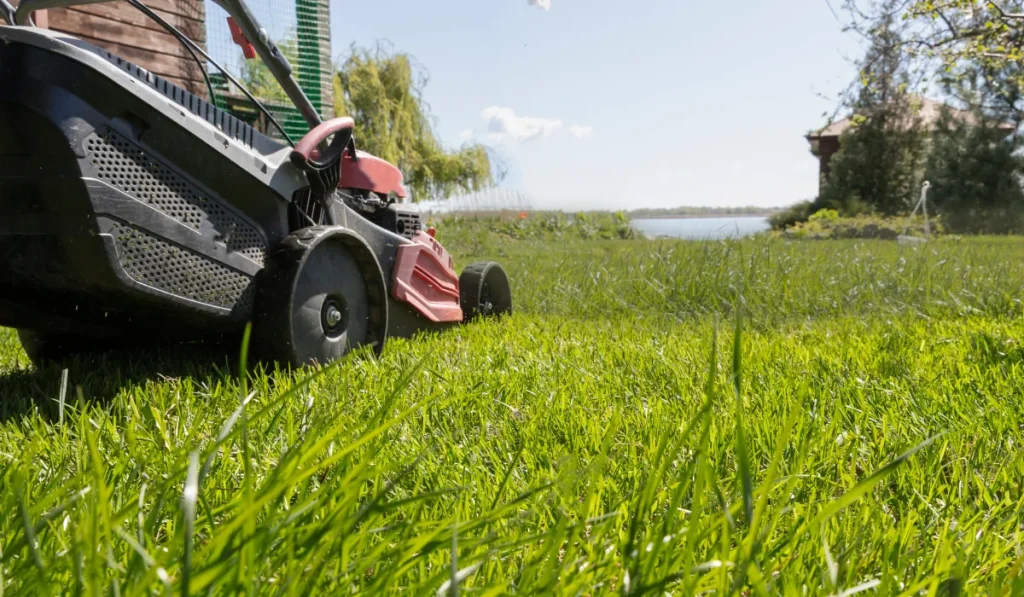
Wait Until Roots Develop Before Mowing
The first mow should not happen too early.
UC IPM notes that sod may be ready for mowing within two to three weeks of planting. Rooting and turf height matter more than the calendar alone.
Before mowing:
- Perform a gentle root test.
- Confirm that the sod resists lifting.
- Let the surface dry enough to support the mower.
- Use sharp blades.
- Set the correct mowing height for the grass type.
- Avoid removing more than one-third of the grass blade.
- Turn carefully.
- Avoid tearing seams.
- Watch for soft areas.
- Remove clumps if they remain on the lawn.
Use the lightest practical mower for the property during the first cut.
Do not mow saturated sod.
Limit Heavy Equipment
New lawns should not support heavy equipment until the turf and soil are stable.
Avoid driving or rolling these items across new grass:
- Wheelbarrows
- Lawn tractors
- Riding mowers
- Loaded carts
- Construction equipment
- Delivery dollies
- Large aerators
- Dethatchers
- Vehicles
If equipment must cross the property, use a hardscape route whenever possible.
For necessary access during installation, use temporary plywood to distribute weight and remove it promptly.
Do Not Aerate New Sod Too Soon
Aeration can help an established compacted lawn, but it is not appropriate during early sod establishment.
Core aerators remove plugs of soil and create mechanical pressure across the turf. Running one over new sod can shift pieces and tear developing roots.
Wait until the lawn is established before aerating.
If the soil was compacted before installation, the better time to correct that problem was during site preparation.
Avoid Dethatching Fresh Sod
Dethatching equipment can damage a lawn that has not rooted fully.
Fresh sod needs time to develop a stable connection with the soil.
Do not use a dethatcher simply because the lawn looks uneven during the first few weeks. Inspect irrigation, seams, and rooting first.
A thatch issue is more relevant to an established lawn than a newly installed one.
Check for Foot-Traffic Damage
Early damage is easier to repair when you catch it quickly.
Inspect the lawn for:
- Footprints
- Sunken sections
- Open seams
- Flattened grass
- Muddy spots
- Bare patches
- Soil exposed between sod pieces
- Torn turf
- Pet paths
- Wheel marks
- Thin sections near entrances
Compare damaged areas with the watering pattern and common traffic routes.
A footprint in soft turf may point to too much irrigation. An open seam near a gate may point to repeated walking. A thin patch along a path may need a temporary barrier.
Repair Minor Damage Early
Small areas often respond to quick attention.
For Shifted Sod
Gently move the piece back into position when possible. Press it into contact with the soil and water according to the establishment plan.
For Open Seams
Check whether the area dried out or shifted. Add clean soil only when a small leveling adjustment is needed. Use matching sod for larger openings.
For Footprints
Allow the area to dry enough for safe access. Level minor impressions carefully if needed and keep traffic away.
For Thin Turf
Check irrigation coverage, soil contact, pet use, and repeated traffic. Give the lawn time to recover before deciding whether patching is necessary.
For Bare Spots
Prepare the soil and use matching sod when the grass does not fill the area. Correct the source of the damage first.
Protect a Seeded Lawn From Foot Traffic
A seeded lawn requires extra patience.
Seed can move, wash away, or become buried unevenly when people walk across the soil.
Protect the site by:
- Using visible barriers
- Avoiding unnecessary access
- Watering gently
- Keeping pets away
- Removing debris before planting
- Using hardscape paths
- Delaying mowing
- Watching for erosion
- Repairing thin sections promptly
Do not walk across the seedbed to inspect every small area. Observe from the edges when possible.
If access is unavoidable, step carefully along a designated route.
Reopen the Lawn Gradually
A rooted lawn can begin handling light use before it is ready for heavy traffic.
Use a gradual approach.
Stage 1: Essential Access Only
During the first establishment period, allow only necessary access for irrigation checks and repairs.
Stage 2: Light Foot Traffic
Once the sod resists gentle lifting and the ground feels stable, allow occasional walking.
Avoid running, sports, furniture, and repeated use of the same route.
Stage 3: Normal Household Use
Once the lawn has rooted evenly, completed its first mowing sessions, and no longer shifts underfoot, allow more regular activity.
Continue monitoring high-traffic areas.
Stage 4: Heavy Use
Delay parties, sports, play equipment, and repeated high-traffic activity until the lawn is well established.
If the lawn will receive frequent use long term, choose a grass type suited to that level of wear.
Choose a Sod Variety That Fits the Property
Traffic protection matters during establishment, but turf selection matters after the lawn opens for normal use.
California lawns vary widely. A coastal yard, inland property, shaded side yard, and frequently used play area may need different turf varieties.
UC IPM notes that turfgrass species vary in their tolerance to temperature, shade, drought, and wear. Selecting grass suited to the local conditions supports denser growth and helps the lawn recover from use more effectively.
SodLawn provides sod delivery and installation throughout California. Enter your ZIP code to compare sod varieties available near your property and review options suited to the yard.
Consider:
- Sun exposure
- Shade
- Climate
- Water needs
- Expected foot traffic
- Pet use
- Mowing preferences
- Lawn size
- Soil conditions
- Irrigation coverage
A turf variety suited to the property is easier to maintain after establishment.
Plan for Long-Term Traffic Patterns
Some lawn damage comes from the design of the yard rather than the grass itself.
People naturally take the shortest route between a door, gate, patio, driveway, and sidewalk. Pets often follow the same path.
If one route receives constant wear, consider:
- Adding stepping stones
- Installing a defined walkway
- Widening an existing path
- Redirecting traffic
- Moving furniture
- Creating a designated pet zone
- Repairing irrigation coverage
- Using a turf variety with suitable wear tolerance
- Reducing activity when the soil is wet
A lawn should not be expected to function as a permanent walkway without showing wear.
Avoid Common New-Lawn Mistakes
Avoid these mistakes:
- Assuming green sod is ready for immediate use
- Allowing daily shortcuts across the lawn
- Letting pets run across soft turf
- Overwatering until footprints remain
- Ignoring open seams
- Placing furniture on the lawn too soon
- Mowing before roots develop
- Using heavy equipment on new turf
- Aerating too early
- Dethatching fresh sod
- Installing play equipment immediately
- Allowing parties before the lawn is stable
- Repairing damage without correcting the cause
- Choosing sod without considering future traffic
A short protection period can prevent weeks of repair work.
Build a Simple Foot-Traffic Protection Checklist
Use this checklist after installing a new lawn:
- Water according to the sod-care plan.
- Prevent runoff and saturated soil.
- Place temporary barriers at common entry points.
- Use hardscape paths whenever possible.
- Create one controlled route for essential access.
- Use plywood briefly when necessary.
- Redirect pets to a temporary bathroom area.
- Keep children and visitors off the turf.
- Avoid furniture and heavy equipment.
- Inspect seams and edges every few days.
- Check for footprints and muddy areas.
- Perform a gentle root test.
- Wait until the sod anchors before mowing.
- Reopen the lawn gradually.
- Monitor high-traffic zones after normal use begins.
- Patch damaged areas only after correcting the cause.
Know When the Lawn Needs More Than Rest
Some damaged lawns need repair rather than more waiting.
A broader renovation may make sense when:
- Large sections shifted after installation
- Seams remain open
- Soil stayed saturated for an extended period
- Footprints created deep depressions
- The lawn did not root evenly
- Irrigation coverage remains poor
- The grade needs correction
- Soil compaction was not addressed before installation
- Pet paths have become bare
- The turf variety does not suit the property
- Several repair attempts have failed
Correct the underlying issue before installing replacement sod.
New turf can develop the same damage when traffic, irrigation, and soil problems remain unchanged.
Start Your California Lawn Project With SodLawn
A new lawn needs a short period of protection before it can handle everyday activity. Limiting traffic, managing irrigation, checking the roots, and reopening the yard gradually can prevent damage while the turf establishes.
SodLawn provides sod delivery and installation for residential and commercial properties throughout California. Enter your ZIP code to view sod varieties available in your area and plan your lawn project.
Frequently Asked Questions
How Long Should I Stay Off New Sod?
Limit traffic during the first few weeks. Sod often begins rooting within ten to fourteen days, but the turf condition matters more than the calendar. Use a gentle root test before allowing regular use.
How Do I Know Whether New Sod Has Rooted?
Lift a corner gently. If the sod resists lifting, roots have started growing into the soil. Check several areas because rooting may happen unevenly.
Can I Walk on New Sod To Water It?
Use a hose, sprinkler system, or hardscape path whenever possible. If essential access is needed, use a temporary plywood route to distribute weight and remove it afterward.
When Can Children Play on New Sod?
Wait until the sod has rooted evenly, the soil feels stable, and the lawn has begun handling normal mowing. Reopen the yard gradually before allowing running, games, or heavy play.
Can Dogs Walk on New Sod?
Limit pet traffic during establishment. Guide dogs to a designated temporary area, avoid letting them run across wet turf, and inspect common routes for footprints or open seams.
Should I Mow New Sod Before Walking on It?
Wait until the sod has rooted and the surface is dry enough to support the mower. UC IPM notes that sod may be ready for mowing within two to three weeks of planting, depending on establishment.
Can Too Much Water Make Foot-Traffic Damage Worse?
Yes. Saturated soil is easier to compact and may hold footprints or depressions. Keep sod moist while roots develop, but stop irrigation before puddles or runoff appear.
Should I Put Furniture on New Sod?
Wait until the lawn has rooted and the surface feels stable. Add furniture gradually, avoid placing heavy items on wet soil, and move objects periodically.
Can I Aerate New Sod?
Do not aerate fresh sod. Wait until the lawn is established. Aeration equipment can shift turf pieces and damage developing roots.
What Should I Do if New Sod Develops Bare Spots?
Check irrigation, foot traffic, pet use, soil contact, and open seams. Repair the cause first, then patch larger bare sections with matching sod when needed.