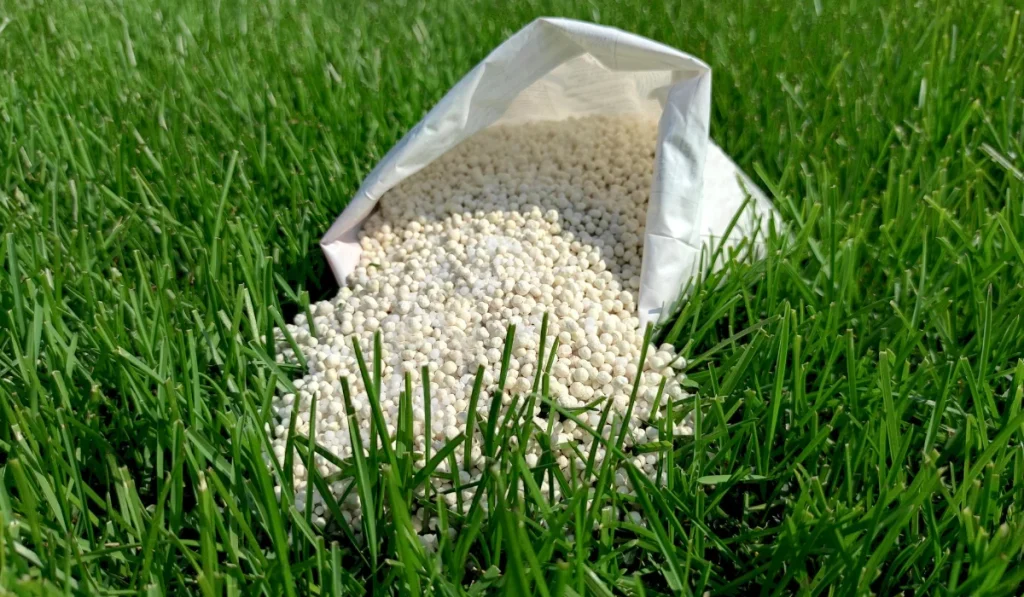
Starter fertilizer can help a new Orange County lawn establish a stronger root system, but timing matters. The best place for starter fertilizer is usually the prepared soil before sod, seed, or another planting method goes down. It should support root development without pushing excessive top growth or washing into sidewalks and storm drains.
If you are using starter fertilizer for new grass, begin with the soil. Check the planting method, measure the lawn area, read the fertilizer label, and follow the recommended application rate. After the lawn has established, move to a regular fertilization plan based on the grass type and active growing season.
Key Takeaways
- Apply starter fertilizer during soil preparation before planting new grass.
- Incorporate the fertilizer into the top two to four inches of the root zone when preparing a new lawn site.
- Use a soil test when possible to identify nutrient needs before applying fertilizer.
- Measure the lawn area and calculate the application rate carefully.
- Avoid applying more fertilizer than the label recommends.
- Sweep spilled granules from sidewalks and driveways instead of washing them into the street.
- Water carefully after installation and stop before runoff begins.
- Wait until the lawn has established before starting a regular nitrogen-fertilization routine.
- Check your local Orange County water provider’s current rules before changing irrigation timing.
What Is Starter Fertilizer?
Starter fertilizer is a fertilizer blend used when establishing new grass. It is commonly applied before laying sod, spreading seed, or planting plugs, sprigs, or stolons.
The UC IPM starter-fertilizer guide recommends applying starter fertilizer before turf establishment and incorporating it into the root zone. This places nutrients where the developing roots can reach them.
Starter fertilizer is different from the regular fertilizer used on an established lawn. A new lawn needs help forming roots and connecting with the soil beneath it. An established lawn needs a seasonal feeding routine matched to its grass type and growth cycle.
Why Starter Fertilizer Matters for New Grass
New grass has a limited root system.
Fresh sod arrives with an existing layer of roots, but those roots still need to grow into the prepared soil below. Seeded lawns begin with an even more delicate root structure. Plugs and sprigs also need time to spread.
Starter fertilizer can support this early stage when it is used correctly. The goal is steady establishment, not rapid leaf growth.
Applying too much nitrogen can create problems. Excessive top growth may increase mowing and watering needs before the roots have developed fully. A poorly measured application can also burn grass or create uneven growth.
Treat starter fertilizer as one part of the installation process. Soil preparation, irrigation coverage, sod quality, planting timing, and early maintenance matter just as much.
Start With a Soil Test When Possible
A soil test can help remove guesswork.
The UC IPM nutrient-deficiency guide explains that professional soil analysis may be needed to determine which nutrients are lacking and what should be added to maintain suitable soil conditions.
A soil test can help answer questions such as:
- Does the site need phosphorus?
- Is the soil pH suitable for turfgrass?
- Are amendments needed before planting?
- Does the soil drain properly?
- Is the site compacted?
- Does the planting plan need to account for sandy or clay-heavy soil?
Do not assume that every lawn needs the same fertilizer formula. Soil conditions can vary between Orange County properties, even within the same neighborhood.
Read the N-P-K Numbers on the Label
Fertilizer bags display three numbers separated by hyphens, such as 5-10-5 or 10-20-10.
These numbers represent the percentage of:
- Nitrogen
- Phosphorus
- Potassium
Nitrogen supports leaf growth and green color. Phosphorus supports root development. Potassium contributes to overall plant function and stress tolerance.
Starter fertilizers commonly contain phosphorus because root development matters during establishment. However, the right formula still depends on the site, the grass type, the planting method, and any soil-test recommendations.
The UC IPM starter-fertilizer guide lists several example formulations, including 5-10-5, 16-20-0, 10-20-10, and 5-20-10.
Do not select a product simply because it has the highest numbers. Read the label, calculate the amount needed for the lawn area, and avoid applying more than recommended.
How Much Starter Fertilizer Should You Apply?
The application rate depends on the product formula and lawn size.
UC IPM recommends applying no more than one pound of nitrogen and at least one pound of phosphorus per 1,000 square feet at planting time. A professional soil test may lead to a more specific recommendation for the property.
The first number in the N-P-K ratio tells you the percentage of nitrogen in the fertilizer bag.
For example, a 10-20-10 product contains:
- 10 percent nitrogen
- 20 percent phosphorus
- 10 percent potassium
UC IPM lists an application rate of ten pounds per 1,000 square feet for a 10-20-10 starter fertilizer. That amount provides one pound of nitrogen and two pounds of phosphorus.
Always confirm the correct rate on the product label. Do not assume that the same quantity applies to every fertilizer blend.
Measure the Lawn Before Applying Fertilizer
Estimate the planting area before opening the fertilizer bag.
For a rectangular section:
- Measure the length.
- Measure the width.
- Multiply the two numbers.
- Record the total square footage.
For an irregular yard, divide the lawn into smaller sections and calculate each one separately. Add the totals together.
Accurate measurements help prevent two common mistakes:
- Applying too much fertilizer and stressing the lawn
- Applying too little and leaving uneven nutrient coverage
If the project includes planting beds, patios, sidewalks, or driveways, subtract those areas from the lawn total.
Apply Starter Fertilizer Before Laying Sod
For a new sod installation, apply starter fertilizer during soil preparation.
The UC IPM soil-preparation guide recommends working the soil, controlling weeds, adding amendments when needed, and incorporating starter fertilizer before final grading.
Use this sequence:
- Remove the old lawn, weeds, roots, and debris.
- Break up compacted soil and large clods.
- Add soil amendments only when needed.
- Measure and apply the starter fertilizer.
- Incorporate it into the top two to four inches of soil.
- Complete the final grading.
- Check that the surface remains firm and level.
- Confirm that irrigation coverage is working.
- Install sod promptly after delivery.
- Keep the sod moist while it develops roots.
The UC IPM sod-installation guide recommends keeping installed sod moist until it becomes well rooted, which often takes around ten to fourteen days.
Avoid pouring fertilizer directly onto fresh sod unless the product label and installation instructions specifically support that use.
Use Starter Fertilizer When Planting Grass Seed
Starter fertilizer can also support a newly seeded lawn.
Apply the fertilizer during soil preparation or at planting time, based on the product instructions and site conditions. The soil should be prepared, leveled, and firm enough to support seed contact without becoming heavily compacted.
After planting:
- Keep the soil moist without soaking it.
- Use gentle irrigation that does not wash seed away.
- Watch for runoff.
- Limit foot traffic.
- Avoid aggressive mowing.
- Wait until the grass is established before moving to a regular fertilization routine.
The UC IPM overseeding guide recommends applying starter fertilizer at planting time and using frequent, light irrigation to keep soil moist but not soaked while the grass establishes.
Seeded lawns usually need more time than sod before they can handle normal lawn use.
Use Starter Fertilizer for Patch Repairs
Starter fertilizer can also be useful when repairing bare sections of an existing lawn.
The UC IPM patch-repair guide recommends removing debris, breaking up the soil, addressing weeds, incorporating amendments when needed, adding starter fertilizer, and grading the surface before replanting.
Before patching:
- Remove dead grass and loose roots.
- Check for irrigation problems.
- Look for compaction.
- Identify mowing damage.
- Confirm that pet activity is not causing repeat damage.
- Work the soil.
- Add starter fertilizer carefully.
- Replant with matching sod or seed.
Correct the original problem before patching. New grass may fail again if dry spots, scalping, drainage problems, or heavy traffic remain unchanged.
Do Not Skip Weed Removal
Installing sod over an active weed problem can create trouble later.
The UC IPM preplant weed-control guide recommends checking the site for weeds before planting. Annual weeds are generally easier to manage than perennial weeds, which may regrow from underground structures.
Remove:
- Visible weeds
- Roots
- Rhizomes
- Tubers
- Old turf debris
- Loose plant material
If the site has a persistent weed problem, address it during soil preparation rather than after the new lawn goes down.
Sod can outcompete many weeds because it covers the soil quickly, but it cannot solve every preexisting issue.
Protect Orange County Waterways From Runoff
Fertilizer needs to stay on the lawn.
H2OC’s lawn and garden care guidance explains that over-irrigation, fertilization, pesticide application, and landscape maintenance can discharge pollutants into the storm-drain system.
This matters in Orange County because stormwater runoff can move from yards and hard surfaces into local waterways.
Use these precautions:
- Keep fertilizer off sidewalks and driveways.
- Sweep spilled granules back onto the lawn.
- Do not rinse fertilizer into gutters or storm drains.
- Avoid applying fertilizer when heavy rain is expected.
- Water carefully after installation.
- Stop irrigation before runoff begins.
- Repair broken sprinkler heads.
- Adjust overspray near patios, sidewalks, and streets.
- Store fertilizer in a closed, labeled container.
Different Orange County communities may receive water from different providers. Check your local agency’s current watering guidance before changing the irrigation schedule.
Use a Spreader for More Even Coverage
A spreader helps distribute dry fertilizer more consistently.
The UC IPM fertilizer-application guide recommends applying dry fertilizer evenly and preventing excess material from washing into storm drains.
For an even application:
- Read the product label.
- Set the spreader according to the instructions.
- Apply around the lawn edges carefully.
- Spread half of the fertilizer in parallel passes.
- Apply the remaining half in passes running perpendicular to the first set.
- Overlap wheel marks slightly to reduce striping.
- Sweep any spilled granules from pavement.
- Return unused product to its container.
Turn the spreader off when crossing sidewalks, driveways, patios, or other hard surfaces.
Check Irrigation Before the Sod Arrives
A new lawn needs reliable water coverage.
Run the irrigation system before applying fertilizer or installing sod. Watch every zone and check for:
- Dry corners
- Broken sprinkler heads
- Overspray onto pavement
- Water pooling in low spots
- Runoff
- Weak spray patterns
- Uneven pressure
- Areas hidden behind shrubs
- Narrow strips that receive too much or too little water
Fixing irrigation issues before installation is easier than lifting new sod later.
Fertilizer cannot compensate for poor watering. A section that stays dry may struggle even when nutrients are available.
Water New Grass Without Saturating the Soil
New grass needs consistent moisture while roots develop.
The UC IPM guide to irrigating new lawns recommends frequent, light watering during early establishment. The soil should remain moist without becoming saturated.
Watch for:
- Standing water
- Muddy patches
- Runoff
- Soft soil
- Dry seams between sod rolls
- Seed washing away
- Water reaching sidewalks or streets
As roots become established, shift gradually toward deeper and less frequent irrigation.
Avoid maintaining a shallow watering routine indefinitely. Established lawns benefit from deeper irrigation that encourages stronger roots.
Wait Before Starting the Regular Fertilizer Routine
Starter fertilizer and regular lawn fertilizer serve different purposes.
Once the lawn is established, begin the regular nitrogen routine. The UC IPM new-lawn care guide recommends applying nitrogen fertilizer:
- Around six weeks after planting sod, plugs, sprigs, or stolons
- Around four to six weeks after germination for seeded lawns
The regular schedule should match the grass type and active growing season.
Do not apply extra fertilizer automatically because new grass looks pale. Discoloration can also result from:
- Uneven irrigation
- Overwatering
- Dry soil
- Poor soil contact
- Compaction
- Root damage
- Mowing too early
- Mowing too low
- Pet activity
- Heat stress
Diagnose the cause before adding another product.
Avoid Overfertilizing New Grass
More fertilizer does not create a stronger lawn.
Overfertilizing can lead to:
- Fertilizer burn
- Yellow or brown patches
- Uneven growth
- Excessive leaf growth
- More mowing
- Higher water demand
- Runoff
- Nutrient loss
- Greater lawn stress
The UC IPM lawn-disease guide explains that excessive nitrogen, especially in fast-release form, can cause soft leaf and stem growth and increase the lawn’s susceptibility to certain diseases.
Follow the label. Measure the lawn. Apply only the required amount.
Avoid Weed-and-Feed Products During Establishment
A new lawn needs time to develop roots.
Weed-control products require careful timing because some herbicides can interfere with seed germination or damage young turf. Do not assume that a product designed for an established lawn is appropriate for sod, seed, plugs, or patch repairs.
If weeds appear:
- Pull small weeds by hand.
- Remove roots when possible.
- Limit soil disturbance around new turf.
- Confirm the grass type.
- Identify the weed.
- Read the full herbicide label before using any product.
- Check whether the product is approved for newly established grass.
The UC IPM weed-management guide explains that herbicide selection depends on the weed problem and the turfgrass species. Not every product can be used safely on every lawn.
Choose the Right Sod for the Property
Fertilizer works best when the grass variety fits the yard.
Orange County lawns can vary in sun exposure, shade, foot traffic, slope, irrigation, and maintenance needs. Before ordering sod, consider:
- How much sunlight reaches the lawn
- Whether pets or children use the area
- How often the lawn will be mowed
- Whether the property has narrow lawn strips
- How well the irrigation system covers the site
- Whether the lawn needs a warm-season or cool-season option
- Whether the yard has areas with heavy traffic
SodLawn lets customers compare sod varieties available by ZIP code. Its online catalog also includes an Elite Plus Sod & Seed Starter product. Check the product label and availability before adding fertilizer to a project.
Build a Simple Installation Checklist
Use this checklist before planting new grass:
- Measure the lawn area.
- Remove weeds, old turf, roots, and debris.
- Run the irrigation system.
- Repair sprinkler problems.
- Complete a soil test when possible.
- Choose the right sod or seed for the site.
- Read the starter-fertilizer label.
- Calculate the correct application rate.
- Incorporate fertilizer into the prepared soil.
- Complete the final grade.
- Install sod or plant seed promptly.
- Water carefully without creating runoff.
- Limit foot traffic during establishment.
- Wait until the lawn has rooted before starting regular maintenance.
- Begin the ongoing fertilizer routine at the appropriate time.
A careful installation process reduces the need for corrections later.
Know When To Ask for Help
Professional guidance can help when:
- The soil test reveals a nutrient imbalance
- The yard has drainage problems
- The property has extensive compaction
- Weeds keep returning after removal
- The irrigation system has poor coverage
- The sod variety is difficult to choose
- The site includes slopes or narrow strips
- The lawn has large bare areas
- Previous sod installations have failed
- You are unsure how much fertilizer to apply
It is easier to correct soil, irrigation, and grading issues before new grass is installed.
Start Your Orange County Lawn Project With SodLawn
Starter fertilizer for new grass works best as part of a broader installation plan. Prepare the soil, apply the product carefully, protect the yard from runoff, and give the lawn enough time to establish before beginning a regular feeding schedule.
SodLawn helps homeowners and commercial property managers compare sod options by location. Enter your ZIP code to view sod varieties available for your Orange County property and plan your lawn project.
Frequently Asked Questions
When Should I Apply Starter Fertilizer for New Grass?
Apply starter fertilizer during soil preparation before planting sod, seed, plugs, sprigs, or stolons. UC IPM recommends incorporating it into the top two to four inches of the root zone.
Can I Apply Starter Fertilizer on Top of New Sod?
Starter fertilizer is usually applied to the prepared soil before sod installation. Do not add fertilizer directly to fresh sod unless the product label and installation instructions confirm that the application is appropriate.
How Much Starter Fertilizer Do I Need?
The amount depends on the N-P-K formula and the lawn square footage. UC IPM recommends no more than one pound of nitrogen and at least one pound of phosphorus per 1,000 square feet at planting time. Follow the product label and use soil-test guidance when available.
What Does the N-P-K Ratio Mean?
The three numbers on the fertilizer bag show the percentages of nitrogen, phosphorus, and potassium. Nitrogen supports leaf growth, phosphorus supports root development, and potassium contributes to overall turf function.
Should I Water After Applying Starter Fertilizer?
Starter fertilizer used during site preparation should be incorporated into the root zone. After planting, water the new grass carefully to keep the soil moist without creating puddles or runoff.
When Can I Start Regular Fertilizing After Laying Sod?
UC IPM recommends beginning nitrogen fertilization around six weeks after planting sod, plugs, sprigs, or stolons. The schedule should match the turf variety and active growing season.
Can I Use Weed-and-Feed Fertilizer on New Grass?
Do not apply weed-and-feed products automatically. Some herbicides can interfere with establishment or damage young turf. Identify the weed, confirm the grass type, and read the full product label before using any weed-control product.