Does pool water kill grass? A few splashes from a properly maintained pool are unlikely to destroy an established lawn. Damage becomes more likely when the same area receives repeated overflow, large amounts of saltwater, filter backwash, or a spill involving concentrated pool products.
Chlorine often gets blamed first because it is the best-known pool sanitizer. In many cases, though, salt buildup, saturated soil, poor drainage, and existing turf stress play a larger role in lasting lawn damage.
The difference comes down to exposure. A small amount of pool water on a healthy, well-drained lawn is not the same as draining water onto one patch of grass or allowing overflow to follow the same route every week.
Does Pool Water Kill Grass?
Pool water can kill grass when the exposure is heavy, repeated, or concentrated. Occasional splash-out usually presents a lower risk because the water is spread over a wider area and does not remain around the roots for long.
Problems develop when pool water repeatedly collects in the same strip of lawn. The soil may stay wet, dissolved salts may accumulate, and stressed roots may struggle to take up water and oxygen. Grass that is already weakened by heat, drought, compaction, or poor soil may show damage sooner.
The type of pool also matters. Traditionally chlorinated pools and saltwater pools both use chlorine, but saltwater systems add another concern because sodium and chloride can remain in the soil after the active chlorine level declines.
Exposure Matters More Than a Yes-or-No Answer
When deciding whether pool water is bad for grass, look at the amount, frequency, and location of the exposure. A child splashing water onto the lawn for an afternoon creates a different situation from a pool overflowing into the same low spot after every cleaning or heavy rain.
The table below shows why those situations should not be treated alike.
| Type of Exposure | Main Lawn Concerns | Relative Risk |
|---|---|---|
| Occasional splash-out | Brief contact with diluted pool water | Lower |
| Repeated overflow | Ongoing moisture, salt buildup, and root stress | Moderate |
| Pool draining or backwash | Soil saturation, concentrated salts, debris, and erosion | Higher |
| Concentrated product spill | Direct tissue injury and handling hazards | High |
These risk levels are general. The actual result depends on the grass variety, soil drainage, weather, and condition of the lawn.
When Does Chlorine Damage Grass?
Chlorine can damage plant tissue when the concentration or contact time is high enough. However, properly maintained pool water contains far less chlorine than the concentrated products used to treat it.
The Centers for Disease Control and Prevention’s pool water guidance recommends a free chlorine level of 1 to 4 parts per million in swimming pools and a pH between 7.0 and 7.8. These figures describe proper pool maintenance. They are not a guaranteed safety threshold for every grass variety or soil type.
A brief splash from balanced pool water is less likely to cause lasting injury than repeated contact or a direct spill. Chlorine residual can decline as it reacts with sunlight and organic matter, but that does not remove concerns related to water volume, soil saturation, or dissolved salt.
Concentrated Pool Products Are a Different Risk
Concentrated pool products should never be treated like ordinary pool water. A direct spill may burn grass, create a safety hazard, and require cleanup steps that depend on the exact product.
Follow the label, keep people and pets away from the area, and use the manufacturer’s handling instructions. Avoid guessing at a cleanup method because adding water or combining products can make some situations worse.
Why Saltwater Can Cause More Lasting Lawn Damage
Saltwater pool grass damage may last longer because the problem does not end when the chlorine level drops. Saltwater pools still use chlorine for sanitation, but they produce it from dissolved salt.
The CDC’s guidance on saltwater pools explains that a salt chlorine generator converts dissolved salt into chlorine. This means water from a saltwater pool contains both chlorine and dissolved sodium and chloride.
Chlorine and chloride are not interchangeable. Chlorine is the active sanitizer. Chloride is a stable salt ion that can remain in the soil until enough clean water moves it below the root zone or carries it elsewhere.
As salt accumulates, grass roots have a harder time taking up water even when the soil appears moist. You may notice browned leaf tips, slower growth, thinning turf, or poor recovery after mowing and foot traffic.
Sodium can create a separate soil problem. In soils that are prone to structural damage, especially those with higher clay content, excess sodium can reduce infiltration and contribute to a sealed or compacted surface. Water may begin pooling instead of moving evenly through the root zone.
Grass and Soil Type Change the Outcome
Not every lawn responds to salt in the same way. Turf species differ in salt tolerance, and the soil determines how quickly salts move away from the roots.
Well-drained soil gives clean irrigation water a better chance to move salts downward. Compacted or poorly drained soil may hold them near the surface, where they continue affecting the grass.
Research on the use of saline water in turfgrass explains that turf response depends on the grass species, salt concentration, climate, drainage, and management. That is why there is no single salt level that predicts damage in every California yard.
Pool Splashing vs. Draining Water Onto a Lawn
Occasional splashing is usually the least concerning type of exposure. The amount is limited, the water often dries or drains quickly, and the affected area changes as people move around the pool.
Repeated overflow deserves closer attention. If water crosses the same edge of the deck or runs toward one low section of grass, moisture and salts can accumulate in a narrow band. The first signs may be thinning turf, brown leaf tips, or grass that grows more slowly than the surrounding lawn.
Draining a pool onto grass creates a much larger load. Even when the chlorine level is within a normal swimming range, the volume can saturate the soil, reduce oxygen around the roots, flatten turf, and wash soil away.
Filter backwash water is also different from ordinary splash-out. It may contain dissolved salts, suspended debris, and material collected by the filter. Check local city, county, or water-agency rules before draining or backwashing because approved disposal methods vary across California.
How to Tell What Damaged the Grass
Brown grass near a pool does not automatically mean chlorine damage. Heat, drought, pet urine, fertilizer burn, mower injury, compaction, and turf disease can produce similar symptoms.
Start by looking at the pattern. Pool water lawn damage often follows a splash zone, overflow route, drain path, or low area. A narrow strip beside the pool points toward repeated splash-out, while a larger downhill patch may indicate overflow or drainage.
Timing gives you another clue. If the grass changed soon after a spill, backwash event, or major overflow, pool water becomes a stronger suspect. If the decline developed across the entire lawn during hot weather, another cause may be responsible.
Check the soil as well as the grass blades. Crusting, standing water, slow infiltration, or a hard surface may point to salt or sodium problems. Brown color alone cannot confirm chlorine damage, so consider the full pattern before treating or replacing the turf.
How to Help Grass Recover From Pool Water Exposure
After a small spill of ordinary pool water, clean water can help dilute residual chlorine and move soluble salts away from the leaf surface. Apply only enough to rinse the grass and move the water through the soil when drainage is good.
Do not continue watering if the ground is already saturated. Waterlogged soil limits oxygen around the roots and can add another layer of stress. Give the area time to drain before deciding whether it needs more irrigation.
If saltwater, repeated overflow, or backwash reached the lawn, monitor the area for several days. Watch for worsening discoloration, weak new growth, standing water, or soil that no longer absorbs irrigation evenly.
A soil test can help identify salinity or sodium problems when damage continues. Where salts have accumulated, recovery may require improved drainage and careful leaching with clean water. Sodium-related soil problems may need a specific amendment, but gypsum should not be applied automatically without soil-test guidance.
Wait before removing the grass. If the crowns and roots are still alive, the lawn may recover once the source of stress is stopped. When the turf fails to regrow, correct the drainage or soil problem before reseeding or installing new sod.
How to Protect Grass Around a Pool
Prevention starts with directing water away from the lawn. Repair leaks, correct deck drainage, and keep overflow from following the same path into a low spot.
Test pool water regularly so chlorine and pH remain within the recommended range. Store concentrated products away from turf and handle spills according to the label.
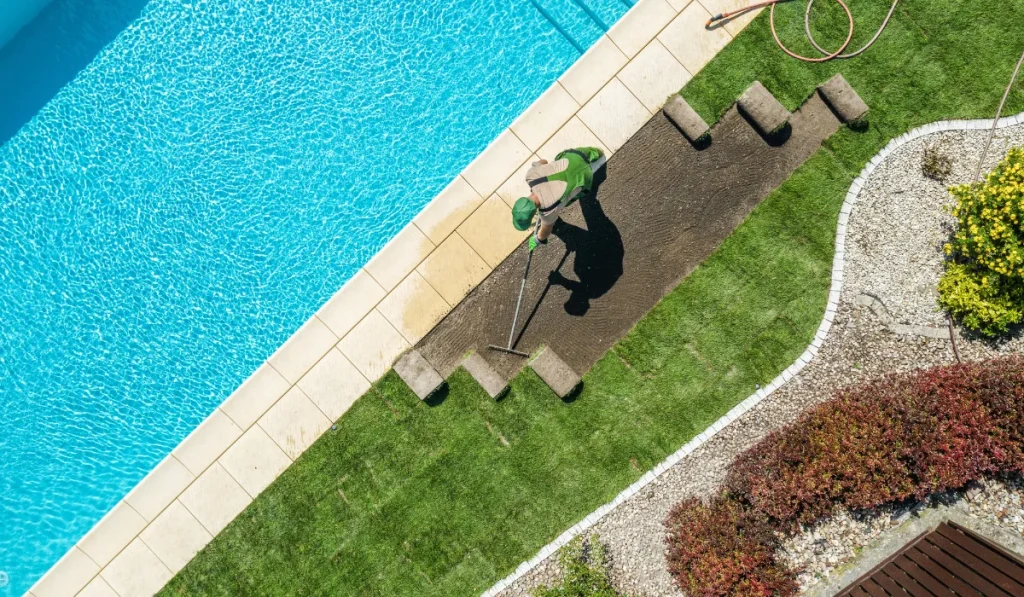
Where splash-out happens often, a wider hardscape, gravel, or other suitable border can protect the edge of the lawn. This buffer also reduces compaction from wet foot traffic and gives pool water a place to drain without repeatedly soaking the grass.
Before draining or backwashing, confirm the approved disposal method for your area. Avoid sending a large volume into one part of the yard, even when the water looks clear.
Keeping Pool Water and Lawn Care in Balance
Pool water can damage grass, but chlorine is not always the main cause. Repeated exposure, salt accumulation, saturated soil, and poor drainage often explain why turf near a pool turns brown or stops recovering.
Light splash-out from a balanced pool is usually less concerning than frequent overflow, concentrated spills, or large-volume drainage. Looking at the exposure pattern, soil condition, and type of pool water will help you choose the right response.
A poolside lawn also performs better when the grass fits the property’s sunlight, traffic, irrigation, and drainage conditions. SodLawn supplies sod for residential and commercial projects across California. For help choosing grass suited to a pool area or replacing turf after water damage, contact SodLawn for practical guidance.