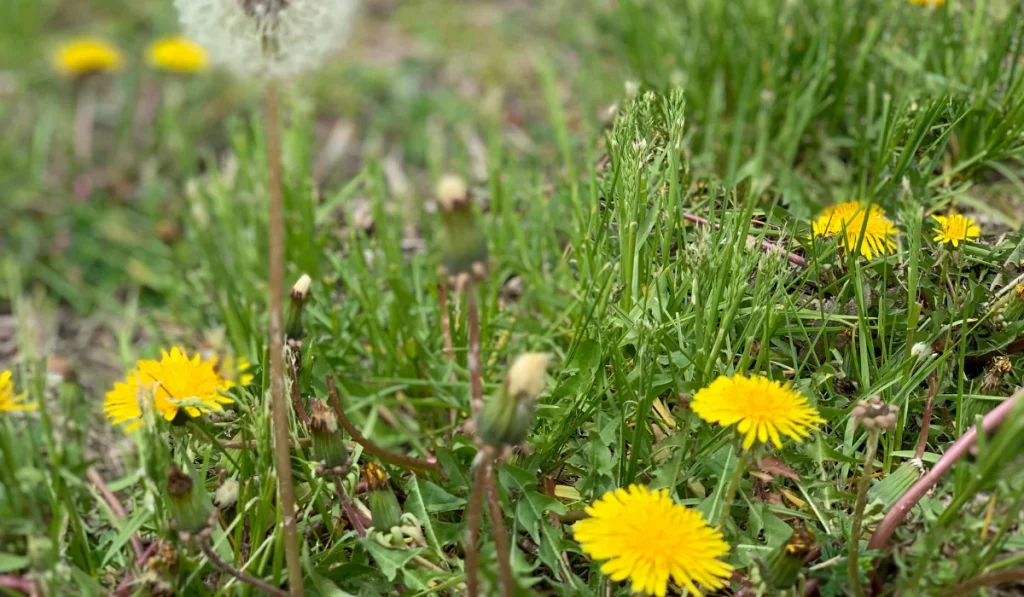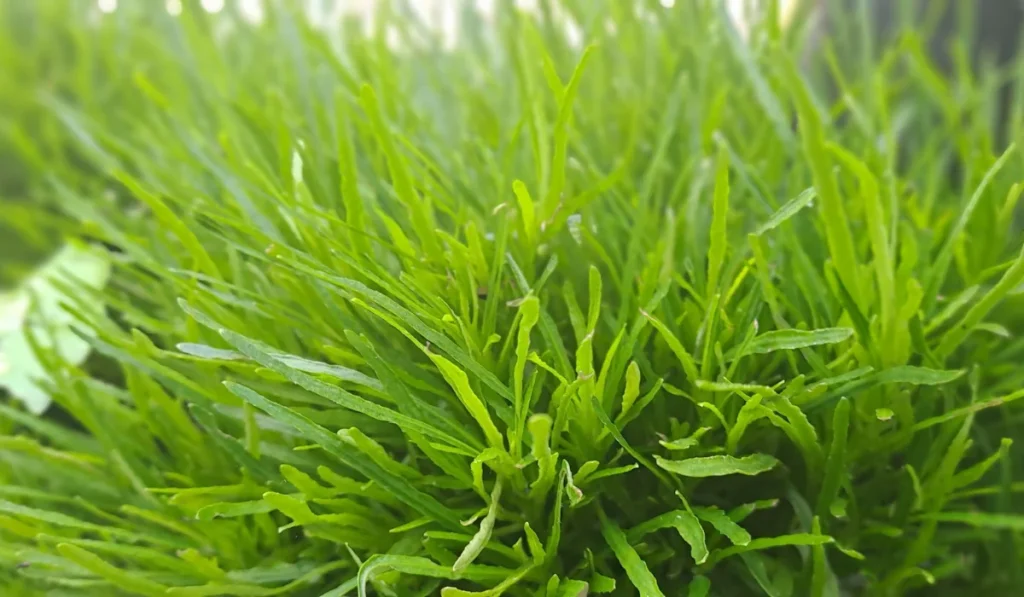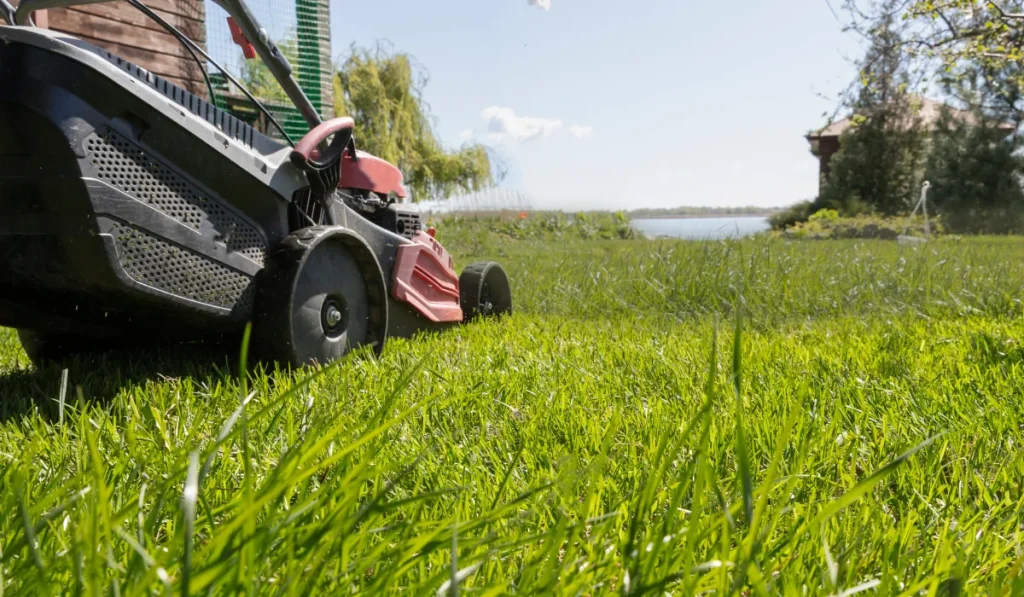
Overseeding can thicken a worn lawn, fill bare patches, and improve seasonal color. The first mowing plays a major role in how well that new grass continues to establish. Mow too early, and the mower can pull up shallow seedlings or leave tracks in soft soil.
The best answer to when to mow after overseeding is to watch the grass, not the calendar. Wait until most seedlings have reached the proper height, developed enough roots to resist light pulling, and are growing in soil firm enough to support a mower.
This approach works whether you are repairing a tall fescue lawn in the Central Valley or planting perennial ryegrass over Bermuda for winter color in Southern California. Grass type, temperature, moisture, sunlight, and soil conditions all affect how quickly the lawn becomes ready for its first cut.
When to Mow After Overseeding
Mow an overseeded lawn when the new grass is about one-third taller than the height you plan to maintain. For example, if your target mowing height is 3 inches, wait until most of the new growth reaches about 4.5 inches before cutting it back to 3 inches.
This method follows the one-third mowing rule, which limits how much leaf tissue you remove in a single cut. The University of Minnesota’s lawn mowing guidance recommends removing no more than one-third of the grass blade at a time to reduce stress on the turf.
Height is only one part of the decision. The seedlings should also be rooted well enough to remain in place under mower traffic, and the ground should feel firm rather than soft or saturated. If the grass has reached the right height but the seedlings lift easily or the mower would leave ruts, give the lawn more time.
How to Tell Whether New Grass Is Ready
The first mow after overseeding should begin with a close inspection of the lawn. Look for even growth across most of the seeded area rather than judging the entire yard by a few fast-growing patches. A small number of tall seedlings does not mean the rest of the lawn can handle mowing.
You can test root development by gently tugging a few seedlings in an out-of-the-way spot. Grass that has started establishing should resist light pressure instead of sliding out of the soil. This simple check works best when you use it with grass height, soil firmness, and overall coverage.
The table below can help you decide whether to mow or wait.
| Lawn Condition | What It Means | Recommended Action |
|---|---|---|
| Most seedlings have reached the proper height | The grass may be ready for a light first cut | Check rooting and soil firmness before mowing |
| Seedlings pull out with a gentle tug | Roots are still shallow | Wait and continue establishment care |
| Soil feels soft or mower wheels would sink | The surface is too wet or loose | Let the lawn dry before mowing |
| Only scattered patches are tall | Growth is still uneven | Give slower areas more time |
| Grass is dry and the soil supports foot traffic | Surface conditions are suitable | Mow carefully at the proper height |
The blades should be dry before you mow. Wet grass tends to bend instead of cutting cleanly, while damp soil can shift under mower wheels and disturb shallow roots. Let the surface dry enough to support the mower, but do not stop watering long enough for young grass to wilt.
How Grass Type Affects the First Mow
Different grasses establish at different rates, so a fixed waiting period will not work for every lawn. California properties may contain cool-season turf, warm-season turf, or a seasonal combination of both. The UC Integrated Pest Management turfgrass resources provide California-specific guidance on grass selection, establishment, irrigation, and mowing.
Perennial Ryegrass
Perennial ryegrass is often used for fall overseeding because it develops quickly under suitable conditions. In warmer parts of California, homeowners may plant it over Bermuda grass to maintain green winter color.
Even when ryegrass appears quickly, the seedlings still need time to anchor into the soil. Let the young ryegrass control the first-mow timing, especially when it is growing among established Bermuda that may already be tall enough to cut.
Tall Fescue
Tall fescue is common in many California home lawns and is usually maintained at a taller height than close-cut warm-season grasses. When you overseed tall fescue, allow the seedlings to produce enough leaf growth to support continued root development.
Avoid lowering the mower just to match surrounding grass that was cut short before overseeding. A light cut at the correct height protects the seedlings and helps the new growth blend into the existing lawn over the next several mowings.
Kentucky Bluegrass
Kentucky bluegrass generally establishes more slowly than perennial ryegrass, so uneven early growth is common. Some areas may look ready while other sections remain short or sparse.
Wait until the seeded area has developed broader, more consistent coverage. If the existing lawn becomes overgrown first, raise the mowing deck and make a light cut rather than bringing the entire yard down to its normal height at once.
Bermudagrass
Seeded Bermudagrass needs warm growing conditions and active soil temperatures. It is usually planted during warmer parts of the year rather than during the cool-season overseeding period used for ryegrass.
If you are establishing Bermudagrass from seed, use the same readiness checks: proper height, rooted seedlings, firm soil, and dry blades. If ryegrass has been planted over existing Bermuda, protect the younger ryegrass when deciding when and how low to mow.
How to Mow After Overseeding Without Damaging Seedlings
Prepare the mower before it touches the lawn. A sharp blade makes a clean cut, while a dull blade can tear tender leaf tips and leave the new grass looking ragged. Set the deck to the highest appropriate height for the grass and avoid removing more than one-third of the blade.
Plan the mowing around irrigation. During early establishment, the upper soil layer may need regular moisture, but the lawn surface should be dry when you mow. Adjust the watering time so the grass and soil can dry before mowing, then resume irrigation based on the seedlings’ condition.
Move slowly in straight passes and avoid tight turns over newly seeded areas. Pivoting sharply can twist mower wheels into soft soil and pull at shallow roots. When possible, make turns on a driveway, sidewalk, or established part of the lawn.
A lighter mower can reduce pressure on soft ground. Try to complete the job with as few passes as possible, since repeated traffic adds stress to the seedlings.
Short, dry clippings can remain when they spread evenly across the lawn. Remove heavy piles or wet clumps because they can block light and trap moisture over the young grass.
Common First-Mow Mistakes
The most common mistake is choosing a mowing date before seeing how the grass develops. Advice such as waiting a certain number of weeks cannot account for species, temperature, irrigation, shade, or soil conditions. Use the lawn’s height and establishment as your guide.
Cutting too low can also slow progress. Young grass needs enough leaf area to support continued growth, and removing too much at once can leave the lawn thin and uneven. Raise the mower for the first cut, then reduce the height gradually during later mowings if the grass type calls for it.
Mowing wet soil creates another avoidable problem. A mower can leave wheel tracks, compact soft areas, and disturb seedlings that have not fully rooted. Check soil firmness before mowing, especially in low spots or shaded areas that stay damp longer.
Heavy foot traffic can cause damage even after the mower is put away. Keep children, pets, and equipment off the softest sections until the new grass has continued growing and the ground feels stable.
Lawn Care After the First Cut
The first mowing marks progress, but the overseeded lawn is still establishing. Continue mowing at a consistent height and follow the one-third rule during each cut. Regular, light mowing will help the new grass blend with the existing turf without placing unnecessary stress on either one.
Watering should change gradually as roots grow deeper. Early seedlings depend on moisture near the surface, while established turf benefits from watering that reaches farther into the root zone. Watch for wilting, uneven color, and areas that dry faster than the rest of the yard instead of following one rigid schedule.
Follow the seed and fertilizer labels before applying additional products. Timing can differ by grass type, formulation, soil condition, and what was applied during overseeding. The Iowa State University yard and garden resources offer practical guidance on lawn establishment and ongoing turf care.
Protecting Your New California Lawn
Knowing when to mow after overseeding comes down to three conditions: the new grass has reached the correct height, the seedlings have started anchoring into the soil, and the surface is dry and firm enough for mowing. Once those conditions are in place, a sharp blade, high mowing setting, and careful movement will help protect the new growth.
California lawns do not all develop at the same rate. Coastal moisture, inland heat, shade, grass type, and seasonal temperature changes can make two lawns seeded on the same day respond differently. Let the condition of your own lawn determine the timing.
SodLawn supplies sod, grass seed, fertilizer, and lawn tools for residential and commercial properties throughout California. For help choosing the right products or planning your next lawn project, contact the SodLawn team for guidance based on your property and growing conditions.