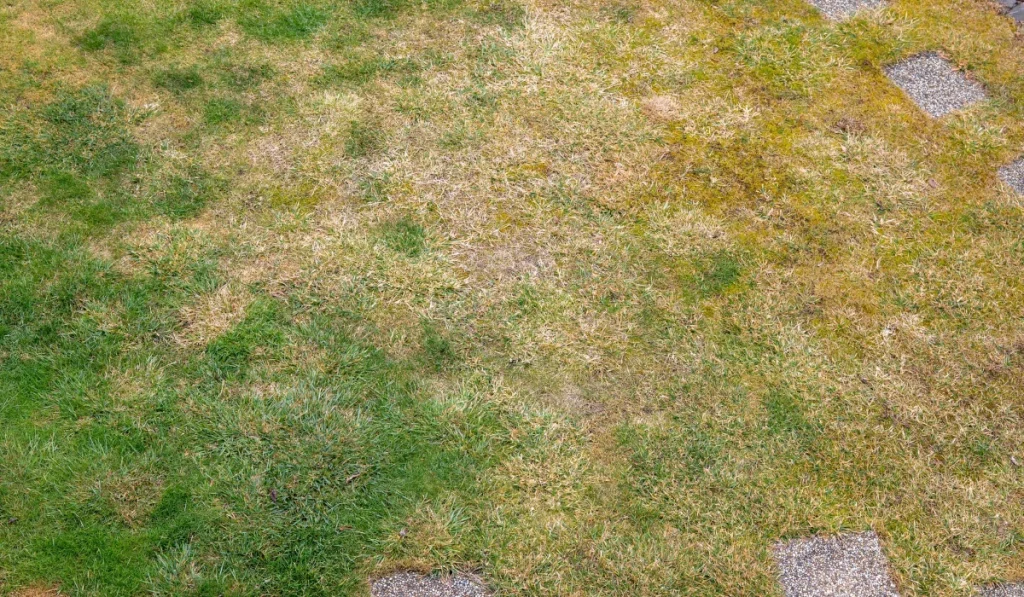
Yellow grass in July does not always mean your lawn is dying. In California, summer yellowing can come from uneven irrigation, intense heat, mowing damage, poor soil conditions, or a problem below the surface. The color may look similar, but each cause leaves a different pattern.
If you are wondering why your grass is turning yellow in summer, start by studying where the damage appears. Curved dry areas, frayed blade tips, widespread fading, hard soil, and expanding patches point in different directions. Treating the lawn before you identify the cause can waste water and place more stress on the turf.
A careful inspection will help you decide whether your lawn needs an irrigation adjustment, a mowing change, soil care, pest identification, or replacement. The five California culprits below cover the most useful places to begin.
Why Yellow Grass in July Needs a California Diagnosis
Yellow grass in July requires a local diagnosis because California lawns grow under very different summer conditions. Coastal properties may experience moderate temperatures and lingering moisture, while lawns in the Central Valley, Sacramento Valley, and Inland Empire can face hotter soil, dry air, and faster moisture loss. Turf type, shade, slope, soil texture, and nearby hardscaping also affect how quickly grass becomes stressed.
The California Irrigation Management Information System tracks reference evapotranspiration across the state. This information helps show why the same watering schedule may not suit a shaded coastal yard and a sunny inland lawn. Even within one property, turf beside a west-facing driveway may dry faster than grass protected from afternoon sun.
The first step is to determine whether the lawn is dry, overheated, cut too short, growing in poor soil, or losing root strength. More irrigation will not correct poor drainage, and fertilizer will not repair grass that was scalped during a hot week.
Five California Culprits Behind Yellow Grass in July
The most reliable way to diagnose yellow grass in summer is to match the visible pattern with a simple test. Look at the shape of the affected area, inspect the blade tips, check the soil below the surface, and compare the damaged turf with nearby healthy grass.
1. Uneven Irrigation and Drought Stress
Uneven sprinkler coverage often becomes more visible in July because hot weather exposes weak spots that were less obvious in spring. A misaligned sprinkler can leave a yellow arc, while poor overlap between two heads may create a narrow strip of dry grass. Clogged nozzles, low pressure, broken heads, and runoff on slopes can also leave roots short of moisture even when the system runs regularly.
Check the soil below the surface instead of relying only on how the lawn looks from above. You can place matching containers across an irrigation zone and run the sprinklers long enough to compare coverage. If one container collects much less water than the others, correct the spray pattern before increasing the watering time for the full zone.
Drought-stressed grass may show folded blades, a dull blue-green cast, or footprints that remain visible after you walk across the lawn. As the stress continues, the turf may turn yellow or straw-colored. These early clues are more useful than the number of minutes shown on the sprinkler controller.
2. Heat Stress or Summer Dormancy
Prolonged summer heat can cause large sections of turf to fade even when irrigation coverage is reasonably even. Cool-season grasses often struggle more during hot inland weather, especially in full sun or near pavement, walls, and driveways that absorb and reflect heat. Warm-season grasses usually respond differently and may hold their color longer under the same conditions.
A yellow or straw-colored lawn is not automatically dead. Grass may slow its growth or enter dormancy while the crowns remain alive. Before removing the turf, inspect the base of the plants for living tissue and check whether the roots still hold the soil together.
The location of the damage can help confirm heat stress. Uniform fading across a sunny section points more toward heat exposure than a sharp dry arc does. Yellowing concentrated beside concrete, on a south-facing slope, or near a reflective wall also suggests that heat is part of the problem.
3. Mowing Too Low or With a Dull Blade
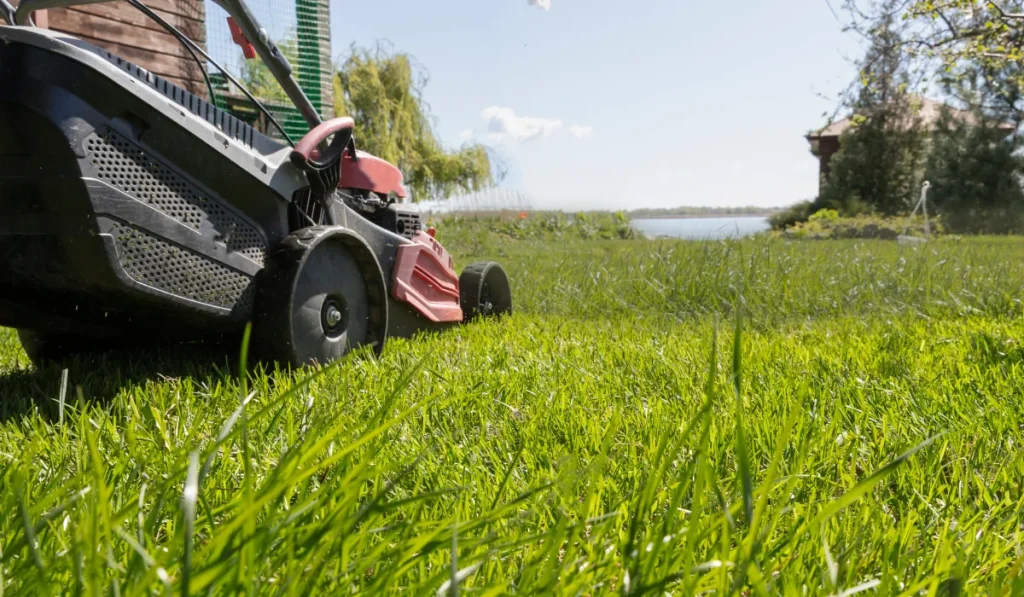
Grass that turns yellow shortly after mowing may have been scalped or torn. If the lawn grew tall between cuts and was then mowed very short, the mower may have removed too much green tissue at once. The exposed stems and crowns can make the lawn look pale, yellow, or brown.
The UC Integrated Pest Management turfgrass resources provide mowing guidance for California turf species. A standard lawn-care practice is to remove no more than one-third of the blade height during a single mowing. Cutting in smaller steps helps the grass maintain enough leaf surface to recover.
Dull mower blades create a different clue. Instead of leaving a clean edge, they tear the blade tips and produce a ragged appearance. Those damaged tips dry out and can give the entire lawn a yellow or tan cast.
Uneven ground increases the chance of scalping. A mower may cut high spots too closely while leaving nearby grass at the correct height. In July, those exposed sections can heat up and lose moisture faster than the rest of the lawn.
4. Compacted, Salty, or Nutrient-Poor Soil
Soil problems can cause yellow grass even when the irrigation schedule seems appropriate. Compacted soil restricts water movement and root growth, so irrigation may run off, pool near the surface, or fail to reach the deeper root zone. Heavy foot traffic, pets, construction work, and dense soil can all contribute.
A basic probe test can reveal useful information. After watering, push a screwdriver or soil probe into both the yellow area and a healthy section. If the tool enters the healthy soil easily but meets strong resistance in the damaged area, compaction may be limiting root growth and water movement.
Salt buildup can also affect turf where drainage is poor or repeated fertilizer use leaves salts in the root zone. Nutrient deficiencies may cause widespread fading or patterned discoloration, but several other lawn problems look similar. A soil test gives you more useful information than applying fertilizer based on color alone.
Do not assume every yellow lawn needs feeding. Check irrigation coverage, soil moisture, mowing height, and root condition first. Fertilizer cannot correct heat stress, shallow roots, or poor drainage.
5. Root-Feeding Insects or Summer Turf Disease
Root damage and turf disease should move higher on your list when irregular patches continue to expand after irrigation and mowing problems have been corrected. Damaged turf may feel loose underfoot or lift more easily because the root system has weakened.
Inspect the edge between healthy and yellow grass, where the problem is still active. Look near the soil line, examine the roots, and note whether the area is unusually wet or dry. Root-feeding insects, excess moisture, and poor drainage can create different symptoms, so identification matters before treatment begins.
The UC IPM turfgrass guides include California-specific information on lawn insects and diseases. Use the symptom descriptions and identification steps to narrow the cause rather than assuming that every spreading patch comes from the same problem.
How to Diagnose Yellow Grass Before Treating It
Start with the pattern, then confirm it with a simple inspection. The table below can help you choose the first test without jumping to a treatment.
| What You See | Most Likely Direction | First Check |
|---|---|---|
| Curved yellow areas or narrow dry strips | Uneven sprinkler coverage | Compare water collection across the zone |
| Broad fading in a sunny section | Heat stress or dormancy | Check turf type, crowns, and exposure |
| Frayed yellow tips after mowing | Dull mower blade | Inspect the cut edges of the grass |
| Pale stems after a low cut | Scalping | Compare mowing height on high and low spots |
| Hard soil with runoff or pooling | Compaction or drainage trouble | Probe the soil after irrigation |
| Irregular patches that keep spreading | Root or disease problem | Inspect roots and the soil line |
Once you identify the strongest clue, compare the damaged area with nearby healthy turf. Check whether both sections receive the same amount of sun, irrigation, foot traffic, and reflected heat. A difference in exposure often explains why one part of the yard turns yellow while the rest stays green.
Make one correction at a time. Adjust a sprinkler, sharpen the mower blade, raise the cutting height, or address a soil problem before making another major change. When several treatments begin at once, it becomes difficult to tell which action helped.
Local watering requirements also affect your options. The California Department of Water Resources water-use and efficiency program provides statewide guidance, while cities and water districts may set their own schedules and restrictions. Check with your local supplier before changing irrigation frequency.
Making the Right Lawn Repair Choice for Your California Property
Yellow grass in July can often recover when the cause is uneven irrigation, mild heat stress, or mowing damage. After you correct the problem, give the turf time to respond before deciding that it needs replacement. Recovery may appear patchy at first, especially where the roots have been stressed for several weeks.
Large dead areas, extensive root loss, or a grass type poorly matched to the site may call for patching or new sod. The best replacement turf should fit the property’s sun exposure, foot traffic, local climate, and water conditions rather than being chosen by color alone.
When you need help selecting grass for a California lawn, visit SodLawn to compare sod options for residential and commercial properties. You can also contact the SodLawn team for help choosing turf that fits your location, use, and maintenance goals.