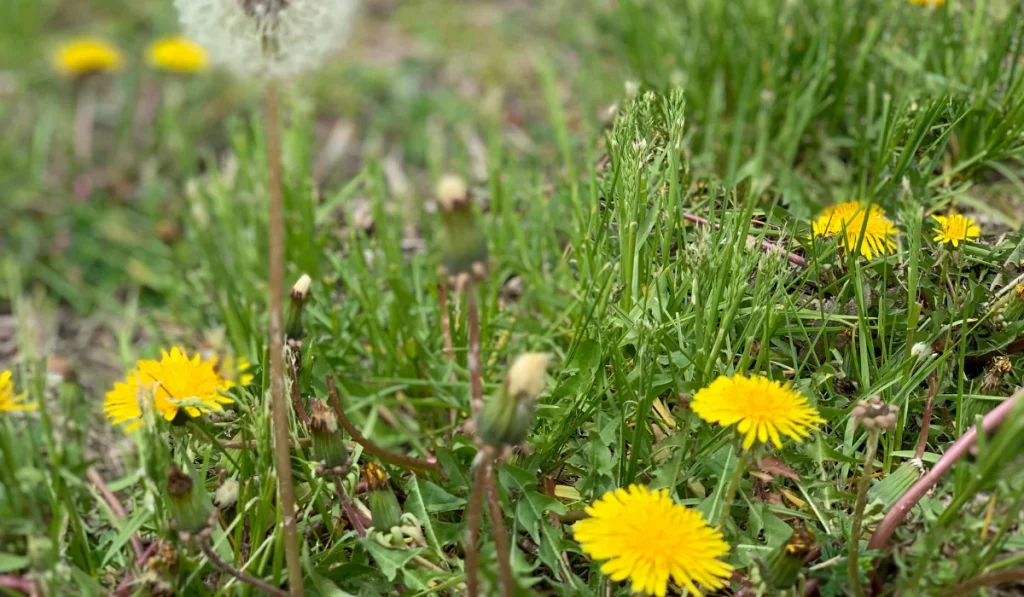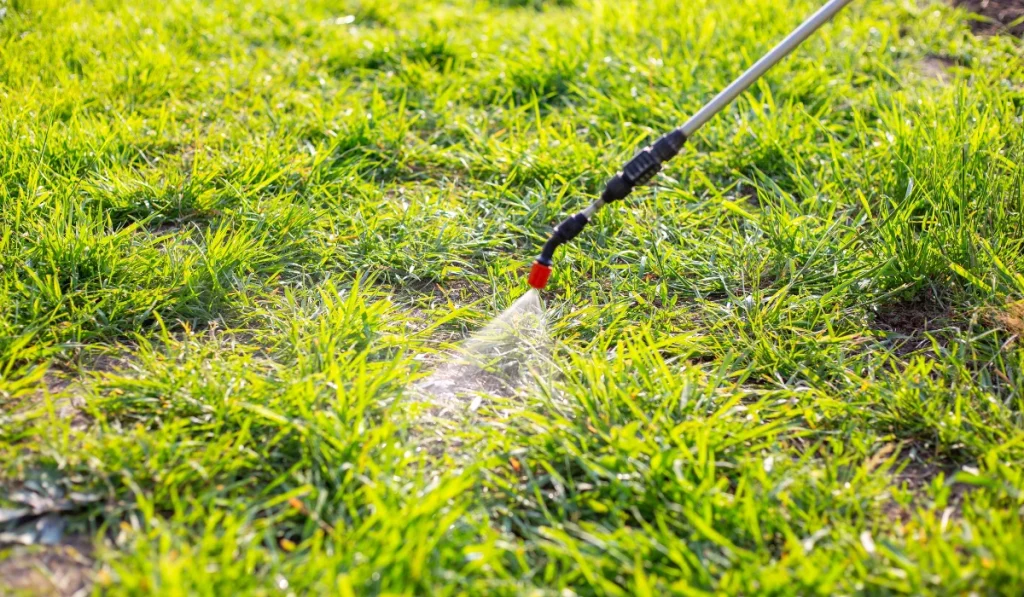
Liquid aeration promises a simple way to loosen soil, improve drainage, and help grass roots grow without running a heavy machine across your lawn. The appeal is easy to understand, especially when you want to avoid soil plugs scattered across the yard. Still, liquid aeration does not perform the same physical job as core aeration.
Depending on its ingredients, a liquid aeration product may help water spread through dry or water-repellent soil. Some formulas may also support broader soil-care goals over time. What a liquid treatment cannot do is remove compacted soil or create the open channels left by a hollow-tine aerator.
That difference matters across California, where lawns may grow in heavy Central Valley clay, sandy coastal soil, compacted construction fill, or mixed urban soil. Before choosing a treatment, you need to determine whether your lawn has a water-distribution problem, true soil compaction, or another issue such as poor grading or overwatering.
What Liquid Aeration Claims to Do
Liquid aeration is a broad marketing term for products that claim to improve soil structure, water infiltration, root growth, and lawn drainage. Most are applied with a hose-end sprayer or lawn sprayer, making them less disruptive than mechanical lawn aeration.
The category does not describe one standard formula. One liquid soil aeration product may rely on a wetting agent, while another may contain humic substances, gypsum, or a blend of soil conditioners. Since the ingredients and application rates vary, you cannot assume that every product will produce the same result.
Most liquid aeration claims fall into two groups. Some products say they help water move into and through the soil. Others suggest that repeated applications loosen compacted soil. The first claim may be reasonable for certain wetting-agent formulas. The second requires more scrutiny because compaction is a physical condition caused by reduced pore space.
A lawn may feel firm for several reasons. Dry soil can become hard, clay may resist penetration, construction can compress the soil profile, and repeated traffic can press the surface tighter over time. A liquid application will not address each of those causes in the same way.
Does Liquid Aeration Work on Compacted Soil?
Does liquid aeration work when soil has been pressed down by foot traffic, pets, mowing equipment, or construction? It may improve how water behaves near the surface, but it does not physically remove dense soil. That limits its ability to correct serious lawn soil compaction.
Compacted soil has less open space for air, water, and grass roots. Turf growing in it may develop shallow roots, thin growth, or worn paths that recover slowly. Water may also collect at the surface, although standing water can come from other causes, including poor grading, excessive irrigation, or a deeper drainage problem.
A liquid treatment cannot create lasting pore space simply by soaking into the ground. It may change wetting behavior or support soil processes, depending on the formula, but severe compaction usually calls for physical cultivation.
You can often spot compaction in areas that receive steady use. Paths between a patio and gate, sections where children play, and turf near driveways may thin faster than the rest of the yard. If those areas remain hard after irrigation and roots stay close to the surface, core aeration offers a more direct response.
Liquid Aeration vs. Core Aeration
Liquid aeration and core aeration are often presented as competing versions of the same service, but they work in different ways. Core aeration uses hollow tines to pull plugs from the ground, leaving open holes through the turf and upper soil layer. Liquid treatments leave the soil in place.
Minnesota Pollution Control describes aeration as the removal of soil cores. It also notes that effective treatment may require enough passes to create about 20 to 40 holes per square foot. That physical process creates space for water and air while reducing resistance in the treated zone.
The Colorado State University guide to lawn aeration explains that core aeration can reduce compaction and improve the movement of water, air, and nutrients into the root zone. Liquid aeration does not reproduce those holes, so it should not be treated as core aeration in a bottle.
| Feature | Liquid Aeration | Core Aeration |
|---|---|---|
| Removes soil plugs | No | Yes |
| Creates open channels | No | Yes |
| May improve water distribution | Depends on the formula | Yes, through physical holes |
| Lawn disruption | Low | Temporary holes and plugs |
| Equipment needed | Hose-end or lawn sprayer | Core aerator |
| Best use | Uneven wetting or supplemental soil care | Compacted, heavily used soil |
Core aeration does cause temporary disruption. You will see holes and plugs for a short period, and the work requires suitable equipment. Liquid lawn aeration is easier to apply and leaves no plugs, but convenience does not make the two methods equivalent.
What Common Liquid Aeration Ingredients Can Do
A liquid aeration product should be judged by its ingredients, not by the category name on the bottle. Wetting agents, humic substances, and gypsum have different purposes. None should automatically be treated as proof that a product can relieve physical soil compaction.
Wetting Agents
A wetting agent changes how water interacts with soil. It can help water spread more evenly through areas that resist moisture, reducing runoff or uneven wet and dry spots in some lawns.
This may help where irrigation beads on the surface or sections dry out despite regular watering. It does not mean the product has removed dense soil, corrected grading, or opened the root zone in the same way as core aeration.
A wetting agent can be useful when the problem is water repellency rather than compaction. If water enters the soil more evenly after treatment, the product may be doing its intended job. That result should not be described as evidence that the soil has been physically loosened.
Humic Substances
Humic substances are often included in soil conditioner products because they may influence soil and plant responses. Results vary based on the material, rate, soil, and growing conditions, so the presence of humic acid for lawns does not guarantee a specific outcome.
You may use a humic-based product as part of a broader soil-care program, but it should not replace diagnosis. If grass roots cannot penetrate a dense layer, improving general soil conditions is not the same as physically relieving that layer.
The label should explain what the product contains and how it should be applied. Broad promises about deeper roots or softer soil are less useful when the manufacturer does not identify the ingredients responsible for those effects.
Gypsum
Gypsum for lawns is often promoted as a way to break up clay soil. Its established use is more specific: it can help sodic soils where excess sodium has damaged soil structure.
Ordinary clay is not automatically sodic. Applying gypsum without knowing the soil condition may fail to address the real problem. A soil test provides better guidance than soil texture alone and helps you avoid treating the wrong issue.
When Liquid Aeration May Help
Liquid aeration may have a useful supporting role when water distribution is the main concern. A formula containing an effective wetting agent may help when irrigation runs off a dry surface, moisture spreads unevenly, or sections of turf develop recurring dry spots without clear signs of severe compaction.
It may also suit a lawn where you want a low-disruption soil conditioner between mechanical aeration treatments. In that role, the product supports a broader maintenance plan instead of replacing the treatment that removes soil cores.
Look closely at the label before applying anything. A reliable product should identify its ingredients, application rate, and intended outcome. Claims such as “loosens all soil types” provide less useful information than a clear explanation of how the formula affects water movement or soil conditions.
Liquid aeration is a poor match when the ground is hard from construction, traffic paths remain thin, roots stay shallow, or a screwdriver is difficult to push into moist soil. Those signs point toward physical resistance that a spray is unlikely to correct on its own.
Choosing an Aeration Method for a California Lawn
Choosing between liquid aeration and core aeration starts with the lawn, not the product. Consider the soil type, site history, traffic level, irrigation pattern, grass variety, and depth of healthy roots. These details tell you more than a general promise printed on a bottle.
A clay soil lawn in the Central Valley may hold water differently from sandy turf near the coast. A newer home may have compacted fill beneath a thin layer of topsoil, while an established residential lawn may only have a dry surface that resists water. Each condition calls for a different response.
Timing also matters. Turf recovers from core aeration best while it is actively growing. Cool-season grasses are generally treated during active spring or fall growth, while warm-season grasses are treated after growth begins in warmer weather.
New sod needs separate consideration because its roots must establish contact with the prepared soil below. Correcting compaction and grading before installation gives the new lawn a better foundation than trying to solve a severe soil problem after the sod is in place.
Making the Right Aeration Choice for Your California Lawn
Liquid aeration delivers less than many product claims suggest, but that does not make every formula useless. A suitable wetting agent may improve water distribution, and other soil conditioners may support an ongoing lawn-care program. Those benefits are different from removing compacted soil.
When your lawn has hard soil, worn traffic areas, or restricted roots, core aeration remains the more direct treatment. When the issue is uneven wetting, a carefully selected liquid product may help as a supplement.
Start with the condition beneath the grass, then choose the method that addresses it. For help selecting sod, seed, fertilizer, or lawn-care tools suited to California conditions, visit SodLawn or contact our team for guidance before your next lawn project.