A California heat wave can slow lawn growth, dry the soil surface, and leave grass more sensitive to a close cut. The right lawn mower height settings help you remove excess growth without taking away more leaf tissue than the lawn can replace under stressful conditions.
During hot weather, the safest approach is usually to mow near the upper end of the recommended range for your grass type. That does not mean setting every mower as high as it will go. Tall fescue, perennial ryegrass, bermudagrass, St. Augustinegrass, and zoysiagrass have different growth habits and should not be maintained at one universal height.
Before mowing, look at the lawn rather than the calendar. If the blades appear gray-green, stay flattened after foot traffic, feel brittle, or show little active growth, delay the cut. When the grass is upright, growing, and adequately hydrated, mow conservatively and remove no more than one-third of the blade.
How Lawn Mower Height Settings Affect Heat Stress
Lawn mower height settings determine how much green leaf tissue remains after each cut. Grass relies on that tissue to support growth, so an aggressive cut can leave the lawn with less capacity to recover while hot weather and dry soil are already slowing it down.
A slightly higher summer cut can also reduce scalping. Mowers often cut too low on raised soil, slopes, wheel tracks, and uneven sections of a yard. When the lawn is already under heat stress, those scalped patches may turn pale or brown faster than the surrounding grass.
The goal is not to grow every lawn as tall as possible. Each grass species performs best within a particular maintenance range. During a heat wave, move toward the upper end of that accepted range rather than adding an arbitrary inch to the mower setting.
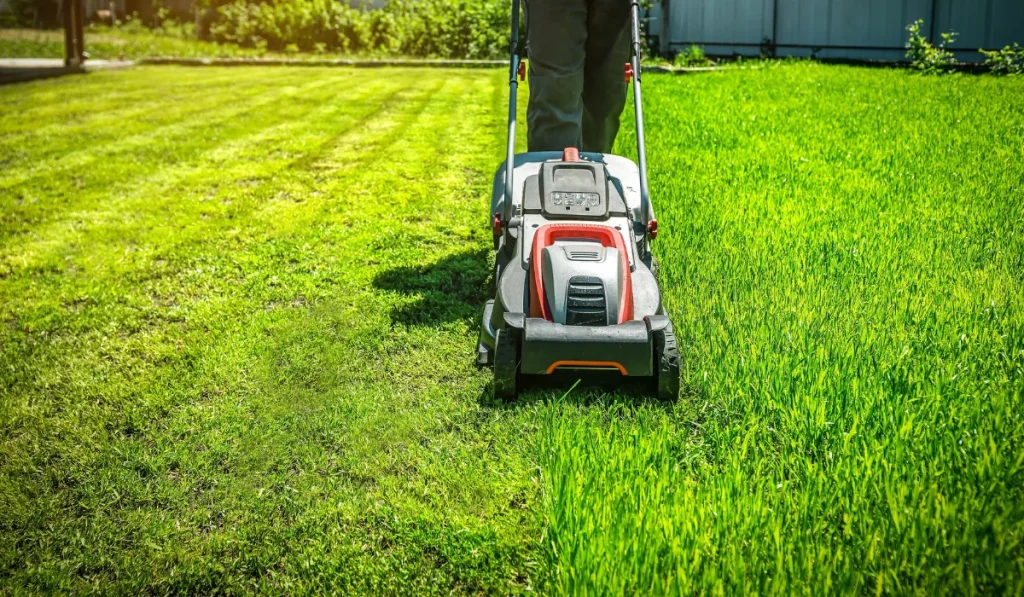
The one-third mowing rule offers a useful limit. Remove no more than one-third of the grass blade during a single cut. If the lawn grows taller than planned, lower it over two or more mowings instead of returning to the regular height all at once.
Best Lawn Mower Height Settings for California Grass Types
The best mowing height for hot weather starts with proper grass identification. Cool-season grasses are generally maintained higher than dense, spreading warm-season grasses. A setting that protects tall fescue may leave a bermudagrass lawn shaggy and uneven.
The following comparison shows how mowing decisions change by grass type. Exact cutting ranges should be confirmed with current California turf guidance and the recommendations for your specific sod variety.
| Grass Type | Typical Summer Approach | Heat-Wave Adjustment |
|---|---|---|
| Tall fescue | Maintain a taller canopy | Use the upper end of the recommended range and delay mowing if the lawn wilts |
| Perennial ryegrass | Keep enough leaf area for continued growth | Raise the setting within the approved range during extended heat |
| Common bermudagrass | Maintain a shorter, even cut | Avoid dropping below the established maintenance height |
| Hybrid bermudagrass, including TifTuf | Match the height to the mower type and lawn use | Keep the existing cut consistent and avoid sudden, severe reductions |
| St. Augustinegrass | Maintain a relatively high canopy | Favor the upper portion of the normal range during hot, dry periods |
| Zoysiagrass | Mow regularly enough to prevent excess buildup | Do not scalp after missed mowings or periods of slow growth |
The University of California Agriculture and Natural Resources is the most relevant starting point for California-specific mowing guidance. Its turf resources account for grass species, climate, irrigation, and regional growing conditions.
Warm-season lawns need particular care when adjusting mower height. SodLawn’s TifTuf maintenance guidance lists a broad mowing range of one-half inch to two inches, depending on the equipment and intended lawn finish. A closely maintained lawn may use a reel mower, while many residential yards rely on a rotary mower and a higher setting.
Do not assume the number beside a wheel lever equals inches. Mower markings often represent positions rather than an exact cutting height. A quick test cut gives you a more reliable measurement.
Should You Mow the Lawn During a Heat Wave?
You can mow during hot weather when the grass is actively growing, the soil has adequate moisture, and the lawn shows no obvious signs of stress. Use a sharp blade, choose a cooler part of the day, and keep the mower near the upper end of the proper range for that grass.
Delay mowing when footprints remain visible, blades fold or curl, the color shifts toward gray-green, or growth has nearly stopped. These are signs that the turf is conserving moisture. Cutting at that point may remove leaf area without giving the lawn enough time or moisture to replace it.
Brown or dormant grass usually does not need routine mowing because it is producing little new top growth. Mowing dormant turf can also create unnecessary wheel traffic and abrasion across dry blades.
Air temperature by itself should not decide whether you mow. The duration of the heat, nighttime temperatures, wind, soil moisture, and the lawn’s current condition all matter. Review local forecasts and heat alerts from the National Weather Service before planning outdoor work, especially when the hottest part of the day may create unsafe conditions for you as well as added stress for the lawn.
How to Adjust and Check Your Mower Deck Height
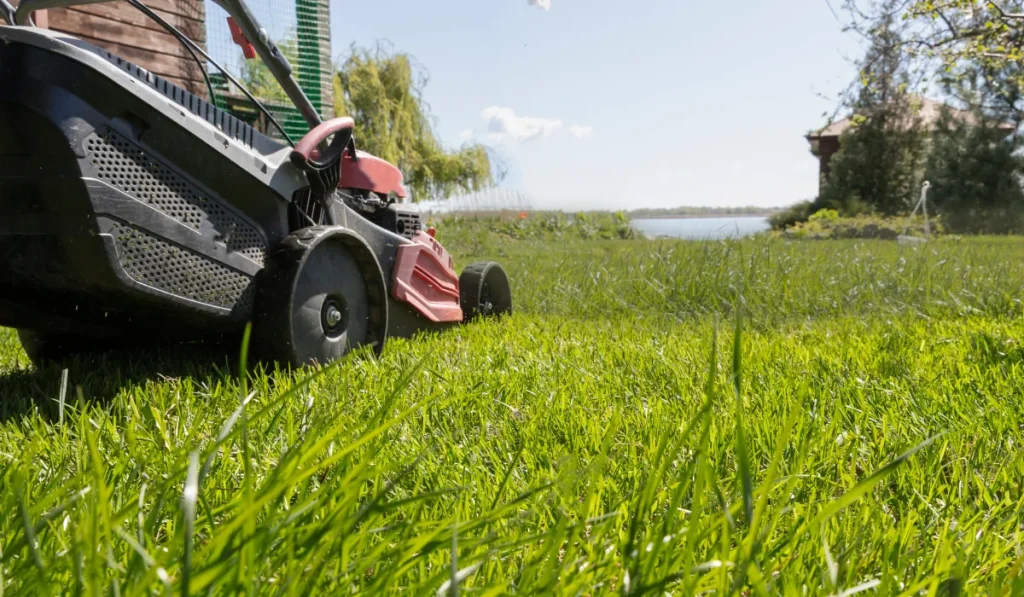
Set the mower on a flat, hard surface with the engine off. Check that the wheel or deck levers are even on all sides. One lower wheel can produce strips, expose stems, and scalp high areas even when the rest of the deck appears properly adjusted.
Make a test pass in a less visible section of the yard. Use a ruler to measure the grass that remains, checking several locations because soil level and turf density can vary. The actual height of the cut matters more than the lever number.
Blade condition also affects the result. A sharp mower blade produces a clean edge, while a dull blade tears the leaf and leaves pale, ragged tips. Those damaged tips can make a healthy lawn look dry shortly after mowing.
Clean built-up clippings from beneath the deck when the mower is safely shut down. Heavy buildup can interfere with airflow, reduce cutting quality, and leave clumps behind. During hot weather, an even cut is better than repeatedly passing over the same area to correct missed strips.
What to Do Before, During, and After Extreme Heat
Before the Heat Arrives
If the lawn is growing and due for mowing, cut it before the hottest weather begins. Keep the mower toward the upper end of the grass type’s normal range and follow the one-third rule. Avoid mowing extra short in an attempt to extend the time before the next cut.
Check irrigation coverage across the yard. Narrow strips, slopes, corners, and areas beside pavement often dry faster than the center of the lawn. Confirm that sprinkler heads are working properly and that water is reaching the root zone rather than running onto sidewalks or driveways.
Review current watering guidance from the California Department of Water Resources and your local water provider before changing an irrigation schedule. Outdoor watering rules may differ by city, county, and water district.
During the Heat Wave
Skip mowing when the lawn is wilted, dormant, or no longer producing noticeable growth. Keep heavy foot traffic, games, and equipment off visibly stressed sections because dry blades and crowns recover more slowly from wear.
When mowing is necessary, work during a cooler period and avoid cutting recently irrigated or wet grass. Wet clippings can form piles, clog the mower, and produce an uneven finish.
Ordinary clippings can remain on the lawn when they disperse in a thin layer. Break apart or collect heavy clumps that block light and press down the grass beneath them.
After Temperatures Ease
Wait for clear signs of recovery before returning to the usual mowing schedule. The grass should stand upright, show active growth, and regain a more consistent color. Check soil moisture before making the first post-heat cut.
Keep the mower high for that first pass. If your regular maintenance height is lower, bring the lawn down over later mowings while continuing to follow the one-third rule. This gradual approach protects shaded stems from sudden exposure and reduces the chance of scalping.
Heat-Wave Mowing Mistakes That Weaken a Lawn
One of the most common mistakes is cutting the lawn extra short so it will not need another mow for several days. This removes more leaf tissue at the same time the grass is coping with high temperatures and limited moisture. A conservative cut is more useful than a longer gap between mowings.
Another mistake is using the same setting for every lawn. Tall fescue, hybrid bermudagrass, and St. Augustinegrass require different maintenance approaches. Even two lawns planted with the same grass can respond differently because of shade, slope, soil, traffic, and irrigation coverage.
Mowing stressed grass with a dull blade creates another avoidable problem. The torn leaf tips lose their clean appearance, and repeated passes over the yard add traffic without improving the cut. Sharpen or replace the blade before the next mowing instead of lowering the deck to compensate.
Avoid dropping immediately back to a short setting after the heat ends. A lawn that has grown taller during a missed mowing should be lowered in stages. Cutting too much at once can expose stems, leave uneven patches, and remove the healthy canopy the grass used during the hot spell.
Protecting Your California Lawn Through the Next Hot Spell
Good summer mowing begins with matching the mower setting to the grass. Use the upper end of the approved range during extreme heat, follow the one-third rule, and delay mowing when the turf shows clear signs of drought stress or dormancy.
As temperatures ease, resume mowing gradually and watch how the lawn responds before making another adjustment. A grass variety suited to your property’s sunlight, foot traffic, and regional climate will also be easier to maintain through California’s hotter months.
For help choosing sod that fits your yard or commercial property, visit SodLawn to review available options. You can also contact the SodLawn team for guidance on grass selection, delivery, and care.