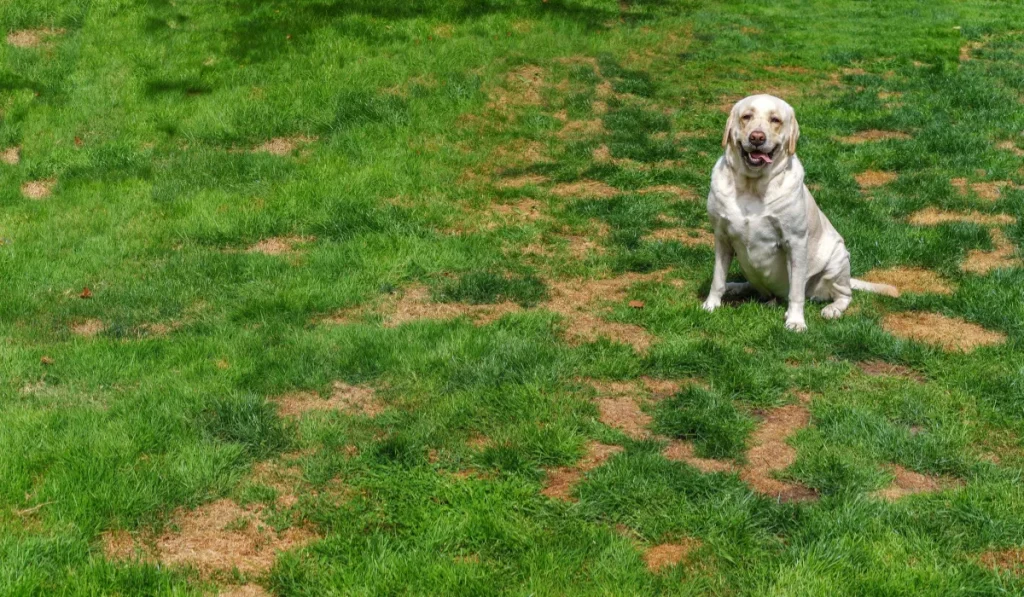
Dog spots can appear quickly on a Bakersfield lawn, especially when turf is already dry or under heat stress. The familiar pattern is usually a small brown or yellow center surrounded by a darker green ring. The center receives a concentrated dose of urine, while the grass around it receives a more diluted amount.
The best lawn rinse routine for dog urine is simple: rinse the affected patch soon after your dog urinates, use enough clean water to wet the spot and the surrounding grass, and stop before runoff begins. A targeted rinse can help flush salts through the soil without turning the entire lawn irrigation system on every time your dog goes outside.
Key Takeaways
- Rinse the affected grass soon after your dog urinates.
- Apply water directly to the spot and the surrounding turf.
- Stop before water pools or runs onto sidewalks and driveways.
- Use a hose, watering can, or small container for targeted rinsing.
- Do not rely on frequent full-lawn watering to manage isolated spots.
- Train your dog to use a designated area when possible.
- Repair dead patches only after you improve the rinse routine.
- Check Bakersfield watering rules before changing your regular irrigation schedule.
Why Dog Urine Leaves Spots on Grass
Dog urine can injure turf when it becomes concentrated in a small area. The damage often looks like a brown or yellow center with a darker green ring around it.
The UC Guide to Healthy Lawns describes circular dead patches surrounded by dark green grass as a common sign of dog-related lawn injury. The same resource recommends watering the affected area soon after urination to flush salts through the soil.
Not every dog spot becomes a dead patch. The outcome depends on several factors:
- The concentration of the urine
- The amount of moisture already in the soil
- The grass type
- The size of the affected area
- The frequency of repeat use
- The condition of the lawn before the damage occurs
- The weather during the days after exposure
A healthy lawn with consistent irrigation may tolerate occasional exposure better than grass that is already dry, thin, or stressed.
Why Dog Spots Can Become More Visible in Bakersfield
Dry turf is more vulnerable to concentrated urine damage.
A UC ANR lawn-problem guide explains that dog-urine injury occurs most often on dry lawns, especially during periods of high temperatures and prolonged drought. The article also notes that the severity depends on turf hydration, grass type, concentration, and water movement through the soil.
This matters in Bakersfield because a patch that might recover under moderate conditions can deteriorate faster when the surrounding lawn is already under stress.
A rinse routine should not replace regular irrigation. It serves a different purpose. Normal irrigation supports the full lawn. A spot rinse dilutes a concentrated deposit in one small area before the turf begins to show damage.
The Best Lawn Rinse Routine for Dog Urine
The routine works best when it is easy enough to repeat consistently.
Step 1: Identify the Spot Immediately
Pay attention to where your dog urinates. The sooner you rinse the area, the easier it is to dilute the concentration before the spot dries.
You do not need to inspect the entire lawn after each trip outside. Focus on the specific area your dog used.
Step 2: Apply Water Directly to the Patch
Use a hose with a gentle spray, a watering can, or a small container of clean water.
Cover the spot and a small ring of surrounding turf. The goal is to move the concentrated urine through the upper soil layer rather than leave it sitting on the grass and surface roots.
Avoid blasting the lawn with high pressure. A harsh spray can disturb soil, flatten the grass, and create muddy patches.
Step 3: Stop Before Runoff Begins
The rinse should stay within the lawn.
Stop when water begins to pool, move toward the sidewalk, or flow across the surface. More water is not automatically better. Oversaturating one section can create a separate lawn problem.
If the soil absorbs water slowly, use a smaller amount, pause briefly, and apply a little more only if needed.
Step 4: Check Repeated-Use Areas
Some dogs return to the same spot each day. A single rinse may not be enough if one area receives repeated exposure.
Watch for:
- Dark green rings
- Yellow grass
- Brown centers
- Bare soil
- Thin turf
- Muddy patches
- A section that stays wetter than the surrounding lawn
If the same area is deteriorating, guide your dog toward a different location or create a designated bathroom area.
Use Targeted Rinsing Instead of Turning On the Sprinklers
A small dog spot does not require a full irrigation cycle.
Running the entire sprinkler system after every bathroom break can waste water and create uneven lawn conditions. It may also increase runoff if the soil has already reached its absorption limit.
A targeted rinse gives you more control. You can apply water only where it is needed and avoid saturating healthy sections of the yard.
Your regular irrigation plan should still support deeper root growth across the lawn. UC IPM’s lawn-watering guidance recommends deep, less frequent irrigation for established turf rather than constant shallow watering.
Use each routine for its intended purpose:
- Spot rinse: A small, prompt application after urination
- Regular irrigation: A scheduled watering cycle for the full lawn
- Repair watering: Temporary moisture support for patched or newly installed sod
Follow Bakersfield Watering Rules
Outdoor watering rules can change, so check local guidance before adjusting the sprinkler schedule.
The City of Bakersfield Water Department states that no outdoor watering is permitted on Mondays. The city also highly recommends limiting outdoor landscape and turf watering to two days per week:
- Odd-numbered addresses: Tuesdays and Saturdays
- Even-numbered addresses: Wednesdays and Sundays
A quick spot rinse and a scheduled sprinkler cycle are not the same activity, but homeowners should still use water carefully. Avoid runoff, check the current city rules, and confirm any questions with the local water provider.
The safest routine is a targeted rinse that uses only the water needed to dilute the affected patch.
Train Your Dog To Use a Designated Area
Rinsing helps reduce damage, but changing where your dog urinates can make lawn care easier.
UC IPM recommends training dogs to urinate away from the lawn when possible. A designated area can reduce the number of patches across the yard and simplify cleanup.
Choose a spot that fits the property layout, such as:
- A gravel area
- A mulched section
- A side-yard zone
- A small designated patch away from the main lawn
- A section that is easy to rinse without creating runoff
Consistency matters. Guide your dog to the same location and reinforce the routine over time.
Do not restrict your dog’s access to drinking water in an attempt to reduce lawn damage. Pet hydration should remain the priority. Ask a veterinarian before making any changes to your dog’s diet, supplements, or health routine.
Avoid Common DIY Remedies
Dog spots often lead homeowners to try quick fixes. Some can create more lawn damage.
Avoid applying:
- Salt
- Bleach
- Concentrated vinegar
- Dish soap
- Baking soda
- Household cleaners
- Strong homemade mixtures
- Extra fertilizer directly on the spot
These products can injure grass, disrupt soil conditions, or create runoff.
Fertilizer deserves special caution. A dark green ring does not mean the lawn needs more nitrogen. The affected area has already received a concentrated input. Adding fertilizer can worsen the stress.
Start with water, observe the patch, and repair the turf only when needed.
How To Tell Dog Spots From Other Lawn Problems
Not every brown circle comes from dog urine.
Dog-related injury usually appears as a small brown or yellow center with a dark green ring. However, irrigation problems, mowing damage, fertilizer spills, insects, and lawn diseases can create similar symptoms.
The UC ANR guide to lawn disorders recommends looking at the pattern, timing, maintenance history, and surrounding plants before assuming the cause.
Ask these questions:
- Does the spot appear where the dog regularly urinates?
- Is there a dark green ring around the damaged center?
- Are several spots similar in size?
- Did the damage appear after a fertilizer application?
- Does the affected area line up with poor sprinkler coverage?
- Are the spots spreading outward over time?
- Does the lawn show signs of mowing damage?
- Are insects visible around the roots or soil?
Dog spots usually remain localized. A patch that keeps spreading may have another cause.
Grass Type Affects Recovery
Some grasses recover from dog spots more easily than others.
UC IPM notes that dog injury is more problematic on bunch grasses than on creeping grasses. Creeping turf types can spread into damaged areas over time when growing conditions improve.
This does not mean one grass type is automatically right for every Bakersfield yard. Sun exposure, irrigation, foot traffic, seasonal preferences, and maintenance needs all matter.
SodLawn’s Bakersfield sod delivery and installation page lists locally available options such as Elite Plus, Celebration Bermuda, and Tifway 419 Hybrid Bermuda. Availability varies by ZIP code and season.
When replacing damaged lawn sections, choose a sod variety that matches the existing grass or fits the broader renovation plan.
How To Repair Existing Dog Spots
A better rinse routine can prevent future damage, but it will not always restore grass that has already died.
Start by assessing the patch.
For Mild Discoloration
If the grass is still present but looks yellow or stressed:
- Rinse the area with clean water.
- Avoid adding fertilizer.
- Keep regular irrigation consistent.
- Reduce repeat exposure.
- Monitor the patch for new growth.
The turf may recover if the roots remain healthy.
For Dead or Bare Centers
If the center is brown, dry, and no longer growing:
- Remove loose dead grass gently.
- Check whether the soil is compacted.
- Rinse the area and allow excess moisture to drain.
- Add clean soil only if the surface needs minor leveling.
- Patch the area with matching sod if the grass does not fill in.
Creeping grasses may spread into a small gap over time. Bunch grasses often need a patch repair because they do not expand into bare soil as readily.
For Multiple Damaged Sections
If the lawn has many overlapping spots, individual patches may create an uneven result.
A larger repair section can make more sense when:
- Several spots have merged
- The lawn has extensive thinning
- The existing turf no longer fills bare areas
- The grass variety is poorly matched to the property
- Irrigation problems affect the same part of the yard
- You are already planning a broader lawn renovation
Correct the rinse and irrigation routine before installing replacement sod. New turf can develop the same damage when the underlying pattern remains unchanged.
Protect New Sod From Dog Spots
New sod needs time to establish roots before it can handle normal use.
During the early establishment period:
- Limit pet traffic where possible.
- Guide your dog toward a designated area.
- Rinse accidental spots promptly.
- Avoid walking repeatedly on saturated turf.
- Check edges and seams for drying.
- Follow the watering instructions for the sod variety.
- Avoid applying unverified lawn products.
New sod can be especially vulnerable because its roots are still developing. A concentrated spot, repeated use, or heavy foot traffic can interrupt establishment.
If your lawn project includes fresh turf, plan the dog routine before installation day.
Build a Simple Daily Routine
The most effective rinse routine is one you can maintain.
Use this checklist:
- Keep a watering can or hose accessible near the yard.
- Watch where your dog urinates.
- Rinse the spot promptly.
- Wet the patch and the nearby grass.
- Stop before runoff begins.
- Check repeat-use areas each week.
- Guide your dog toward a designated bathroom zone.
- Repair dead areas after the routine improves.
This process takes little time and can prevent small spots from becoming larger bare patches.
Know When the Lawn Needs a Larger Reset
Dog spots may reveal an existing lawn problem rather than create the entire issue.
A lawn may need broader repair when:
- Grass stays thin despite consistent care
- Sprinkler coverage is uneven
- Dry patches appear across the yard
- The turf is frequently scalped
- Multiple dog spots overlap
- Bare areas no longer fill in
- The lawn type does not fit the property conditions
Before replacing turf, inspect irrigation, mowing height, soil compaction, pet traffic, and sun exposure. A successful lawn project depends on correcting the cause of the damage as well as replacing the grass.
Refresh Damaged Turf With SodLawn
A targeted rinse routine can reduce new dog spots, but severely damaged grass may still need repair.
SodLawn offers sod delivery and installation in Bakersfield and surrounding areas. Enter your ZIP code to compare available sod varieties and plan your lawn repair.
Frequently Asked Questions
How Soon Should I Rinse Grass After My Dog Urinates?
Rinse the affected area as soon as possible. UC IPM recommends watering the spot soon after urination to flush salts through the soil.
How Much Water Should I Use on a Dog Spot?
Use enough clean water to wet the affected patch and a small area around it. Stop before water pools or runs onto sidewalks, driveways, or other hard surfaces.
Should I Turn On the Sprinklers Every Time My Dog Uses the Lawn?
No. Use a hose, watering can, or small container for a targeted rinse. Keep the regular sprinkler schedule separate and follow Bakersfield watering guidance.
Can Dog Urine Kill New Sod?
Yes. New sod is still developing roots and can be more vulnerable to concentrated urine, foot traffic, and uneven moisture. Guide your dog toward a designated area during establishment.
Should I Add Fertilizer to a Brown Dog Spot?
No. A dog spot does not automatically need fertilizer. Adding nitrogen can increase stress in the affected area. Rinse the patch first and monitor recovery.
Will Dead Grass Grow Back After a Dog Spot Appears?
Mild damage may recover when the roots remain healthy. Creeping grasses may spread into small bare areas over time. Dead patches in bunch grasses may need matching sod repair.
Why Does a Dog Spot Have a Dark Green Ring?
The urine becomes more diluted around the outer edge of the spot. The center may receive enough concentration to injure the grass, while the surrounding ring may grow darker and faster.