Gray leaf spot in St Augustine grass often appears when the lawn seems to be growing at its best. Warm weather arrives, irrigation increases, morning moisture lingers on the blades, and small brown spots begin spreading through otherwise healthy turf.
The timing is not tied to a specific date. Gray leaf spot develops when susceptible grass, the fungal pathogen Pyricularia grisea, and favorable conditions occur together. Warm temperatures, high humidity, tender growth, and extended leaf wetness create the setting the disease needs.
In California, those conditions vary by property. Coastal lawns may stay damp after foggy mornings, while inland lawns may remain wet because sprinklers run after sunset. Newly installed sod can face greater pressure because it needs frequent watering while its roots establish. Learning what to look for can help you respond before scattered leaf spots become large, thin areas.
Why Gray Leaf Spot in St Augustine Grass Appears on Schedule
Gray leaf spot in St Augustine grass is associated with Pyricularia grisea, a fungal pathogen that infects leaf tissue. Guidance from the University of Florida IFAS identifies St. Augustine grass as a common host and explains that warm, humid conditions support disease development.
The disease seems seasonal because the same lawn conditions often return at similar times each year. Temperatures rise, grass produces fresh growth, irrigation systems run more often, and humid air or morning dew keeps the turf canopy damp. When the blades stay wet for long periods, infection becomes more likely.
Moisture Keeps the Leaf Surface Vulnerable
Leaf wetness does not have to come from rain. Overhead irrigation, poor drainage, sprinkler overspray, dense shade, and limited airflow can all keep the grass wet. Areas beside fences, walls, shrubs, or buildings may dry more slowly than open parts of the yard.
Late-day watering can extend that wet period through the night. Early-morning irrigation gives the grass time to dry as temperatures rise and sunlight reaches the lawn. This does not mean you should withhold needed water. The goal is to deliver moisture to the soil without leaving the blades damp longer than necessary.
Tender Growth Can Increase Disease Pressure
Fresh, rapidly growing blades are often more susceptible than mature tissue. New St. Augustine sod needs consistent moisture while it develops roots, but an unchanged establishment schedule can keep the turf canopy saturated after the sod has begun rooting into the soil.
Heavy nitrogen feeding can create lush, soft growth that is more vulnerable to infection. Clemson Cooperative advises against excessive nitrogen when gray leaf spot is active. Applying more fertilizer may deepen color for a short time, but it does not repair infected leaves and can encourage the type of growth the disease attacks.
How to Recognize Gray Leaf Spot Symptoms
Gray leaf spot symptoms are easiest to identify when you examine individual blades. From across the yard, the damage may resemble drought stress, mowing injury, insect feeding, or another St. Augustine grass disease.
Look near the edge of a damaged area, where newer symptoms may be easier to see. Grass in the center of a declining patch may already be too damaged to show a clear lesion pattern.
Early Leaf Lesions
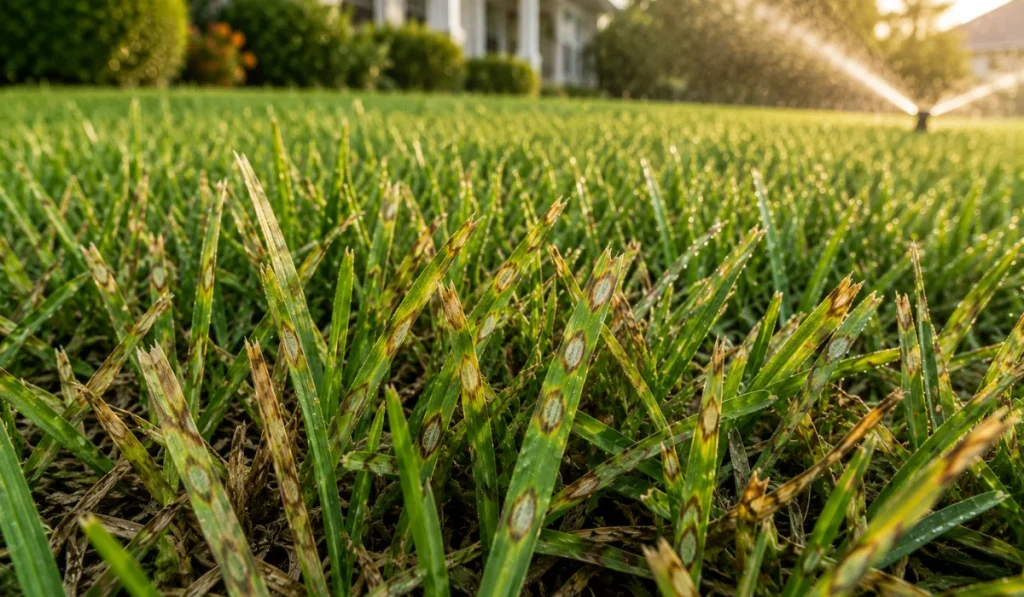
The disease often begins as small brown, olive, or dark spots. As the lesions develop, their centers may become gray or tan while the borders remain brown, reddish, or purple. Some spots appear oval, while others stretch along the narrow shape of the blade.
Several lesions can form on one leaf. As they enlarge and merge, more of the blade loses color and begins to dry. This progression helps separate gray leaf spot from problems that affect the whole plant without creating distinct marks on the leaves.
The alternate spelling, grey leaf spot in St Augustine, refers to the same disease. “Gray” is the spelling most often used by U.S. turfgrass resources.
Lawn-Level Damage
When many blades become infected, sections of the lawn may look yellow, brown, thin, or scorched. Severe leaf loss reduces the grass’s ability to produce energy, which slows recovery and leaves the turf looking weak.
The damage may follow an irregular pattern because shade, soil drainage, sprinkler coverage, and turf density differ across the property. Low spots and areas with limited airflow often remain wet longer, so symptoms may begin there even when the rest of the lawn looks healthy.
Gray leaf spot mainly damages leaf tissue. Established St. Augustinegrass may recover when its stolons and roots remain healthy, but recovery depends on the severity of the outbreak and whether another lawn problem is present.
What to Do When Symptoms First Appear
When you notice gray or brown spots on St Augustine grass, start by correcting the conditions that favor infection. Applying a treatment without addressing watering, feeding, or mowing practices may leave the lawn exposed to continued damage.
Inspect several blades from the affected area and compare them with healthy grass nearby. Distinct lesions with lighter centers and darker margins support a gray leaf spot diagnosis, but overlapping symptoms may require help from a county extension office, turf laboratory, or experienced lawn professional.
Adjust the Irrigation Schedule
Check when your sprinklers run and how long the lawn stays wet afterward. Shift watering to the early morning, then allow the blades to dry during the day. Repair clogged heads, overspray, pooling water, and sections where runoff begins before the soil can absorb the applied moisture.
The UC Statewide Integrated Pest Management Program emphasizes cultural practices such as proper irrigation and drainage when managing turf problems. Water should reach the root zone, but a consistently wet leaf surface gives lawn diseases more opportunity to develop.
New sod requires closer observation. As roots begin growing into the soil below, reduce unnecessary irrigation rather than continuing the initial schedule by habit. Check the soil beneath the sod to judge moisture instead of relying only on the appearance of the surface.
Pause Heavy Fertilization
Avoid pushing rapid growth while gray leaf spot is active. Excess nitrogen can create tender leaf tissue and increase disease pressure. Wait until the lawn begins recovering, then use a feeding plan suited to the grass, season, and soil conditions.
A soil test can help you avoid guessing. Pale or thin turf does not always need more fertilizer. Poor drainage, damaged roots, excessive shade, uneven watering, or active disease can also reduce color and density.
Reduce Mowing Stress
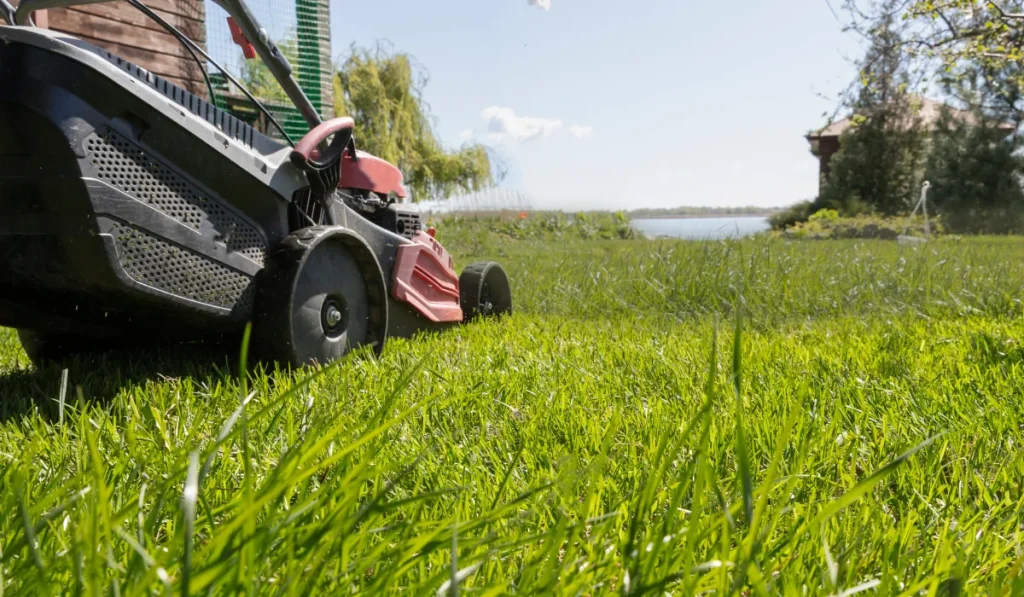
Mow only when the lawn is dry, and keep the mower blade sharp. Dull blades tear the grass instead of cutting it cleanly, leaving frayed tips and a rough appearance that can make disease damage look worse.
Avoid scalping the lawn or removing too much growth in one mowing. Consistent mowing preserves enough leaf area for recovery. When wet clippings collect in thick piles, remove or spread them so they do not trap moisture against the turf.
How Gray Leaf Spot Differs From Similar Lawn Problems
Several St. Augustine grass problems can create brown or thinning areas. The appearance of individual leaves, the condition of the roots, and the location of the damage can help narrow the cause.
| Lawn Problem | Distinguishing Clue |
|---|---|
| Gray leaf spot | Individual leaf lesions with lighter centers and darker margins |
| Large patch | Expanding discolored areas that often develop during cooler, wet periods |
| Take-all root rot | Weak roots, thinning turf, and poor recovery despite adequate moisture |
| Chinch bug injury | Damage often begins in hot, sunny sections and resembles drought stress |
| Irrigation stress | Dry soil, uneven sprinkler patterns, or damage that follows coverage gaps |
| Mowing injury | Shredded tips, scalping, or damage that follows mower paths |
Do not choose a treatment based only on a distant photograph. Large patch and root disease require different management than gray leaf spot, while chinch bug damage or irrigation stress will not improve with a fungicide.
Check the blades first, then look at the roots and soil. If the grass pulls up easily, the soil remains saturated, or the damage keeps spreading despite corrected care, seek a professional diagnosis.
When Gray Leaf Spot Treatment Makes Sense
Gray leaf spot treatment may be appropriate when symptoms continue spreading after you correct irrigation and maintenance problems. Treatment may also make sense when newly installed sod is threatened or when a qualified inspection confirms active disease.
Use only a fungicide labeled for gray leaf spot on St. Augustinegrass and approved for use in California. Follow the product label for application rates, timing, watering instructions, limits, and safety requirements. More product does not produce better control and may damage the lawn or nearby plants.
Avoid repeating the same fungicide group without understanding its mode of action. Repeated use of one group can reduce effectiveness over time as the pathogen becomes less sensitive. A licensed lawn professional or local extension specialist can help you select and rotate suitable products when disease returns.
Treatment cannot correct nighttime watering, poor drainage, excessive feeding, or mowing stress. Those conditions must change for the lawn to recover and remain less favorable to another outbreak.
How to Prevent Gray Leaf Spot in St Augustine Grass
Preventing gray leaf spot in St Augustine grass depends on how you manage moisture, growth, and stress. You cannot control every humid morning, but you can control irrigation timing, fertilization, mowing, and the way new sod is established.
Water early enough for the blades to dry during the day. Adjust the schedule as weather changes instead of allowing the timer to run the same program throughout the season. Shaded areas may need less frequent watering than open sections, even when both are connected to the same system.
Feed the lawn according to its actual needs. Avoid using color alone as a signal to apply nitrogen. When growth is already soft and rapid, more fertilizer can increase susceptibility rather than strengthen the turf.
Maintain a consistent mowing height, use sharp blades, and avoid cutting wet grass. Limit foot traffic on weak areas until new growth begins filling them in. These practices reduce stress and help healthy turf compete with damaged sections.
For new St. Augustine sod, watch how quickly the soil and leaf surface dry as rooting progresses. Moisture is necessary during establishment, but the original watering schedule should not continue unchanged once the sod begins drawing water from the soil below.
Keeping St. Augustine Grass Healthy Through Gray Leaf Spot Season
Gray leaf spot shows up “right on schedule” when warm conditions, prolonged leaf wetness, tender growth, and susceptible St. Augustinegrass occur together. The first signs usually appear on individual blades before broad areas begin thinning or turning brown.
Inspect the grass closely, water in the early morning, pause heavy feeding, and reduce mowing stress. Confirm the cause before applying a treatment, especially when root disease, insects, or uneven irrigation could be responsible.
When sections of sod are too damaged to recover, we can help you select grass suited to your California property and a plan for a successful establishment. For help with sod availability, replacement areas, or delivery questions, contact the SodLawn team before you begin the next stage of your lawn project.