A mower blade does not need to be replaced on a fixed calendar. Some blades can be sharpened and balanced several times before replacement. Others need to be replaced immediately after they hit a rock, develop a crack, bend out of shape, or show significant wear.
If you are wondering how often to replace mower blade parts, inspect the cut quality and the blade condition regularly instead of relying on a single timeline. A dull blade may only need sharpening. A damaged or worn blade needs replacement. In Fresno, keeping blades sharp also supports better water efficiency because cleanly cut grass can recover more easily than shredded turf.
Key Takeaways
- There is no universal replacement interval for every mower blade.
- Inspect grass tips after mowing and check the blade condition regularly.
- Sharpen and balance an intact blade when it becomes dull.
- Replace a blade immediately if it is bent, cracked, badly worn, or damaged.
- Stop using the mower if it vibrates unusually or leaves an uneven cut.
- Check the blade after hitting rocks, roots, curbs, or other hard objects.
- Follow the maintenance schedule in your mower’s owner manual.
- Use a professional service provider when you are unsure whether a blade is safe to reuse.
How Often to Replace Mower Blade Parts
The best answer depends on the mower, the yard, and the blade condition.
Some mower manuals recommend servicing blades once a year. Others recommend inspecting blades before each use or sharpening them after a set number of operating hours. The right schedule varies because a small residential lawn creates different wear than a larger yard with rocks, sandy soil, exposed roots, or frequent mowing.
The safest routine is to separate inspection, sharpening, and replacement:
- Inspect regularly: Look for poor cut quality, visible wear, cracks, bending, or unusual vibration.
- Sharpen as needed: An intact but dull blade can often be sharpened and balanced.
- Replace when damaged: A blade that is bent, cracked, badly worn, or unsafe should not be reused.
A fixed annual reminder can help you schedule maintenance, but it should not replace regular inspections.
Why Sharp Mower Blades Matter for Fresno Lawns
A clean cut helps turf recover more efficiently after mowing.
The UC Guide to Healthy Lawns explains that dull blades tear and shred grass tips. The damaged tips may turn gray shortly after mowing and later become yellow or brown. Turf weakened by mower-blade injury can also become more susceptible to drought stress and disease.
Sharp, balanced blades matter in Fresno because lawn watering must fit the city’s outdoor-use schedule. The City of Fresno outdoor water schedule limits watering to designated days and prohibits irrigation on Mondays and between 10:00 a.m. and 6:00 p.m.
A sharp blade will not replace proper watering, but it can reduce unnecessary stress on turf that already needs to make efficient use of available irrigation.
Signs Your Mower Blade Is Dull
A dull blade does not always mean the mower needs a replacement blade. It may only need sharpening and balancing.
Look at the lawn after mowing. The grass itself can reveal the problem.
Ragged Grass Tips
A sharp blade leaves a clean edge. A dull blade tears the grass instead.
Inspect several blades of grass closely. If the tips look frayed, shredded, or uneven, the mower blade may need attention.
A Gray or Brown Cast After Mowing
UC IPM notes that turf injured by dull mower blades can turn somewhat gray soon after mowing. The leaf tips may later become yellow or brown.
This discoloration can make a healthy lawn appear dry or diseased even when irrigation is working properly.
Uneven Cut Quality
A dull or poorly balanced blade may leave sections of the lawn taller than others. The cut can look patchy, especially when the grass is actively growing.
Uneven mowing can have other causes too. Check the mower height, deck condition, wheel settings, and grass moisture before assuming the blade is the only issue.
More Strain During Mowing
If mowing feels slower or the mower struggles through grass that it previously handled well, the blade may be dull. Wet grass, tall turf, debris beneath the deck, or a low cutting height can create similar symptoms.
Inspect the full mowing setup before deciding whether sharpening or replacement is needed.
When Sharpening Is Enough
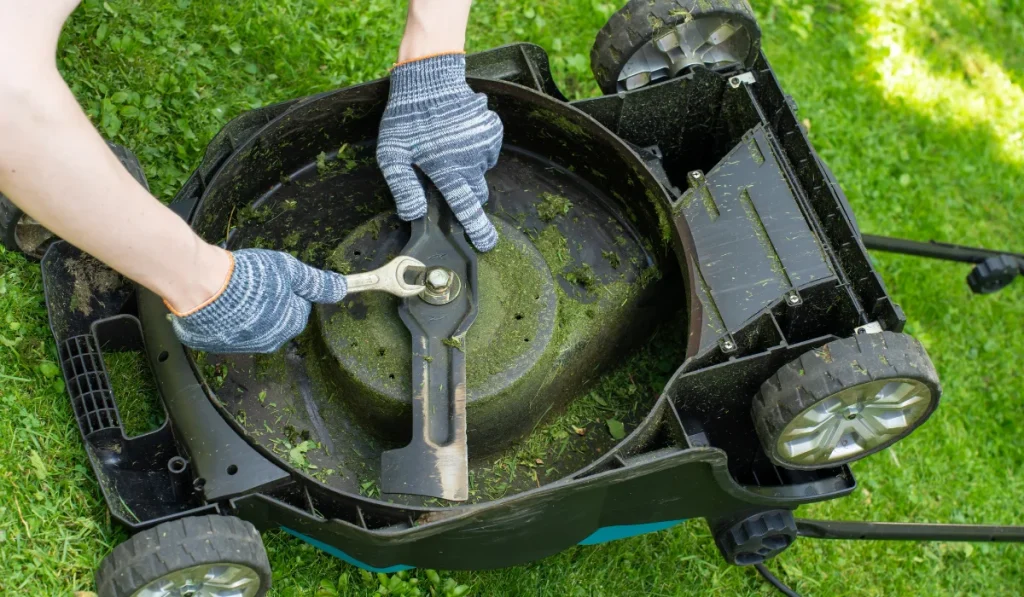
An intact mower blade can often be sharpened instead of replaced.
Sharpening may be appropriate when:
- The blade edge is dull
- Small nicks are present
- The blade is not bent
- There are no cracks
- There is no severe thinning or wear
- The blade can be balanced correctly after sharpening
The Husqvarna blade-support guide recommends keeping blades sharpened and undamaged. It also advises letting a service workshop determine whether a blade with large nicks can be repaired or needs replacement.
Balancing matters after sharpening. An unbalanced blade can create vibration and place additional stress on mower components.
If you are not comfortable evaluating the blade condition, use an authorized mower-service provider.
When To Replace the Blade Immediately
Some damage should not be repaired or ignored.
Replace the blade when you notice:
- Cracks
- Bending
- Severe wear
- Large damaged areas
- A slot or thinning section forming in the metal
- Damage after a hard impact
- Persistent imbalance
- Unusual vibration after maintenance
Toro’s blade-service guidance states that damaged or cracked blades should be replaced immediately. It also warns against trying to straighten bent blades or repair cracked blades.
A damaged blade can break while the mower is running. Stop using the mower and arrange for inspection or replacement before the next cut.
Check the Blade After Hitting an Object
Rocks, roots, curbs, sprinkler heads, toys, branches, and landscape edging can damage a mower blade.
Even if the mower continues running, inspect it after a hard impact.
Watch for:
- New vibration
- A rattling sound
- Uneven cutting
- Reduced mowing performance
- Visible bending
- A damaged cutting edge
- Loose components
- Soil or turf damage along the mowing path
Do not continue mowing if the machine vibrates unusually. Turn it off and follow the manufacturer’s safety instructions.
A professional inspection can help determine whether the blade, mounting components, or another part of the mower was affected.
Do Not Confuse Dullness With Damage
Dullness and damage require different responses.
A dull blade usually has a worn cutting edge but remains structurally sound. It may be sharpened and balanced.
A damaged blade may be bent, cracked, deeply nicked, worn thin, or unstable. It needs replacement.
Use this simple comparison:
A Dull Blade May Need Sharpening
Common signs include:
- Ragged grass tips
- A rough-looking cut
- Slightly slower mowing
- Brown tips after mowing
- Minor nicks
A Damaged Blade Needs Replacement
Common signs include:
- Visible cracks
- Bending
- Deep damage
- Severe wear
- Persistent vibration
- Damage after hitting a hard object
- A blade that cannot be balanced safely
When in doubt, replace the blade or ask a service professional to inspect it.
Build a Practical Inspection Routine
Regular inspection helps catch small issues before they affect a larger area of turf.
Use this routine:
Before Mowing
Walk through the lawn and remove:
- Rocks
- Branches
- Toys
- Pet items
- Garden tools
- Loose edging pieces
- Other debris
Check for raised sprinkler heads, exposed roots, and uneven ground.
After Mowing
Inspect the lawn for:
- Ragged tips
- Gray or brown grass edges
- Missed strips
- Uneven height
- Scalped patches
- Soil disturbed by the mower
- New vibration during operation
During Seasonal Maintenance
Review the mower owner manual and schedule blade service at the recommended interval.
Some mower models call for annual blade service. Others require more frequent checks based on operating hours. If your lawn contains sandy soil, rocks, or other abrasive material, the blade may dull faster.
Use the Owner Manual as the Final Reference
Mower maintenance intervals vary by manufacturer and model.
Your owner manual should guide:
- Inspection frequency
- Sharpening intervals
- Replacement criteria
- Blade type
- Torque requirements
- Safe service procedures
- Authorized replacement parts
Do not assume that a blade designed for one mower fits another model. Use the replacement part specified by the manufacturer.
If the manual is missing, look up the mower model through the manufacturer’s official website or ask an authorized service provider.
Avoid Mowing Wet or Drought-Stressed Grass
Blade condition matters, but mowing timing matters too.
The UC Guide to Healthy Lawns recommends avoiding mowing during drought stress or when grass blades are wet. Drought-stressed turf should be watered deeply and mowed after the blades have dried.
Wet grass can clump beneath the mower deck and make it harder to evaluate cut quality. It can also increase soil compaction when the mower moves over saturated ground.
During Fresno’s warmer months, mow when the lawn is dry and avoid cutting more than one-third of the grass blade at once.
Match the Mowing Height to the Turf Type
A new blade will not solve damage caused by mowing too low.
Grass varieties have different mowing-height needs. Cutting below the recommended range can scalp the lawn, expose stems, and weaken turf.
Fresno lawns may include cool-season and warm-season grasses. SodLawn’s Fresno sod delivery and installation page lists locally available varieties such as Elite Plus, Celebration Bermuda, and Tifway 419 Hybrid Bermuda.
Before adjusting the mower:
- Identify the grass type
- Check the recommended height
- Avoid removing more than one-third of the blade
- Raise the mower if the lawn is under stress
- Reduce height gradually after missed mowing sessions
A sharp blade and the correct mowing height work together.
Watch for Scalping
Scalping happens when the mower removes too much grass or cuts into exposed stems and uneven areas.
Common causes include:
- Mowing too low
- Waiting too long between cuts
- Uneven soil
- Low spots
- Raised edges
- Sloped lawn sections
- Mower wheels dropping into depressions
A sharp blade will not prevent scalping if the deck height is too low.
If the lawn develops brown strips or exposed stems after mowing, raise the cutting height and inspect the terrain before mowing again.
Keep the Mower Deck Clean
Grass buildup beneath the mower can affect cutting performance.
Clippings, moisture, and debris may interfere with airflow and leave an uneven cut. A clogged deck can also make a mower work harder.
Follow the manufacturer’s instructions for deck cleaning and maintenance. Always turn the mower off fully and follow the safety procedures in the owner manual before inspecting any component.
If the deck remains clogged after routine maintenance, a service provider can check whether another issue is affecting performance.
Use Extra Care With New Sod
New sod needs time to establish roots before regular mowing begins.
Mowing too early can pull turf away from the soil, damage seams, and create thin sections. Wait until the sod has anchored before the first cut.
Once mowing begins:
- Use a sharp blade
- Confirm the correct mowing height
- Let the lawn surface dry first
- Avoid removing more than one-third of the grass blade
- Turn carefully to avoid tearing the sod
- Watch for uneven sections near seams and edges
If the new lawn develops persistent thin areas, check irrigation coverage, rooting, soil contact, and mowing practices before assuming replacement sod is needed.
Follow Fresno Watering Rules After Lawn Work
Mowing and irrigation should work together.
The City of Fresno outdoor water schedule allows outdoor watering three days per week from April 1 through October 31:
- Odd-numbered addresses: Tuesday, Thursday, and Saturday
- Even-numbered addresses: Wednesday, Friday, and Sunday
- No watering on Mondays
- No watering between 10:00 a.m. and 6:00 p.m.
Check the current city guidance before adjusting your irrigation schedule.
If a freshly mowed lawn appears gray or brown, inspect the grass tips first. Ragged tips may point to a dull blade rather than a need for additional watering.
Common Mistakes To Avoid
Avoid these mower-blade mistakes:
- Waiting for severe lawn damage before checking the blade
- Replacing a blade that only needs sharpening
- Reusing a cracked or bent blade
- Ignoring new vibration
- Trying to straighten a damaged blade
- Using a replacement part that does not match the mower model
- Mowing wet grass
- Cutting drought-stressed turf too low
- Removing too much growth in one session
- Assuming every brown patch is caused by irrigation
A careful inspection can prevent unnecessary turf damage and reduce the risk of mower problems.
When To Call a Mower-Service Professional
Professional service makes sense when:
- The blade is bent or cracked
- The mower vibrates unusually
- The blade has deep nicks
- The cut remains uneven after sharpening
- The blade cannot be balanced
- You do not have the correct equipment
- The mower hit a hard object
- You are unsure whether the blade is safe
- The owner manual requires authorized service
Blade maintenance involves sharp parts and moving equipment. Follow the mower manual and use a professional service provider when the condition is unclear.
Repair Turf Damaged by a Dull Blade
Minor damage may improve after the blade is sharpened and mowing practices are corrected.
Start with:
- Inspecting the grass tips
- Sharpening or replacing the blade as needed
- Raising the mower height if the lawn was cut too low
- Watering according to Fresno’s schedule
- Avoiding additional mowing until stressed grass begins to recover
- Checking sprinkler coverage
- Monitoring thin areas
Large bare sections may need patching after the cause has been fixed.
SodLawn provides sod delivery and professional installation in Fresno. Enter your ZIP code to compare sod varieties available near your Fresno property if damaged areas no longer fill in evenly.
Keep Your Fresno Lawn Cutting Cleanly
How often to replace mower blade parts depends on their condition, not a single calendar date.
Inspect the lawn after mowing. Sharpen an intact blade when the grass tips become ragged. Replace the blade immediately if it is bent, cracked, severely worn, or damaged after impact.
A sharp blade protects turf from avoidable stress and helps the lawn recover more efficiently between cuts.
Refresh Damaged Turf With SodLawn
If repeated mowing damage has left thin or bare sections across your Fresno lawn, replacing the affected turf may provide a cleaner reset after the mower issue has been corrected.
SodLawn offers sod delivery and professional installation for Fresno homes and commercial properties. Enter your ZIP code to view locally available sod varieties and plan your lawn repair.
Frequently Asked Questions
How Often Should I Replace a Lawn Mower Blade?
There is no universal replacement schedule. Inspect the blade regularly and follow the mower manual. Replace it immediately if it is bent, cracked, badly worn, or damaged. Sharpening may be enough when the blade is intact but dull.
How Can I Tell if a Mower Blade Is Dull?
Inspect the grass after mowing. Ragged, shredded tips and a gray or brown cast can indicate a dull blade. Uneven cut quality may also signal that the blade needs sharpening or balancing.
Can I Sharpen a Mower Blade Instead of Replacing It?
Yes, when the blade is structurally sound. An intact blade with a dull edge or minor nicks can often be sharpened and balanced. Replace blades with cracks, bending, severe wear, or major damage.
Should I Replace the Blade After Hitting a Rock?
Stop mowing and inspect the blade after any hard impact. A blade that is bent, cracked, unbalanced, or damaged should be replaced before the mower is used again.
Does a Dull Mower Blade Damage Grass?
Yes. UC IPM notes that dull blades tear and shred grass tips. Damaged turf may turn gray, yellow, or brown and become more susceptible to drought stress and disease.
Can a Sharp Blade Help Reduce Water Stress?
A sharp, balanced blade creates a cleaner cut. UC IPM notes that cleanly cut grass can recover faster and lose less water than grass cut with a dull blade.
Can New Sod Be Damaged by a Dull Blade?
Yes. New sod is still establishing roots and can be more vulnerable to mowing stress. Wait until the turf has anchored, use a sharp blade, and avoid removing more than one-third of the grass blade in one session.