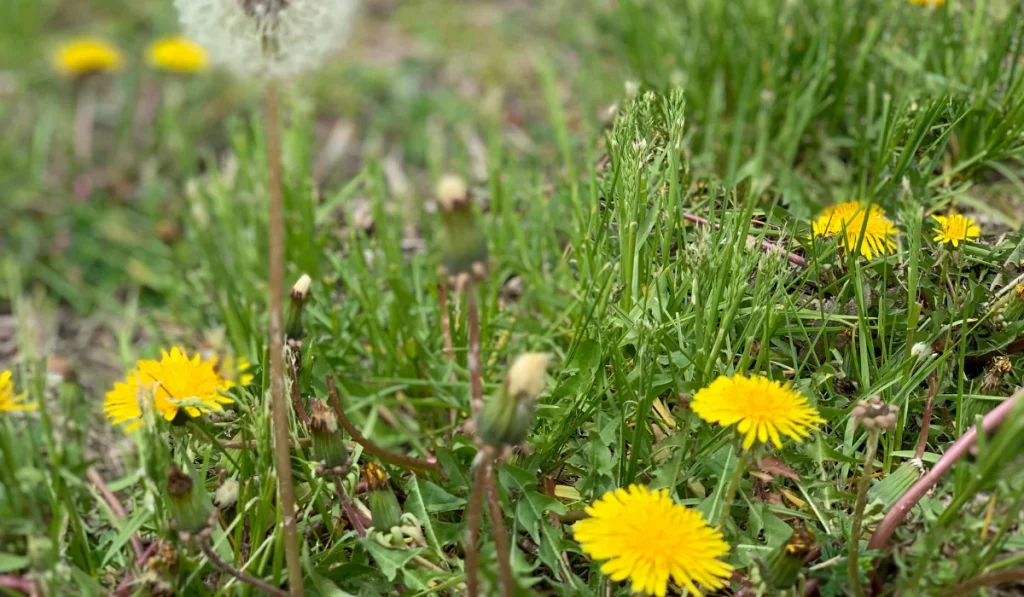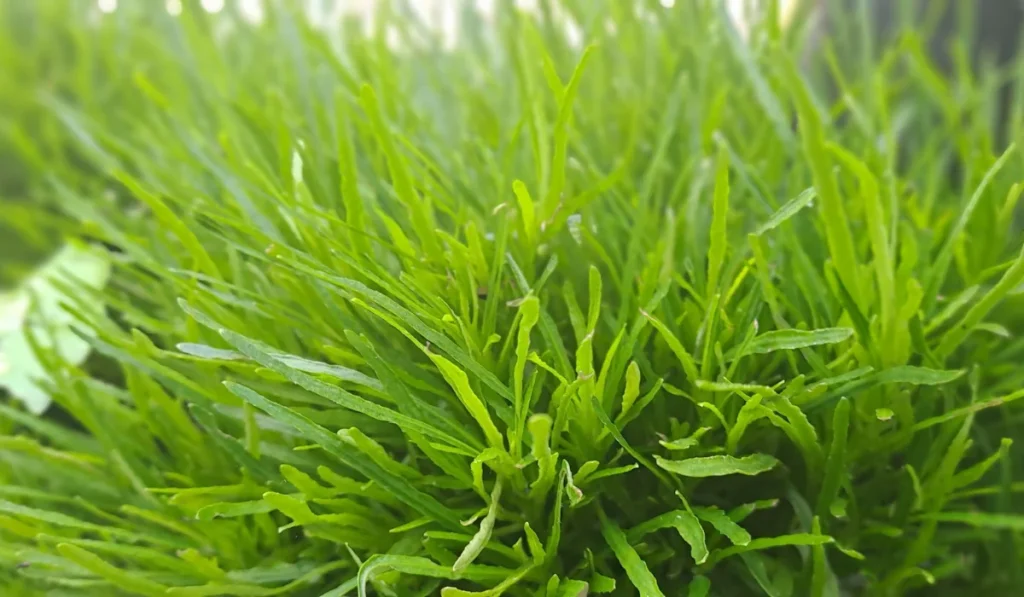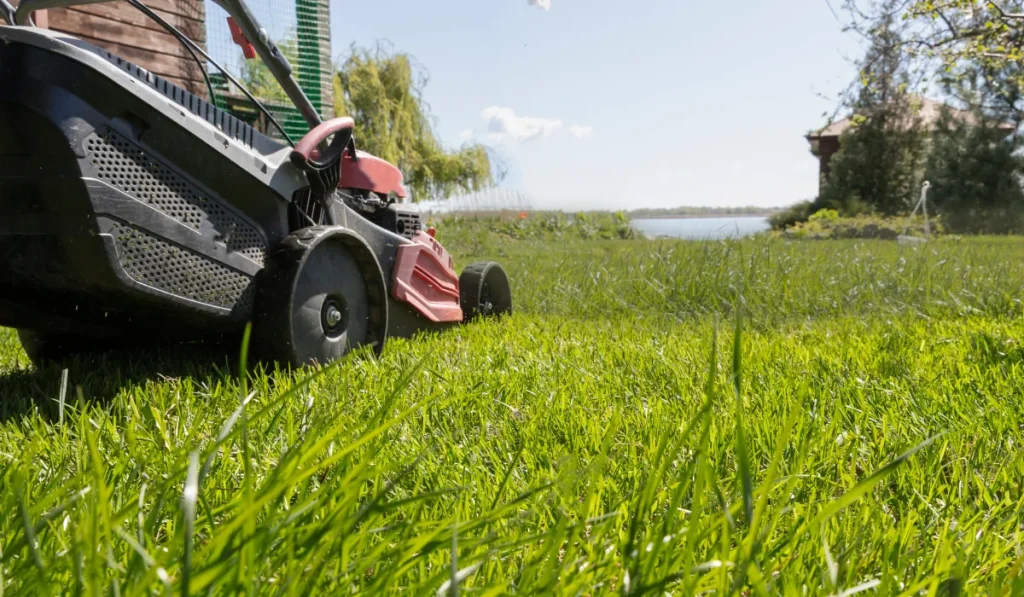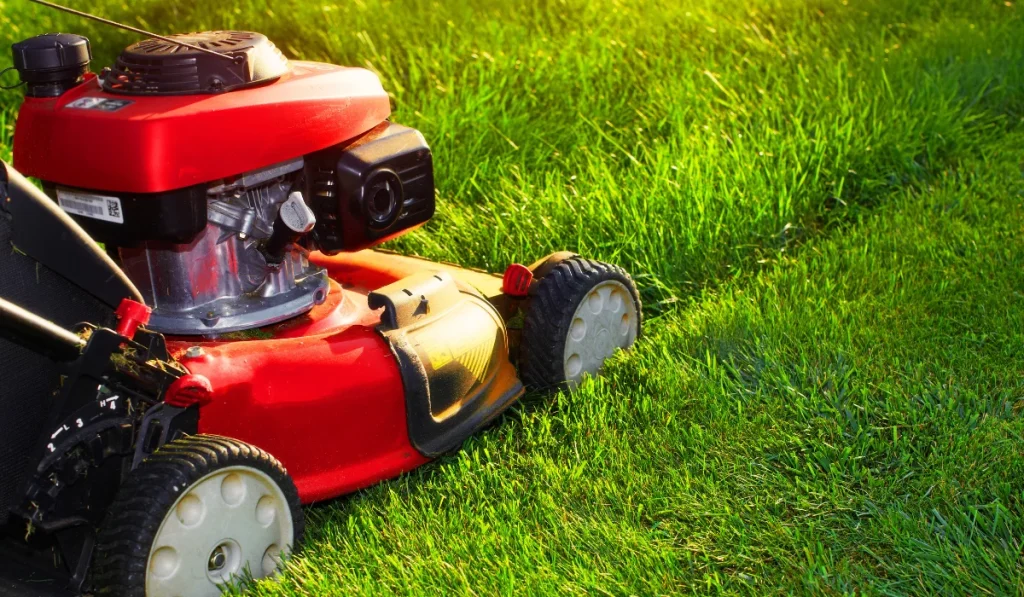
A mowing schedule should help the lawn stay healthy, not force the grass into the same routine every week of the year. Growth changes with the turf variety, season, temperature, irrigation, fertilizer use, and amount of sunlight the yard receives.
If you want to know how to create a mowing schedule that works in Anaheim, start with the grass rather than the calendar. Identify the turf type, set the correct mowing height, and cut only when the lawn has grown enough to remove no more than one-third of the leaf blade. Some weeks may require mowing more frequently. During slower growth, heat stress, or dry conditions, the lawn may need a longer break.
Key Takeaways
- Build the mowing schedule around growth rate rather than a fixed weekly appointment.
- Identify the grass type before choosing the mower height.
- Remove no more than one-third of the leaf blade during one mowing session.
- Mow more frequently when the lawn grows quickly and less frequently during slower periods.
- Use a sharp mower blade and inspect the grass tips after cutting.
- Delay mowing when the lawn is wet, drought-stressed, or newly installed.
- Leave short, evenly distributed clippings on the lawn when practical.
- Check Anaheim water guidance before changing irrigation around mowing days.
- Repair recurring thin or scalped sections before they become larger lawn problems.
Why a Fixed Weekly Mowing Schedule Does Not Always Work
A weekly mowing day may be convenient, but the lawn does not grow at the same speed every week.
The UC IPM mowing-frequency guide recommends mowing frequently enough to remove only one-third of the leaf blade at one time. This means the schedule needs to respond to growth.
A lawn may grow faster after:
- Warmer weather
- Regular irrigation
- Fertilizer application
- New sod establishment
- Seasonal growth changes
- Increased sunlight
Growth may slow when:
- Temperatures become unusually high
- The lawn experiences drought stress
- Cool-season turf struggles during summer
- Warm-season grass enters dormancy
- Shade limits growth
- Irrigation has been reduced
- The lawn has recently been stressed or damaged
Instead of mowing automatically every Saturday, inspect the grass first. If the lawn has not grown enough to need a cut, waiting may be healthier.
Start by Identifying the Grass Type
Different turf varieties need different mowing heights.
The UC IPM turfgrass identification guide explains that turf species vary in mowing height, frequency, irrigation needs, fertilizer requirements, and tolerance for heat, shade, and traffic.
Anaheim lawns may include cool-season grasses, warm-season grasses, or blends.
Common examples include:
- Tall fescue
- Kentucky bluegrass
- Perennial ryegrass
- Seeded Bermudagrass
- Hybrid Bermudagrass
- St. Augustinegrass
- Zoysiagrass
The right schedule depends partly on whether the lawn grows most actively during mild weather or warmer months.
SodLawn’s Anaheim sod delivery and installation page lets customers enter a ZIP code and compare turf varieties available near the property.
Match the Mowing Height to the Turf Variety
A healthy schedule begins with the correct mower setting.
The UC IPM guide to cool-season mowing heights and warm-season mowing heights provide species-specific ranges.
Examples include:
- Tall fescue: 1.5 to 3 inches
- Kentucky bluegrass: 1.5 to 2.5 inches
- Perennial ryegrass: 1.5 to 2.5 inches
- Seeded Bermudagrass: 1 to 1.5 inches
- Hybrid Bermudagrass: 0.5 to 1 inch
- St. Augustinegrass: 1 to 2 inches
- Zoysiagrass: 0.5 to 1 inch
These ranges help you decide when the lawn is ready for another cut.
For example, tall fescue maintained at 3 inches should not be allowed to grow much higher than 4.5 inches before mowing. Cutting it back to 3 inches removes one-third of the blade.
Follow the One-Third Rule
The one-third rule is the foundation of a practical mowing schedule.
UC IPM recommends removing no more than one-third of the grass blade at one time. Cutting more can temporarily slow root growth and weaken the lawn when it happens repeatedly.
Use this simple method:
- Choose the mowing height for the turf variety.
- Multiply that height by 1.5.
- Mow when the grass approaches that taller height.
- Reset the mower to the planned maintenance height.
For example:
- A lawn maintained at 2 inches should be mowed before it grows much taller than 3 inches.
- A lawn maintained at 3 inches should be mowed before it grows much taller than 4.5 inches.
- A lawn maintained at 1 inch should be mowed before it grows much taller than 1.5 inches.
This method creates a schedule based on growth rather than habit.
Build a Baseline Schedule
A baseline schedule gives you a starting point. It should remain flexible.
For the first month:
- Identify the turf type.
- Choose the appropriate mowing height.
- Measure the grass before mowing.
- Record how many days it takes to grow by approximately one-third.
- Note the weather, irrigation, and fertilizer timing.
- Adjust the next mowing day based on the growth pattern.
After several mowing cycles, the lawn’s rhythm becomes easier to predict.
You may find that one section grows faster than another. A sunny area may need mowing sooner than a shaded corner. A strip near a sprinkler leak may grow more quickly until the irrigation problem is repaired.
Adjust the Schedule by Season
Anaheim lawns can respond differently as conditions change throughout the year.
Spring
Spring often brings active growth.
The lawn may need more frequent mowing as temperatures rise and seasonal growth accelerates. Check the height regularly rather than waiting for the grass to look overgrown.
Summer
Summer requires more observation.
Warm-season turf may grow actively when irrigation is appropriate. Cool-season grass may show stress during hotter periods.
Raise the mowing height within the recommended range when the lawn is stressed. Delay cutting if the grass looks wilted or brittle.
Fall
Growth may remain active as temperatures become milder.
Continue following the one-third rule. Avoid lowering the mower aggressively simply because summer has ended.
Winter
Some turf varieties grow more slowly or enter dormancy.
Reduce mowing frequency when growth slows. Do not continue mowing on a fixed calendar when the grass does not need cutting.
Increase the Height During Stressful Conditions
The UC IPM guide to lawns requiring special mowing attention recommends cutting at the highest allowable height for the turf species during stressful conditions. Taller grass retains more leaf area for photosynthesis and can support deeper roots.
Raise the mower when:
- Temperatures are unusually high
- The lawn shows drought stress
- Shade limits growth
- Foot traffic has weakened the turf
- New sod is being mowed for the first time
- The lawn is recovering from scalping
- Pest or disease pressure has stressed the grass
Avoid mowing drought-stressed turf. Water deeply when appropriate, let the blades dry, and mow only after the lawn has recovered enough to handle the cut.
Mow When the Grass Is Dry
Wet grass is harder to cut cleanly.
Mowing damp turf can create clumps, uneven cutting, and soil compaction. The mower deck may clog, and wheels can leave marks in soft ground.
Wait until:
- Morning dew has dried
- Irrigation moisture has left the blades
- The soil is stable enough to support the mower
- Rain has passed
- New sod no longer shifts underfoot
The lawn can have moist soil without wet blades. That is often a better mowing condition.
Keep the Mower Blade Sharp
A dull blade changes the appearance of the lawn even when the schedule is correct.
The UC IPM dull-blade guide explains that dull blades tear and shred grass tips. The lawn may develop a gray cast shortly after mowing, and damaged tips can later turn yellow or brown.
Inspect the grass after cutting.
Look for:
- Ragged tips
- Frayed edges
- Gray areas
- Brown tips
- Uneven cutting
- Missed strips
- Repeated shredding
Sharpen or replace the blade according to the mower manufacturer’s instructions.
A sharp blade helps the lawn recover more efficiently between cuts.
Choose the Right Mower for the Lawn
Equipment should match the turf type and maintenance height.
A rotary mower works well for many home lawns. The UC IPM rotary-mower guide explains that rotary mowers are best suited to higher cutting heights and coarser-textured grasses.
Reel mowers are more appropriate for turf that needs a very low mowing height.
Before choosing equipment, consider:
- The grass variety
- Lawn size
- Desired mowing height
- Terrain
- Slopes
- Narrow sections
- Edges near sidewalks
- Ease of maintenance
Using the wrong equipment can make it harder to achieve a clean, even cut.
Leave Short Clippings on the Lawn
Short, evenly distributed clippings can remain on a healthy lawn.
The UC IPM grasscycling guide explains that small clippings decompose quickly, return nutrients to the turf, and reduce the work involved in bagging and disposal.
Grasscycling works best when:
- The lawn is dry
- The grass is mowed regularly
- No more than one-third of the blade is removed
- The mower spreads clippings evenly
- Thick piles do not remain on the surface
Collect or redistribute clippings when they form heavy rows, cover the grass, or remain wet and clumped.
Do Not Confuse Clippings With Thatch
Grass clippings do not automatically create a serious thatch problem.
Thatch is made up largely of stems, roots, rhizomes, crowns, and stolons rather than fresh clippings alone.
Problems are more likely when the lawn is overfertilized, mowed irregularly, or allowed to develop thick accumulations of organic material.
A consistent mowing schedule helps prevent large clipping piles and supports grasscycling.
Adjust the Schedule After Fertilizing
Nitrogen can increase growth.
After fertilizing, check the lawn more frequently. A routine that worked before the application may allow too much growth between cuts afterward.
Avoid applying more fertilizer than the lawn needs. Excess nitrogen can create rapid top growth, additional mowing work, and greater water demand.
Review:
- The fertilizer label
- The grass type
- The season
- Recent growth rate
- Irrigation coverage
- Lawn color
- Thatch depth
The goal is steady growth, not a sudden surge.
Check Irrigation Coverage
Mowing and irrigation work together.
A lawn with uneven sprinkler coverage may grow inconsistently. One area may become tall and lush while another remains dry and thin.
Run each sprinkler zone separately and look for:
- Dry corners
- Overspray
- Broken heads
- Clogged nozzles
- Water pooling
- Uneven pressure
- Runoff
- Water reaching sidewalks or driveways
Repair irrigation problems before changing the mowing schedule for the entire lawn.
A fast-growing patch near a leaking sprinkler head does not mean the rest of the yard needs more frequent mowing.
Follow Anaheim Water Guidance
The City of Anaheim water-conservation FAQ currently states that no mandatory irrigation restrictions are in place. The city encourages customers to limit outdoor irrigation voluntarily and use water wisely.
Anaheim’s water-supply guidance advises avoiding:
- Irrigation that causes runoff
- Watering within 48 hours after measurable precipitation
- Washing sidewalks and driveways with potable water except for immediate health and safety needs
- Water waste from poorly maintained equipment
Check the city pages before changing the irrigation schedule because local requirements can change.
A mowing schedule should fit the watering routine without pushing the lawn toward rapid, unnecessary growth.
Watch for Scalping
Scalping happens when the mower cuts too low or removes too much grass at once.
Common signs include:
- Brown strips
- Yellow patches
- Exposed stems
- Uneven growth
- Bare soil
- Dry areas after mowing
- Damage along slopes or low spots
Scalping often develops after a missed mowing session when the mower deck is lowered too aggressively.
If the lawn has become too tall, reduce the height gradually across several cuts.
Adjust for Shade
Shaded sections grow differently from sunny areas.
Grass under trees or beside structures may grow more slowly. It may also need a higher mowing height within the recommended range.
Avoid mowing the full lawn lower simply because one sunny section grows quickly.
Inspect shaded turf for:
- Thin grass
- Damp soil
- Powdery mildew
- Heavy leaf debris
- Poor airflow
- Bare patches
- Weeds
A deeply shaded area may need a different landscape plan if turf struggles repeatedly.
Adjust for Slopes and Uneven Ground
Uneven terrain can make mowing more difficult.
Mower wheels may drop into low areas and scalp the grass. Slopes may also dry unevenly or receive more runoff.
Use care on:
- Raised edges
- Low spots
- Lawn borders
- Areas near sidewalks
- Sloped sections
- Tree-root zones
- Narrow side yards
Move more slowly and avoid lowering the mower to force a uniform appearance in one pass.
If uneven soil causes repeat scalping, correct the grade before patching the turf.
Create a Plan for Missed Mowing Sessions
A missed week does not need to become a lawn emergency.
When the grass becomes too tall:
- Raise the mower.
- Remove no more than one-third of the blade.
- Wait several days.
- Mow again.
- Lower the height gradually until the turf returns to the recommended range.
Do not cut the lawn back to the usual height in one aggressive session.
Gradual correction protects the roots and reduces heavy clipping piles.
Build a New-Sod Mowing Schedule
New sod needs a separate plan.
The UC IPM mowing guide for new lawns notes that sod may be ready for mowing within two to three weeks of planting. Root development matters more than the calendar alone.
Before the first mow:
- Perform a gentle root test.
- Confirm that the sod resists lifting.
- Let the lawn surface dry.
- Set the mower to the recommended height.
- Use a sharp blade.
- Remove no more than one-third of the grass blade.
- Turn carefully to avoid tearing seams.
- Avoid soft or saturated sections.
For the first cut, allow the grass to reach the upper end of the recommended range or slightly higher. Reduce the height gradually over the next mowing sessions.
Limit Traffic on New Sod
New turf needs time to connect with the soil.
Limit foot traffic during the first few weeks. Keep pets, furniture, and heavy equipment away from soft areas.
Traffic can:
- Shift sod pieces
- Open seams
- Compact wet soil
- Leave footprints
- Damage roots
- Create thin patches
Once the sod has rooted evenly and completed its first mowing sessions, reopen the yard gradually.
Record the Lawn’s Growth Pattern
A simple log can make mowing more predictable.
Record:
- Date of mowing
- Grass height before cutting
- Mower setting
- Weather conditions
- Irrigation changes
- Fertilizer applications
- Areas that grew faster
- Scalped sections
- Blade-sharpening dates
- New-sod progress
After several weeks, you will see patterns.
The lawn may need more frequent mowing during one part of the year and less attention during another. A written record makes those changes easier to manage.
Avoid Common Mowing-Schedule Mistakes
Avoid these shortcuts:
- Mowing automatically every week without checking growth
- Cutting more than one-third of the blade
- Using one mower height for every turf variety
- Lowering the mower aggressively after a missed week
- Mowing wet grass
- Using a dull blade
- Ignoring sprinkler problems
- Bagging every clipping automatically
- Leaving heavy clipping piles on the lawn
- Fertilizing heavily and then failing to adjust the schedule
- Mowing drought-stressed turf
- Cutting new sod before it roots
- Scalping edges and uneven sections
A good schedule stays flexible.
Build a Simple Mowing Checklist
Use this routine before each cut:
- Identify the turf variety.
- Confirm the recommended height.
- Measure the grass.
- Check whether mowing will remove more than one-third of the blade.
- Look for drought stress.
- Confirm that the grass is dry.
- Remove debris.
- Inspect sprinkler heads.
- Check the mower blade.
- Mow at a steady pace.
- Leave short clippings when practical.
- Collect heavy piles.
- Review the lawn for scalping.
- Record the date and any changes.
- Adjust the next mowing day based on growth.
Know When the Lawn Needs More Than a New Schedule
A mowing adjustment cannot solve every lawn problem.
A broader repair may make sense when:
- Bare areas continue spreading
- Scalping damage returns repeatedly
- Irrigation coverage remains uneven
- Soil compaction limits water absorption
- Weeds fill large sections
- Sod seams remain open
- The turf variety does not suit the property
- Shade prevents healthy growth
- Several repair attempts have failed
Correct the cause before installing replacement grass.
New sod can struggle again if the same mowing, irrigation, and soil problems remain unresolved.
Refresh Your Anaheim Lawn With SodLawn
Learning how to create a mowing schedule makes lawn care more predictable without forcing the grass into an inflexible routine.
If an older lawn has developed large bare or damaged areas, correct the mowing and irrigation issues before replacing the turf. SodLawn offers sod delivery and professional installation in Anaheim. Enter your ZIP code to compare sod varieties available near your property and plan your lawn project.
Frequently Asked Questions
How Often Should I Mow My Lawn in Anaheim?
Mow based on growth rather than a fixed weekly rule. Cut when the grass has grown enough to remove no more than one-third of the leaf blade.
How Do I Create a Mowing Schedule?
Identify the turf type, choose the correct maintenance height, mow before the grass exceeds approximately one-and-a-half times that height, and adjust the timing as growth changes through the seasons.
What Is the One-Third Rule for Mowing?
Remove no more than one-third of the grass blade during one mowing session. Cutting more can weaken the turf and slow root growth.
Should I Mow Every Week?
Not automatically. Some lawns need weekly mowing during active growth. Others need more or less frequent cutting depending on the season, irrigation, grass type, and weather.
Should I Raise the Mower Height During Hot Weather?
Use the upper end of the recommended height range when the lawn is stressed. Taller grass supports more leaf area and can encourage deeper roots.
Can I Mow Wet Grass?
Wait until the grass blades have dried. Wet mowing can create clumps, uneven cutting, and soil compaction.
Can I Leave Grass Clippings on the Lawn?
Yes, when the clippings are short, dry, and distributed evenly. UC IPM notes that grasscycling returns nutrients to the lawn and reduces disposal work.
How Do I Fix a Lawn That Became Too Tall?
Raise the mower and reduce the height gradually across several sessions. Do not cut the lawn back to its normal height in one aggressive pass.
When Can I Mow New Sod?
UC IPM notes that sod may be ready within two to three weeks, but root development matters more than the calendar. Wait until the turf resists gentle lifting and the lawn surface is dry enough to support the mower.
Does Anaheim Have Mandatory Watering Restrictions?
Anaheim currently states that no mandatory irrigation restrictions are in place. The city still encourages water-wise practices, avoiding runoff, and avoiding watering within 48 hours after measurable precipitation. Check the latest city guidance before adjusting the controller.
When Should I Replace Damaged Turf?
Replace turf after correcting the cause. Persistent scalping, poor sprinkler coverage, soil compaction, shade, and an unsuitable grass variety may require a broader lawn repair.