Choosing what to do with grass clippings can affect how long mowing takes, how the lawn looks afterward, and how much yard waste you need to manage. In many cases, leaving finely cut clippings on an Orange County lawn is the more practical option. The clippings break down and return nutrients to the turf.
Bagging still has a place. Wet clumps, overgrown grass, renovation work, and certain lawn problems may require removal. The right answer in the mulching vs bagging clippings debate depends on the condition of the lawn before mowing and the quality of the cut afterward.
Key Takeaways
- Leave short, evenly distributed clippings on a healthy lawn when mowing regularly.
- Remove no more than one-third of the grass blade during one mowing session.
- Use a mulching mower or a suitable mower setting to cut clippings into smaller pieces.
- Bag clippings when the grass is wet, overgrown, clumping, or covering the turf surface.
- Do not assume that leaving clippings automatically creates a thatch problem.
- Collect clippings during lawn renovation or when a diagnosed turf issue requires removal.
- Follow the product label before reusing or disposing of clippings from recently treated grass.
- Place removed grass clippings in the appropriate organic-waste bin when allowed by your Orange County hauler.
What Is the Difference Between Mulching and Bagging?
Mulching means returning grass clippings to the lawn after mowing. This practice is also called grasscycling.
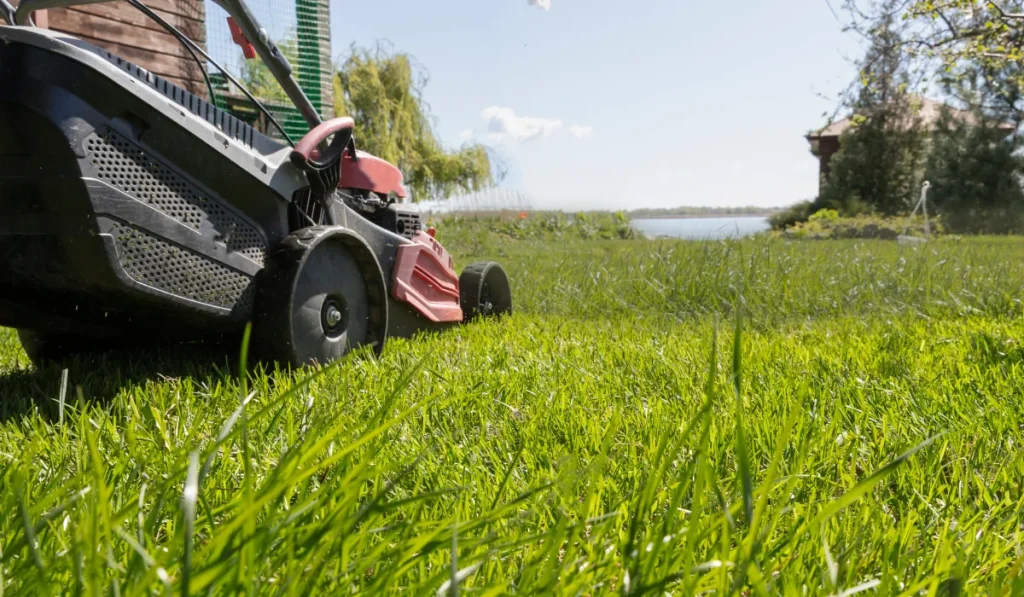
A mulching mower cuts clippings into smaller pieces and distributes them across the turf. Those pieces settle between the grass blades and decompose over time.
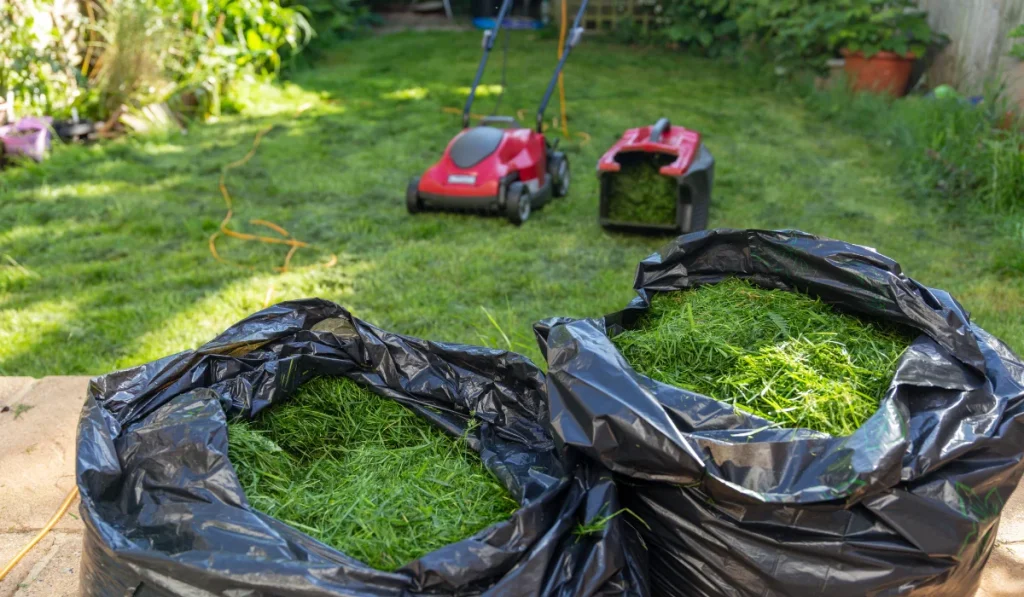
Bagging means collecting the clippings while mowing and removing them from the lawn. Depending on the mower, the material may collect in an attached bag or require raking afterward.
Both options can be appropriate. The decision depends on the amount of grass removed, the moisture level, the mower setup, and the condition of the turf.
When Mulching Clippings Works Best
For routine lawn maintenance, mulching is often the better starting point.
The UC IPM grasscycling guide explains that clippings can stay on the lawn when the grass is mowed at the proper frequency and height. The guide also recommends removing no more than one-third of the leaf blade during a single mowing session.
Mulching works best when:
- The grass is dry
- The lawn is mowed regularly
- The clippings are short
- The mower blades are sharp
- The clippings spread evenly
- The turf is healthy
- No thick piles remain on the surface
When these conditions are met, the clippings settle into the turf instead of forming a visible layer.
Mulching Can Return Nutrients to the Lawn
Grass clippings decompose and return nutrients to the soil.
UC IPM notes that grasscycling can reduce the cost and work involved in bagging, removal, and disposal. It may also allow homeowners to use a lower fertilizer rate in some lawn-care programs.
This does not mean clippings replace every part of lawn maintenance. A healthy lawn still needs appropriate irrigation, mowing height, soil care, and fertilization based on the turf type.
Mulching Can Save Time
Bagging adds several steps to a mowing session. You need to stop and empty the mower bag, move the clippings, and clean up afterward.
Mulching removes much of that extra handling. For a lawn that is cut regularly, leaving small clippings in place can make weekly maintenance easier.
When Bagging Clippings Makes More Sense
Mulching is not the best choice after every mow.
Bag clippings when leaving them behind would cover the lawn surface, block light, or create uneven piles.
Bag When the Lawn Is Overgrown
If mowing has been delayed, the mower may remove too much grass at once.
Long clippings can sit on top of the lawn in thick piles. These piles may flatten the turf and leave an uneven appearance.
The better approach is to raise the mower height and reduce the lawn gradually over several mowing sessions. If heavy clippings still remain, collect them rather than leaving them on the surface.
Bag When the Grass Is Wet
Wet clippings tend to stick together.
They can form clumps beneath the mower deck and across the lawn. Wet soil may also compact more easily when a mower passes over it.
Wait for the grass blades to dry before mowing whenever possible. If mowing cannot be delayed and wet clumps remain afterward, collect them.
Bag During Lawn Renovation
Some lawn projects require a cleaner surface.
Collect clippings during:
- Sod removal
- Overseeding preparation
- Dethatching
- Major weed cleanup
- Grading
- Patch repair
- Lawn replacement
- Soil preparation before new sod installation
Removing debris makes it easier to inspect the soil, find uneven areas, and prepare the surface for the next step.
Bag When a Turf Professional Recommends Removal
Routine grasscycling has not been found to significantly increase disease incidence, but some diagnosed lawn problems may require clipping removal.
The UC IPM lawn-disease guide explains that cultural practices such as correct mowing height, sharp blades, irrigation, and thatch control support a healthier lawn.
If a disease issue is suspected, identify the problem before changing the entire maintenance routine. Brown patches can also result from poor irrigation coverage, mowing damage, drought stress, or excessive fertilizer.
Does Mulching Cause Thatch?
Grass clippings do not automatically create a serious thatch problem.
Thatch is a partially decomposed layer made up of roots, stems, rhizomes, crowns, and stolons above the soil surface. It is not simply a layer of freshly cut grass.
UC IPM states that grasscycling may slightly increase thatch buildup, but the benefits outweigh the disadvantages in most situations. Its lawn-disease guidance also notes that routine grasscycling has not been found to significantly increase thatch or disease incidence.
Problems are more likely when:
- The lawn is mowed infrequently
- Too much grass is removed at once
- Thick clumps stay on the surface
- The lawn receives excessive nitrogen
- The grass type naturally produces more thatch
- The turf already has a heavy thatch layer
Inspect the lawn rather than assuming every clipping needs to be removed.
Follow the One-Third Rule
The one-third rule makes grasscycling easier.
During a single mowing session, avoid cutting off more than one-third of the grass blade. Removing too much growth can weaken the turf and leave clippings that are too long to settle into the lawn.
For example, if the lawn becomes noticeably taller after a missed mowing session, do not lower the mower aggressively to restore the usual height in one pass. Raise the mower deck and reduce the height gradually.
This approach supports healthier turf and produces smaller clippings that are easier to leave in place.
Use the Right Mower Setup
You do not always need a specialized mower to leave clippings on the lawn, but the equipment needs to distribute the material evenly.
The UC IPM guide to rotary mowers explains that some rotary mowers are designed as mulching mowers. Their blades chop clippings into fine pieces and return them to the lawn.
For better results:
- Keep mower blades sharp
- Mow when the grass is dry
- Use the correct deck height for the turf type
- Follow the manufacturer’s instructions
- Avoid mowing an overgrown lawn too low
- Clean buildup from the mower deck safely
- Check the lawn for piles after mowing
A mower that leaves rows of thick clippings may need a height adjustment, a sharper blade, a slower pass, or a different setting.
Sharp Blades Matter
A dull blade tears grass instead of cutting it cleanly.
Torn grass tips may look ragged, gray, yellow, or brown after mowing. A dull blade can also make the clippings less uniform.
Inspect the lawn after mowing. If the cut looks shredded or uneven, sharpen or replace the mower blade as appropriate.
Clean cuts help the lawn recover more efficiently and create smaller, more manageable clippings for grasscycling.
Mowing Height Still Matters
Mulching will not fix damage caused by mowing too low.
Different grass varieties have different height requirements. Cutting below the appropriate range can scalp the lawn, expose stems, and weaken turf.
Orange County lawns may contain warm-season or cool-season grasses depending on the property. Before changing the mower setting:
- Identify the turf type.
- Check the recommended mowing height.
- Avoid removing more than one-third of the grass blade.
- Raise the mower during stressful conditions.
- Reduce the height gradually after missed mowing sessions.
A healthy lawn produces better results whether you mulch or bag.
What To Do With Clumps After Mowing
If clippings form piles, do not leave them sitting on top of the lawn.
Use a rake or mower pass to spread light accumulations more evenly. Collect heavier clumps.
Clipping piles can develop when:
- The lawn is wet
- The mower deck is clogged
- The grass is too tall
- The mower blade is dull
- The mower moves too quickly
- The cutting height is too low
Correct the cause before the next mowing session.
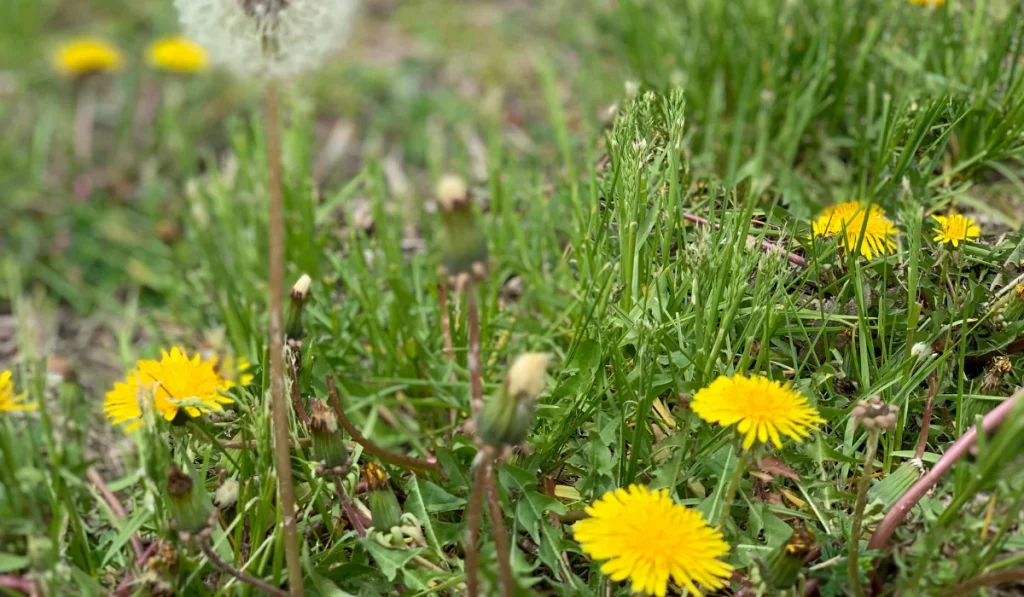
Can Clippings Spread Weeds?
Clippings can sometimes move weed seeds or plant fragments around the yard.
Bagging may be useful when the lawn contains mature weeds with visible seeds. It can also help during a larger weed-removal project.
Pay attention to weeds that spread through plant fragments. UC IPM notes that bermudagrass can spread through rhizomes and stolons. In some settings, mower equipment can move stem sections into areas where the grass is unwanted.
To reduce spread:
- Remove mature weeds before mowing
- Mow less-weedy areas first
- Clean the mower deck after working in problem sections
- Collect clippings during heavy weed cleanup
- Repair bare patches so weeds have less room to establish
A dense lawn remains one of the best defenses against recurring weeds.
Use Caution With Recently Treated Grass
If the lawn has recently received an herbicide or another lawn treatment, check the product label before leaving, composting, or reusing clippings.
Do not assume that treated clippings belong in a compost pile or landscaped bed. Some labels include specific instructions for mowing, collection, composting, or disposal.
Follow the label and local disposal guidance. When instructions are unclear, contact the product manufacturer or a licensed lawn-care professional.
What To Do With Bagged Clippings in Orange County
Removed grass clippings should not automatically go into the trash.
OC Waste & Recycling’s residential organics guidance lists grass clippings, leaves, weeds, twigs, shrubbery, and garden trimmings as organic waste.
Orange County residents should follow the instructions provided by their local waste hauler because collection rules can vary by city and service area.
Before placing clippings in a bin:
- Confirm the correct organic-waste container
- Check whether loose clippings are required
- Avoid adding plastic bags unless your hauler permits them
- Keep treated clippings separate when the product label requires different handling
- Contact the local hauler when instructions are unclear
Grasscycling can reduce the amount of material that needs to be moved off the lawn. When collection is necessary, the organics stream is usually the appropriate next step.
How Mulching Fits Into Water-Smart Lawn Care
Mulching clippings can support a lower-waste lawn routine, but it does not replace correct irrigation.
A lawn that receives too much water may grow rapidly and require more mowing. A lawn that receives too little may become stressed and recover slowly after cutting.
A balanced routine includes:
- Irrigating based on the lawn’s needs
- Avoiding runoff
- Repairing sprinkler problems
- Mowing at the correct height
- Keeping mower blades sharp
- Leaving small clippings in place
- Removing heavy clumps when needed
The goal is steady turf growth rather than excessive growth followed by aggressive mowing.
Mulching vs. Bagging Clippings for New Sod
New sod needs a little more care during establishment.
Wait until the turf has rooted before mowing. The lawn should resist gentle lifting, and the surface should be dry enough to support the mower without shifting the sod.
For the first mowing sessions:
- Use a sharp blade
- Cut at the correct height
- Avoid removing more than one-third of the grass blade
- Turn the mower carefully
- Keep heavy equipment off soft turf
- Collect clumps if they remain on the surface
Small, evenly distributed clippings may be left in place once the sod is established enough for routine mowing.
If the lawn develops open seams, thin areas, or poor rooting, correct the underlying problem before relying on regular grasscycling.
Common Mistakes To Avoid
Avoid these clipping-management mistakes:
- Bagging every clipping automatically
- Leaving thick piles on the lawn
- Mowing wet grass
- Cutting an overgrown lawn too low
- Ignoring dull mower blades
- Assuming clippings always create thatch
- Leaving mature weed seeds on the lawn
- Reusing recently treated clippings without checking the product label
- Placing yard waste in the wrong bin
- Mowing new sod before it has rooted
A quick inspection after mowing can help you decide whether the clippings should stay or go.
Build a Simple Mowing Routine
Use this routine to keep clipping management straightforward:
- Check whether the grass is dry.
- Inspect the lawn for weeds, debris, and uneven growth.
- Confirm the mowing height.
- Remove no more than one-third of the blade.
- Use a sharp mower blade.
- Leave short, evenly distributed clippings in place.
- Collect thick clumps.
- Place removed clippings in the appropriate organics container.
- Review the lawn for scalped or thin areas.
- Adjust the next mowing session if needed.
This approach works for many established Orange County lawns.
When the Lawn Needs More Than a Mowing Adjustment
Clipping management can improve routine maintenance, but it cannot repair every turf problem.
A lawn may need a broader refresh when:
- Bare areas continue expanding
- Weeds fill large sections
- Sod seams remain open
- Scalping damage keeps returning
- Irrigation coverage is uneven
- Grass no longer recovers between mowing sessions
- The turf variety does not fit the site conditions
- Lawn renovation is already planned
Correct the cause before replacing damaged turf. New sod can struggle if the same irrigation, mowing, or maintenance issues remain in place.
Refresh Damaged Turf With SodLawn
Mulching vs bagging clippings is an important lawn-care decision, but healthy turf also depends on the grass variety, irrigation system, mowing height, and condition of the soil.
If your Orange County lawn has large bare or damaged sections, SodLawn offers sod delivery and professional installation for residential and commercial properties. Enter your ZIP code to compare sod varieties available near your Orange County property and plan your lawn repair.
Frequently Asked Questions
Is It Better To Mulch or Bag Grass Clippings?
Mulching is usually a practical choice for a healthy lawn that is mowed regularly. Bagging makes more sense when the grass is wet, overgrown, clumping, or being removed during renovation work.
Do Grass Clippings Cause Thatch?
Not usually. Thatch is made up largely of roots, stems, rhizomes, crowns, and stolons. UC IPM notes that routine grasscycling has not been found to significantly increase thatch or disease incidence.
Should I Bag Clippings After Missing a Mowing Session?
You may need to collect clippings if the grass has grown tall enough to leave heavy piles. Raise the mower and reduce the height gradually rather than cutting the lawn too low in one pass.
Can I Put Grass Clippings in the Green Bin in Orange County?
OC Waste & Recycling lists grass clippings as organic waste. Follow the instructions from your local waste hauler because the correct bin and collection details may vary by city or service area.
Should I Bag Clippings if My Lawn Has Weeds?
Bagging can help when weeds have matured and produced seeds. Remove mature weeds before mowing when possible and clean the mower deck after working in problem sections.
Can I Leave Clippings on New Sod?
Small, evenly distributed clippings may remain after the sod has rooted and is ready for routine mowing. Wait until the turf is established, use a sharp blade, and collect heavy clumps.
Should I Compost Treated Grass Clippings?
Check the lawn-product label first. Recently treated clippings may have restrictions on composting, reuse, or disposal. Follow the label and local guidance.