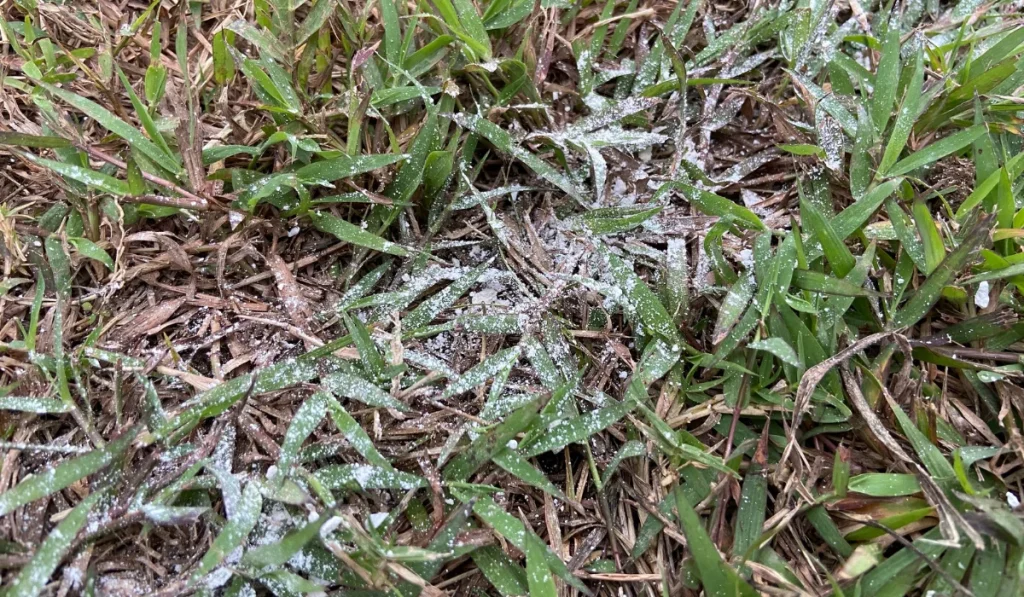
A dusty white coating on grass blades can make a Fresno lawn look like it has been sprinkled with flour. The problem often starts in shaded sections beneath trees, beside fences, or near structures where airflow is limited. Over time, isolated patches may spread and the grass can begin to look pale or thin.
Powdery mildew on grass is a fungal disease, but it does not always require a chemical treatment. The most effective first steps are usually cultural: reduce shade where practical, improve air movement, check irrigation, avoid excessive fertilizer, and mow at an appropriate height for the turf variety. If the affected section remains weak after those conditions improve, the lawn may need closer inspection or repair.
Key Takeaways
- Look for grayish-white powdery growth on individual grass blades.
- Check shaded areas first, especially where airflow is limited.
- Raise the mowing height within the recommended range for the turf type.
- Improve soil aeration when compaction contributes to weak growth.
- Water according to the lawn’s needs without creating soggy soil or runoff.
- Avoid adding fertilizer automatically to pale or thinning turf.
- Consider professional support when symptoms continue spreading despite better lawn care.
What Does Powdery Mildew on Grass Look Like?
The UC IPM powdery mildew guide describes the disease as a grayish-white powdery growth that covers the leaf surfaces. It may begin in isolated patches and spread into larger sections of the lawn. In later stages, the affected leaf blades can turn pale yellow.
Inspect the grass closely rather than judging the lawn from a distance. Powdery mildew sits on the blades themselves. The affected area may look dull, dusty, or faded, especially in low-light sections.
The most common signs include:
- A white or gray powder-like coating on grass blades
- Patches that begin small and gradually expand
- Pale yellow leaves in more advanced cases
- Thinner growth in shaded areas
- Symptoms that appear more strongly beside fences, walls, trees, or dense landscaping
Not every pale lawn has powdery mildew. Dust, mowing damage, drought stress, irrigation problems, and fertilizer issues can create a similar overall appearance. The powdery coating on the blades is the most useful clue.
Why Powdery Mildew Develops
Powdery mildew becomes more likely when the lawn stays shaded and air movement remains limited.
The UC IPM turfgrass disease guidance explains that powdery mildew is most injurious in shady areas with high humidity and poor air circulation. It can affect any turfgrass species, although some varieties are more susceptible than others.
A Fresno yard can develop these conditions in small pockets even during a dry season. A section beneath a dense tree canopy may receive little direct sun. A narrow strip beside a fence may hold moisture longer than the center of the lawn. Overgrown shrubs may reduce airflow close to the turf.
Common contributing factors include:
- Dense shade
- Limited air circulation
- Soil compaction
- Excessive irrigation
- Turf growing too tall or too weak
- Heavy thatch
- Poorly timed fertilizer applications
- A grass variety that struggles in the site conditions
The solution starts with the growing conditions, not with a quick spray.
Check Whether Shade Is the Main Problem
Powdery mildew often appears where the lawn receives less sunlight.
Walk through the property at different times of day. Notice whether the affected grass stays shaded for long periods beneath trees, shrubs, fences, walls, or nearby structures.
Practical improvements may include:
- Pruning dense shrubs carefully
- Thinning tree branches when appropriate
- Removing low branches that block airflow
- Redirecting foot traffic away from weak shaded turf
- Avoiding heavy objects that sit on the grass
- Reconsidering whether turf is the best choice for a deeply shaded corner
Do not remove major tree limbs without proper guidance. A certified tree-care professional can help when large branches or mature trees are involved.
If the area receives very little light throughout the day, repeatedly replacing the grass may not solve the underlying problem.
Improve Air Circulation
A shaded lawn becomes more vulnerable when moisture lingers and air movement remains limited.
Trim back dense landscape growth where practical. Keep shrubs from crowding lawn edges. Remove heavy piles of leaves and clippings that hold moisture close to the turf.
Look closely at narrow sections between buildings, fences, and planting beds. These spaces may need a different maintenance routine than an open lawn.
Improving airflow does not mean stripping the yard of landscaping. The goal is to reduce stagnant, damp conditions around the affected grass.
Raise the Mowing Height
Cutting grass too short can weaken turf that is already struggling in shade.
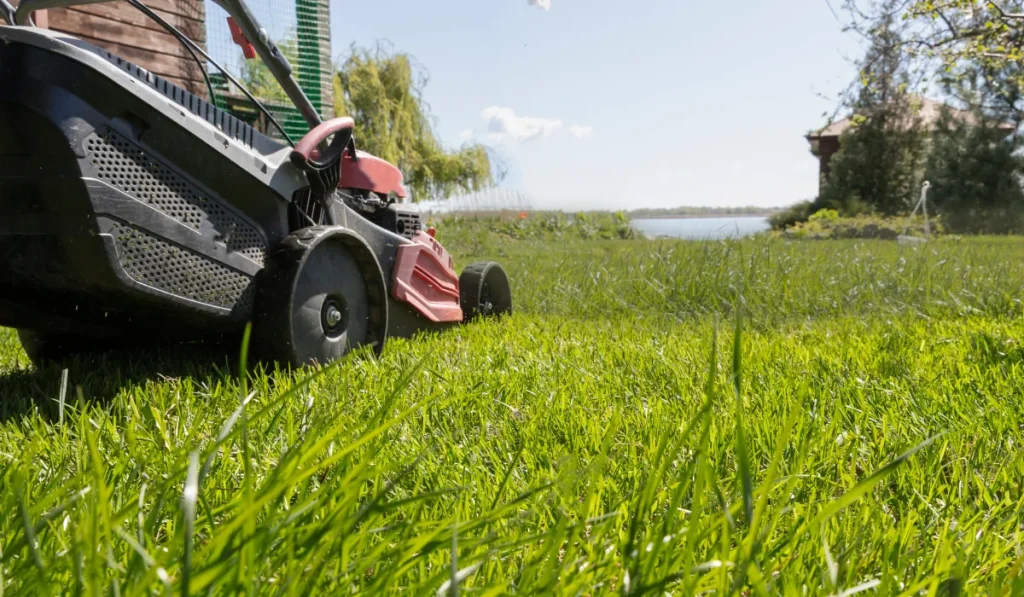
UC IPM recommends mowing at the high end of the recommended height for the turf species when powdery mildew is a problem.
A slightly taller lawn keeps more leaf surface available for photosynthesis. This matters in shaded areas where the turf already receives less light.
Use these basic mowing rules:
- Identify the grass type.
- Set the mower toward the upper end of the appropriate height range.
- Remove no more than one-third of the grass blade during one mowing session.
- Use a sharp mower blade.
- Avoid mowing wet grass.
- Reduce the height gradually after a missed mowing session.
Do not scalp the affected section to remove the visible mildew. Cutting too low can add stress and leave the turf thinner.
Keep Mower Blades Sharp
A dull mower blade tears grass rather than cutting it cleanly.
Shredded tips can turn yellow or brown and make an already weak lawn look worse. Torn blades also make diagnosis harder because mowing damage and disease symptoms begin to overlap.
Inspect the grass after mowing. If the tips look ragged or frayed, sharpen or replace the mower blade according to the manufacturer’s instructions.
A clean cut supports a healthier appearance and reduces unnecessary stress.
Check Irrigation Before Adding More Water
Powdery mildew does not mean the lawn needs more irrigation automatically.
Run each sprinkler zone separately and watch the affected area.
Look for:
- Overspray onto sidewalks or driveways
- Water pooling in shaded sections
- Broken sprinkler heads
- Clogged nozzles
- Uneven pressure
- Water reaching fences or walls
- Dry corners beside soggy patches
- Runoff moving toward the street
A shaded section may need less water than a sunny section of the yard. If both areas share the same irrigation zone, the shaded turf can remain damp longer.
Adjust the system before increasing the overall runtime.
Follow Fresno Watering Rules
The City of Fresno outdoor water-use schedule applies from April 1 through October 31.
The current schedule allows watering on:
- Tuesdays, Thursdays, and Saturdays for odd-numbered addresses
- Wednesdays, Fridays, and Sundays for even-numbered addresses
Outdoor watering is not allowed on Mondays or between 10:00 a.m. and 6:00 p.m.
Check the city page before changing the controller because local guidance can change. Some properties may also receive service from a different water provider.
A lawn with powdery mildew needs careful irrigation, not constant moisture. Stop watering when runoff begins and avoid leaving shaded areas soggy.
Use Cycle-and-Soak Irrigation When Needed
Some lawns absorb water slowly because of compaction, slope, or soil texture.
Instead of running one long irrigation cycle, split the watering time into shorter intervals.
For example:
- Run the sprinkler zone briefly.
- Stop before water pools or reaches pavement.
- Allow the soil time to absorb moisture.
- Run another short cycle later within the permitted watering window.
- Stop when the root zone has received enough water.
This approach can help prevent runoff while reducing excess surface moisture.
Improve Soil Aeration
Compacted soil can make it harder for roots to access air, water, and nutrients.
UC IPM recommends improving soil aeration when powdery mildew becomes a recurring problem.
Check for compaction when:
- Water pools quickly
- The ground feels hard underfoot
- Grass thins along walkways
- Footprints remain visible
- The lawn receives heavy pet or foot traffic
- Water runs off before soaking in
For an established lawn, core aeration may help. A core aerator removes small plugs of soil and creates openings in the root zone.
Mark sprinkler heads before using aeration equipment. Avoid aerating saturated soil or completing disruptive maintenance during extreme heat.
Check for Thatch
Thatch is the layer of roots, stems, and organic material between the green grass and the soil surface.
A thin layer can be normal. A thick layer may trap moisture and make it harder for water and air to move into the soil.
Inspect the lawn by cutting a small wedge and measuring the thatch layer. If it exceeds half an inch, dethatching may help.
Do not dethatch aggressively when the turf is already stressed. Choose a suitable time for the grass type and weather conditions.
Avoid Excess Fertilizer
Pale grass does not always need more nitrogen.
Adding fertilizer without diagnosing the problem can push weak top growth while leaving the underlying shade, airflow, or soil issue unresolved.
Before fertilizing, check:
- The grass type
- The recent fertilizer history
- The season
- Irrigation coverage
- Soil moisture
- Shade
- Compaction
- Mowing height
- Thatch depth
The UC IPM lawn-disease prevention guide explains that correct irrigation, mowing, fertilization, and thatch management can reduce lawn-disease problems.
Use fertilizer only when the lawn needs it and follow the product label.
Do Not Apply Fungicide Automatically
Fungicide is not usually the first step for powdery mildew on a home lawn.
UC IPM notes that fungicides are usually not warranted for residential turf and are generally reserved for severe cases.
Start with:
- Shade reduction
- Better airflow
- Appropriate mowing height
- Soil aeration
- Irrigation adjustments
- Thatch management
- Correct fertilization
If the symptoms continue spreading despite those changes, ask a licensed lawn-care professional to inspect the turf and confirm the diagnosis.
Do not apply a product without checking that it is labeled for the grass type and the specific lawn problem.
Distinguish Powdery Mildew From Other Problems
Several lawn issues can resemble powdery mildew from a distance.
Dust or Soil Residue
Dry soil and landscaping work can leave a light coating on the turf. Inspect individual blades and check whether the residue appears mainly near bare soil, construction areas, or pathways.
Fertilizer Residue
Granules or residue after an application may create patchy discoloration. Review the application date and look for spreader patterns.
Drought Stress
Dry grass may look faded, grayish, or brittle. Check soil moisture and irrigation coverage.
Dull Mower Blades
Torn grass tips can create a gray or brown cast after mowing. Inspect the blade edges closely.
Other Lawn Diseases
Some diseases create patches, thinning turf, or discoloration. UC IPM recommends identifying the pattern and growing conditions before treating a lawn.
Powdery mildew is most recognizable when the powdery coating appears directly on the leaf surfaces in shaded areas.
Monitor the Lawn After Making Changes
Cultural improvements take time.
After adjusting shade, airflow, irrigation, and mowing height, watch the lawn over the next several weeks.
Check whether:
- New patches stop appearing
- The white coating becomes less noticeable
- The grass grows more evenly
- Water absorbs better
- Shaded sections stay less damp
- Bare areas begin filling in
- The lawn recovers after mowing
Keep notes on where symptoms return. A recurring patch may reveal a persistent shade, drainage, or compaction problem.
Protect New Sod From Powdery Mildew
New sod needs regular moisture while roots grow into the soil. However, the lawn should not remain saturated.
During establishment:
- Follow the watering instructions for the sod variety.
- Check shaded sections carefully.
- Prevent runoff.
- Keep sprinkler coverage even.
- Limit foot traffic.
- Wait until the sod roots before mowing.
- Avoid cutting the grass too low.
- Reduce irrigation frequency gradually as roots develop.
If mushrooms, mildew, or other fungal symptoms appear, inspect the lawn conditions before adding products.
The most important questions are whether the sod is rooting, whether the soil drains correctly, and whether shaded areas stay damp for too long.
Know When the Lawn Needs Repair
Powdery mildew can often be managed without replacing the turf.
A larger repair may make sense when:
- The affected section remains thin after conditions improve
- Bare soil appears
- Weeds begin filling open areas
- Shade prevents turf from growing consistently
- Drainage problems remain unresolved
- Several maintenance changes have failed
- The lawn variety does not suit the site
- A broader renovation is already planned
Correct the cause before installing replacement sod.
Fresh turf can develop the same problem when shade, moisture, or soil issues remain unchanged.
Choose Sod That Fits the Property
SodLawn provides sod delivery and professional installation in Fresno for residential and commercial lawn projects.
Available varieties can differ by ZIP code and season. The Fresno page currently lists options that include Elite Plus, Celebration Bermuda, and Tifway 419 Hybrid Bermuda.
Before choosing replacement sod, consider:
- Sun exposure
- Shade
- Irrigation coverage
- Foot traffic
- Pets
- Soil conditions
- Mowing preferences
- Seasonal growth patterns
A turf variety that fits the property is easier to maintain and less likely to struggle in a recurring problem area.
Avoid Common Powdery Mildew Mistakes
Avoid these shortcuts:
- Applying fungicide before correcting shade and airflow
- Cutting the lawn too short
- Watering shaded areas too heavily
- Fertilizing automatically because grass looks pale
- Ignoring compaction
- Leaving thick thatch unaddressed
- Mowing with a dull blade
- Replacing turf before diagnosing the site conditions
- Installing new sod in deep shade without reviewing the landscape plan
- Assuming every white coating is powdery mildew
A careful diagnosis can prevent unnecessary treatments and repeat lawn damage.
Build a Simple Powdery Mildew Checklist
Use this routine:
- Inspect individual grass blades for grayish-white powdery growth.
- Check whether the affected area stays shaded.
- Improve airflow where practical.
- Raise the mowing height within the suitable range.
- Sharpen the mower blade.
- Run each irrigation zone separately.
- Correct overspray, pooling, and runoff.
- Follow Fresno watering rules.
- Check for compaction and thatch.
- Aerate established turf when appropriate.
- Avoid excessive fertilizer.
- Monitor the lawn before adding treatment products.
- Ask a professional for help if symptoms continue spreading.
Know When To Call a Professional
Professional support may help when:
- The mildew spreads across a large section
- The grass continues thinning
- Shade cannot be reduced easily
- The irrigation layout needs major changes
- The lawn stays soggy
- Soil compaction is severe
- A fungicide may be needed
- The grass type is unclear
- New sod installation is planned
- Several repair attempts have failed
A lawn-care professional can help determine whether the lawn needs cultural improvements, irrigation repair, aeration, turf replacement, or a different landscape plan for the shaded area.
Refresh Damaged Turf With SodLawn
Powdery mildew on grass often improves after shade, airflow, irrigation, and mowing practices are corrected.
If the affected turf has become thin or bare, SodLawn can help you compare locally available sod varieties for a larger repair. Enter your ZIP code to review sod options for your Fresno property and plan the next step for your lawn.
Frequently Asked Questions
What Does Powdery Mildew Look Like on Grass?
Powdery mildew appears as grayish-white powdery growth on the grass blades. It often begins in isolated patches and may spread across a larger area. Advanced cases can cause pale yellow leaves.
What Causes Powdery Mildew on Grass?
UC IPM identifies shade, high humidity, poor air circulation, and cool temperatures as favorable conditions. Soil compaction, excessive moisture, and weak turf can also contribute.
Is Powdery Mildew Harmful to a Lawn?
It can weaken the appearance and growth of the turf, especially when it spreads through shaded areas. Many cases can be managed by improving the growing conditions.
Should I Water Less if My Lawn Has Powdery Mildew?
Do not stop watering automatically. Check soil moisture and irrigation coverage. Reduce unnecessary moisture, correct pooling, and avoid leaving shaded areas soggy.
Should I Fertilize Grass With Powdery Mildew?
Do not fertilize automatically. First review the lawn’s recent fertilizer history, irrigation, shade, soil conditions, and grass type. Excess fertilizer can create weak growth.
Does Powdery Mildew Need Fungicide?
Usually not. UC IPM recommends cultural improvements first. Fungicides are generally reserved for severe cases and should be used only when labeled for the lawn and problem.
Can Aeration Help Powdery Mildew?
Aeration may help when compacted soil contributes to weak turf and poor water movement. Use core aeration on established lawns and mark sprinkler heads first.
Should I Mow Grass With Powdery Mildew?
Yes, but keep the mower toward the upper end of the recommended height range for the grass type. Use a sharp blade and avoid cutting more than one-third of the grass blade at once.
Can New Sod Develop Powdery Mildew?
Yes. New sod can develop fungal problems when shaded areas remain damp and airflow is limited. Follow the establishment watering plan and reduce irrigation frequency gradually as roots develop.
When Should I Replace Grass Affected by Powdery Mildew?
Replace turf only after correcting the underlying cause. Large bare areas, persistent thinning, deep shade, poor drainage, or repeated failure may justify a broader repair.