A Coastal California lawn can stay wet well into the morning even when no rain has fallen. Fog, dew, shade, and limited air movement often leave grass blades damp for hours, creating conditions that favor red thread lawn disease.
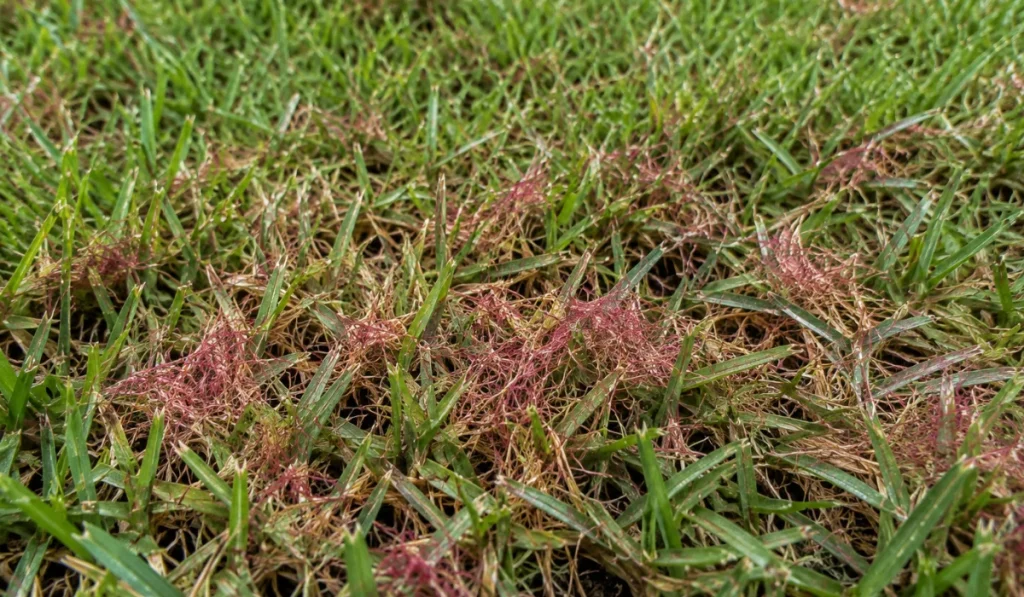
This turf problem usually appears as irregular tan, pink, or reddish patches. When you inspect the affected grass closely, you may see fine coral-colored threads extending from individual blades. Those threads offer a better diagnostic clue than patch color alone.
Fog does not cause red thread by itself. The disease develops when a susceptible grass, the pathogen, and favorable environmental conditions occur together. Identifying each part of that combination helps you correct the lawn conditions that allow the problem to continue.
What Red Thread Lawn Disease Looks Like
Red thread lawn disease often begins as scattered pale or tan areas that resemble dry grass, uneven irrigation, or a nutrient problem. As the disease develops, the patches may take on a pink or reddish cast, especially when the lawn is wet. Several small patches can also merge and create a larger area of thin, discolored turf.
The most useful symptoms appear on the grass blades. Fine red or coral-colored growth may extend from the tips or damaged sections of infected leaves. According to NC State Extension’s turf disease guidance, red thread is associated with the pathogen Laetisaria fuciformis and primarily affects grass leaves and sheaths rather than beginning in the roots.
Inspect the Grass Blades Closely
Do not diagnose red thread disease from lawn color alone. Drought stress, rust, mowing damage, uneven sprinkler coverage, and other turf problems can also leave grass looking brown, pink, or thin.
Inspect several blades early in the morning, when moisture can make the red growth easier to see. Take close photographs before mowing if you plan to ask a lawn professional for help. A detailed image of the affected blades is often more useful than a wide photo of the entire yard.
Why Coastal California Fog Favors Red Thread Disease
Coastal fog can extend the amount of time grass remains wet. Marine-layer mornings in the Bay Area, Monterey Bay, Santa Cruz, and other coastal communities may leave moisture on turf long after sunrise. Shaded yards and enclosed landscapes can dry even more slowly when fences, buildings, or dense plantings restrict air movement.
That prolonged leaf wetness creates favorable conditions for red thread disease activity. Cool, moist weather supports disease development, while repeated fog, dew, and poorly timed irrigation can keep grass damp from evening through the following morning.
The pattern can be confusing because the soil may not look saturated. Red thread in grass responds to moisture on the leaves, not only to water in the root zone. A lawn can experience extended leaf wetness during a week with little or no measurable rain.
Fog is still only one part of the problem. Many coastal lawns remain healthy under the same weather because their grass type, nutrition, irrigation schedule, and site conditions differ. Disease becomes more likely when several favorable factors overlap.
Red Thread vs. Pink Patch and Other Lawn Problems
Red thread disease symptoms can resemble pink patch, another turf disease that produces pink-colored growth. Red thread is more closely associated with narrow red or coral strands extending from infected blades, while pink patch tends to look softer or more cottony.
Rust, drought stress, and scalping can also create discoloration. Comparing the visible signs can help you narrow the cause before changing your watering, mowing, or fertilization routine.
| Lawn Problem | Common Sign | What Sets It Apart |
|---|---|---|
| Red thread | Red or coral strands on grass blades | Threadlike growth extends from infected leaves |
| Pink patch | Pink, cottony, or gelatinous growth | Growth has a softer appearance than red thread |
| Rust | Orange powder on blades, shoes, or mowing equipment | Spores rub off easily |
| Drought stress | Folded, gray-green, or dry blades | Often follows uneven moisture or dry soil |
| Scalping | Short, pale, or brown strips after mowing | Damage follows low mowing or uneven ground |
These differences are helpful, but symptoms can overlap. Recent weather, irrigation, shade, grass variety, and mowing practices all affect how lawn damage appears. If you cannot find the characteristic red threads, avoid assuming that every pink or tan patch is red thread fungus.
A professional diagnosis may be worthwhile when symptoms persist or when several lawn problems appear at the same time. Correct identification matters because irrigation changes, nutrient adjustments, and repair work should match the actual cause.
What Causes Red Thread in Grass?
Red thread lawn disease develops when Laetisaria fuciformis affects susceptible turf under favorable conditions. Cool weather, persistent moisture on the blades, and slow turf growth can support visible disease activity. Lawns with poor airflow, heavy shade, compacted areas, or drainage problems may remain wet longer than open, sunny turf.
The disease is often associated with grass that is growing slowly or receiving inadequate nitrogen. That does not mean every pale lawn needs an immediate fertilizer application. Similar symptoms can result from irrigation problems, root stress, soil conditions, or another disease, so color alone should not guide treatment.
Perennial ryegrass and fine fescues are commonly reported as susceptible cool-season grasses. Tall fescue and mixed lawns can also show symptoms, although disease response varies by cultivar and growing conditions.
Late-day irrigation can add another layer of moisture before nighttime fog or dew arrives. When irrigation water remains on the blades overnight, the lawn has little opportunity to dry before the next cool, damp morning.
How to Treat Red Thread Lawn Disease
Effective red thread lawn treatment starts with confirming the symptoms. Look for narrow red growth on affected blades, then consider recent weather, irrigation timing, shade, and mowing practices. Treating an unidentified patch may leave the real cause unchanged.
Correct Lawn Nutrition Carefully
Red thread disease treatment often includes improving turf growth through balanced nutrition. A soil test can help determine whether the lawn needs nitrogen or another adjustment. Applying fertilizer without understanding the lawn’s condition can produce excessive top growth or fail to address the underlying problem.
The goal is steady, healthy growth that replaces damaged leaf tissue. Visible symptoms may remain until infected blades grow out and are removed through routine mowing, so the lawn may not look better immediately after conditions improve.
Reduce Unnecessary Leaf Wetness
Water in the morning so the grass has more time to dry. Check sprinkler coverage for areas that receive repeated overlap, and avoid running irrigation automatically after a foggy night without first checking whether the lawn needs water.
California homeowners can use the California Irrigation Management Information System to review local weather and evapotranspiration information when planning irrigation. A schedule based on current conditions is more useful than watering by habit throughout the year.
Improve drainage where water collects, and consider whether dense vegetation is limiting airflow across problem areas. The goal is not to keep the lawn completely dry. It is to avoid extending wet conditions longer than the coastal climate already does.
Improve Mowing Practices
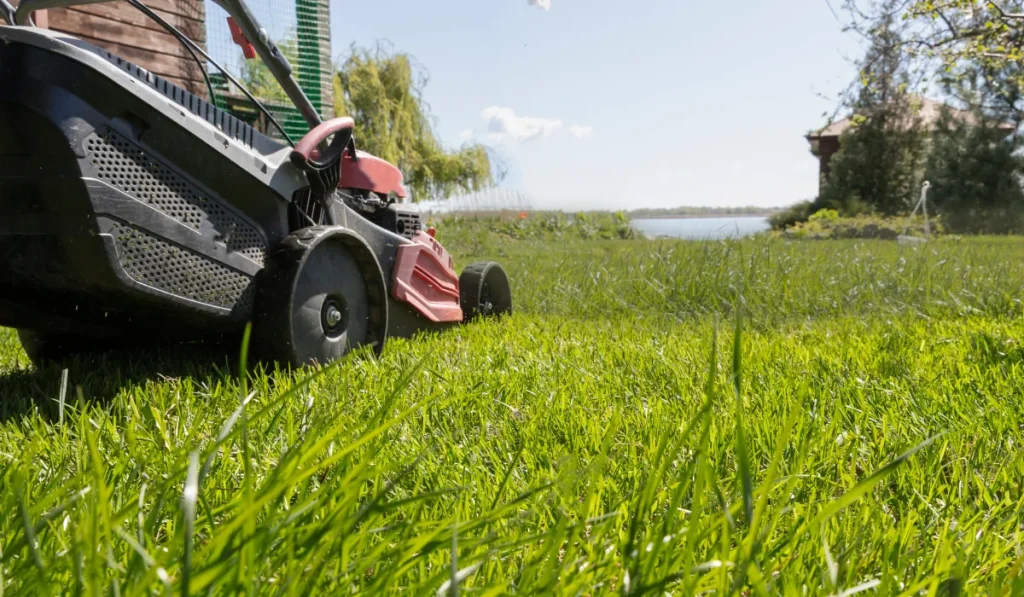
Mow at a suitable height for your grass type, and keep the mower blade sharp. A dull blade tears leaf tissue and leaves the lawn looking frayed, which can make diagnosis more difficult.
Avoid mowing while the turf is saturated. Wet grass cuts unevenly, and soft soil can be damaged by repeated foot traffic or equipment. Remove a moderate amount of growth during each mowing instead of cutting an overgrown lawn down all at once.
Know When Further Treatment Is Needed
Many residential outbreaks improve after irrigation, nutrition, mowing, and drying conditions are corrected. A labeled fungicide treatment may be more appropriate when symptoms are persistent, widespread, or affecting high-value turf.
Seek a professional diagnosis before choosing a product. Follow the label and local guidance rather than treating every discolored area as red thread.
How to Prevent Red Thread in Foggy Coastal Yards
Red thread disease prevention depends on reducing unnecessary leaf wetness and keeping the turf growing at a healthy rate. Start by checking the lawn before each irrigation cycle. Fog and dew may already be supplying surface moisture, even when the root zone still needs occasional deep watering.
Use a soil-informed fertilizer schedule instead of responding to every pale patch with more nitrogen. Keep mower blades sharp, mow at the correct height, and address low spots where water sits after irrigation. Dense thatch, compacted soil, and restricted drainage can also slow drying around the grass canopy.
The University of California Statewide Integrated Pest Management Program provides California-focused guidance for diagnosing turf problems and using cultural management practices. That regional perspective matters because lawn care near the coast differs from lawn care in hotter inland communities.
Grass selection also plays a role. Choose sod or seed suited to your property’s sunlight, foot traffic, irrigation capacity, and coastal microclimate. A shaded yard near Monterey may need a different grass and maintenance plan than an open lawn farther inland.
Restoring a Healthy Coastal California Lawn
Coastal fog can help red thread lawn disease remain active by keeping grass blades wet, but fog is not the only factor. Accurate diagnosis, balanced nutrition, morning irrigation, suitable mowing, better airflow, and improved drainage can reduce the conditions that allow the disease to persist.
Monitor new growth rather than expecting every damaged blade to recover. As healthy grass replaces affected tissue, the lawn should regain a more even appearance. Areas left thin or bare may need seed or sod after disease pressure and site problems have been addressed.
SodLawn supplies sod, grass seed, fertilizer, and lawn-care tools for residential and commercial properties across California. For help choosing products suited to your grass type and coastal growing conditions, contact the SodLawn team.