If your yard sits on a slope, soil erosion can become a serious problem. When rainwater moves downhill, it can carry away topsoil, leaving patches of exposed soil. Over time, this runoff weakens your lawn and can even lead to mudslides on hillsides.
This issue is common in Southern California. Long dry periods often make the soil hard and compacted. When heavy rain finally arrives, the ground cannot absorb water quickly. Instead, rainwater flows across the surface and washes soil away.
Learning how to stop soil erosion on sloped California lawns helps protect your yard and improve soil health. In this guide, you will learn what to do right away, why slopes lose soil, and how solutions like sod installation, bark mulch, and proper drainage help stabilize your sloped landscape.
Key Takeaways
- Installing sod or vegetation helps stabilize sloped lawns and prevent soil erosion.
- Bark mulch and erosion control blankets protect exposed soil quickly.
- Installing sod helps develop strong root systems that hold soil in place.
- Terraces, retaining walls, and French drains help control water flow and reduce mudslides.
What To Do Right Now To Stop Erosion
Soil erosion can get worse quickly if exposed soil is left unprotected. Taking a few immediate steps after you notice erosion can help stabilize the slope and prevent further soil loss.
Cover Exposed Soil Immediately
Bare soil erodes quickly during heavy rainfall. When water flows across exposed soil, it carries loose dirt downhill. This leads to soil erosion and soil loss.
If you want to stop lawn erosion during the rainy season, one of the fastest solutions is to cover the area with bark mulch. Bark mulch protects the surface from rainfall and slows water flow. It also helps hold moisture in the soil and protects the remaining topsoil.
If the area is part of your lawn, installing sod can help stabilize the ground. Sod provides instant coverage while root growth begins beneath the surface.
Install Erosion Control Blankets
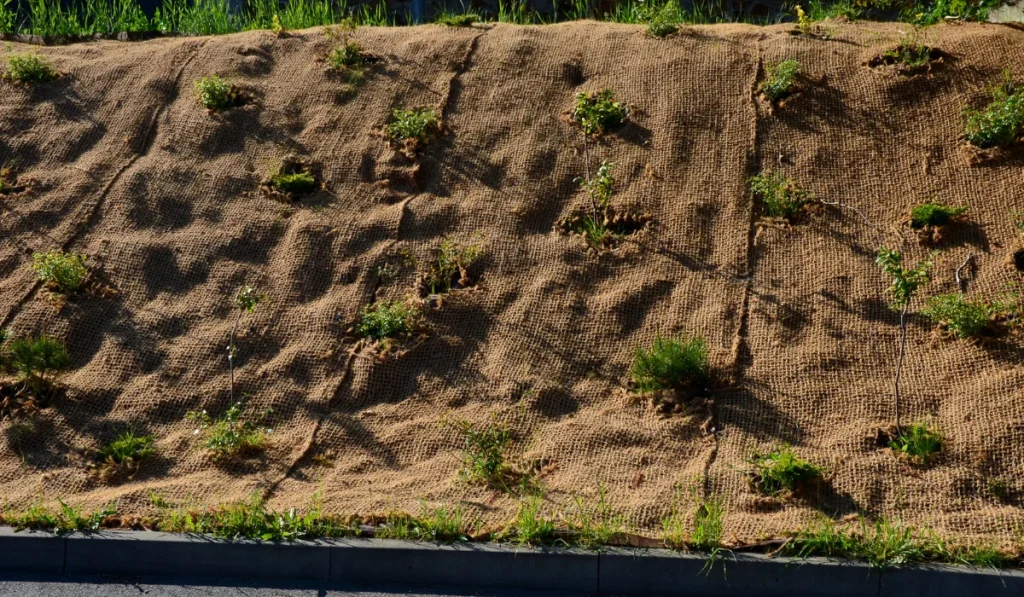
Erosion control blankets help stabilize soil on slopes and hillsides. These biodegradable materials hold soil in place while plants or grass grow.
The blankets’ slow runoff allows rainwater to soak into the soil. They also protect topsoil during storms.
Homeowners in Southern California often use erosion control blankets after heavy rainfall damages a slope or exposes soil.
Redirect Water Runoff
Stopping erosion often requires managing how water moves across your yard. When rainwater flows repeatedly through the same path, it creates erosion channels.
Redirecting water runoff can prevent this damage. Drainage systems, such as French drains, move excess rainwater away from slopes.
By controlling water flow, you can reduce soil erosion and lower the risk of mudslides.
Why Your Sloped Lawn Keeps Washing Out
Soil erosion often occurs due to a few common issues with soil, water movement, or plant cover. Understanding why your sloped lawn keeps washing out can help you choose the right erosion control solution.
Fast Runoff On Sloped Lawns
Gravity naturally pulls water downhill. On steep slopes, water runoff moves quickly and carries soil particles with it.
This problem is common in Southern California. Dry soil cannot absorb sudden rainfall, so rainwater flows across the surface instead of soaking in.
Without proper erosion control, repeated storms can remove large amounts of topsoil.
Compacted Soil And Poor Infiltration
Compacted soil also contributes to erosion. When soil becomes tightly packed, water cannot soak into the ground.
Instead, rainwater moves across the surface and increases runoff. Over time, this repeated water flow causes deeper erosion and soil loss.
Planting vegetation with strong root systems helps improve infiltration and stabilize soil.
Thin Lawns And Weak Root Systems
Grass and plants help prevent soil erosion by holding soil in place with their root systems. When a lawn becomes thin or damaged, the soil becomes vulnerable.
Healthy grass develops deep roots that strengthen the ground. These roots slow runoff and protect topsoil during storms.
Installing sod is one of the fastest ways to rebuild a lawn with strong root systems.
How To Stabilize A Sloped California Lawn
Once erosion starts, long-term solutions are needed to stabilize the soil and prevent future damage. The right combination of sod, plants, and structural improvements can help protect sloped lawns and reduce runoff over time.
Install Sod For Immediate Lawn Coverage
For slopes that serve as lawns, sod provides one of the fastest erosion-control solutions. Unlike planting grass with grass seed, sod covers the soil immediately. Research shows that established vegetation protects soil from erosion by providing surface cover and root systems that stabilize soil and increase infiltration.
Once installed, sod begins developing strong root systems. These roots anchor the soil and reduce water runoff.
Many homeowners in Southern California use sod because it stabilizes sloping lawns quickly and creates a durable lawn.
Use Ground Cover Or Native Plants On Steep Slopes
Very steep slopes may not work well as traditional lawns. In these areas, ground cover, wildflower mixes, cover crops, and native plants often provide better erosion control because vegetation protects soil and stabilizes slopes with root systems. According to research from California Polytechnic State University, vegetation helps reduce soil detachment and improves soil stability by increasing root development and surface protection.
These plants develop root systems that hold soil in place and reduce runoff. Many drought-tolerant plants also grow well in Southern California climates.
Planting vegetation on slopes creates an eco-friendly and low-maintenance landscape.
Add Terraces Or Retaining Walls
Steep hillsides sometimes require structural support. Terraces divide long slopes into smaller levels, which slows water flow and improves infiltration.
Retaining walls hold soil in place and reduce the risk of landslides or mudslides. They also create stable planting areas where sod, grass seed, or ground cover can grow.
Using terraces or retaining walls along with plants helps stabilize steep slopes.
Improve Drainage And Irrigation
Managing water movement through proper lawn drainage and grading is essential for long-term erosion control. Proper drainage reduces runoff and helps rainwater soak into the soil.
French drains move excess water away from slopes and prevent erosion. On planted slopes, drip irrigation delivers water slowly and supports healthy root growth.
Good drainage systems protect soil health and reduce erosion during heavy rainfall.
Book A Slope And Drainage Check In California
Soil erosion can quickly damage sloped lawns when runoff repeatedly removes topsoil. If the problem continues, slopes may develop soil loss, unstable ground, or mudslides during heavy storms.
Professional lawn care solutions help stabilize slopes by promoting proper drainage, establishing vegetation with strong root systems, and installing high-quality sod. Once installed, sod develops deep roots that strengthen soil and reduce water runoff.
SodLawn supplies high-quality sod for residential landscapes across California. If your sloped yard is dealing with erosion, we can help you choose the right sod to support a healthier, more stable lawn.
FAQs
How can homeowners prevent soil erosion on sloped lawns?
Homeowners can prevent soil erosion by covering exposed soil with bark mulch, installing erosion-control blankets, and planting vegetation with deep root systems. Adding sod or planting grass with grass seed also helps stabilize soil and reduce runoff.
What is the best solution for erosion on steep slopes?
Steep slopes often require ground cover, native plants, terraces, or retaining walls. These solutions stabilize hillsides, reduce water flow, and help prevent landslides or mudslides.
Does sod help prevent soil erosion?
Yes. Sod protects exposed soil immediately and develops deep roots that anchor the soil beneath the lawn. Once established, sod reduces runoff, stabilizes topsoil, and improves soil health.