After installing sod, most California homeowners want their new lawn to stay green and healthy. One common question comes up right away: Will fertilizer kill new sod?
The short answer is yes if you apply fertilizer too early or use the wrong type. New sod is sensitive. Too much fertilizer can burn the grass, dry out roots, and slow growth. With proper timing and care, fertilizer helps sod root faster and grow stronger.
This guide explains when and how to fertilize new sod safely in California. You will learn which fertilizer works best, how to avoid common mistakes, and how to care for sod over the long term.
Key Takeaways:
- Applying the wrong fertilizer too early can burn new sod and damage shallow roots.
- Starter fertilizer can support early root establishment when used at installation or as directed on the label.
- Wait 4 to 6 weeks before applying regular fertilizer to established new sod.
- Choose fertilizer based on grass type, soil needs, and season.
Why Timing Matters When Fertilizing New Sod
When you install sod, the roots stay shallow. Applying fertilizer too soon can cause damage. Fertilizer salts dry out tender roots and grass blades. This risk increases in California’s sunny, dry areas.
During the first week after laying sod, focus on watering and keeping the soil moist. Light watering two to three times per day helps roots attach to the soil. When you can no longer lift sod corners easily, the lawn is ready for its first fertilizer.
In warm areas such as Bakersfield or Riverside, warm-season grasses, such as Bermuda or zoysia, establish quickly. In cooler climates, such as Sacramento or Santa Rosa, fescue and Kentucky bluegrass take longer to root.
Most experts recommend waiting at least four weeks before the first fertilization to prevent fertilizer burn and support strong root growth. Our team is ready to help you choose the right sod for your location and lawn goals.
Understanding What’s in Fertilizer
If you’re worried whether fertilizer will kill new sod, it helps to know how fertilizers work. Manufacturers label all fertilizers with an NPK ratio, which stands for nitrogen (N), phosphorus (P), and potassium (K). Each nutrient serves a specific purpose in turfgrass growth and development.
- Nitrogen builds thick, green grass blades.
- Phosphorus encourages strong root growth and early root development.
- Potassium improves disease resistance and heat tolerance.
New sod needs more phosphorus and potassium. Add nitrogen later, after roots take hold.
Starter fertilizer often uses ratios like 10-20-10 or 16-20-0. Balanced fertilizer, such as 15-15-15, works best for established lawns.
Soil testing shows which nutrients your yard needs. California soil ranges from sandy coastal soil to dense inland clay, so results vary by location. Organic fertilizers and compost improve soil without adding harsh salts.
When to Fertilize New Sod in California
The right timing depends on the grass type and local weather.
Fertilize cool-season grasses like fescue and Kentucky bluegrass in early spring and fall when temperatures stay mild. Warm-season grasses such as Bermuda, zoysia, and St. Augustine grow best when fertilized in late spring or early summer.
For most homeowners, waiting four to six weeks after installation is safest. That waiting period allows roots to anchor into the soil and absorb nutrients.
Avoid fertilizing during heat waves or drought. California’s dry summers allow fertilizer salts to build up quickly with poor irrigation. Overwatering also leaches nutrients and leads to shallow growth.
If this is your first sod installation, apply starter fertilizer and use slow-release feedings every six to eight weeks during the growing season. This feeding schedule helps maintain steady growth and supports strong roots.
Starter Fertilizer vs. Regular Fertilizer
Choosing the correct type of fertilizer at the right time protects your sod and promotes even growth.
| Fertilizer Type | Purpose | Typical NPK Ratio | When to Apply | Best For |
|---|---|---|---|---|
| Starter Fertilizer | Encourages quick root growth | 10-20-10 or 16-20-0 | During or just after sod installation | New sod or seeded lawns |
| Regular Fertilizer | Boosts top growth and color | 20-5-10 or 15-5-15 | 4–6 weeks after sod establishes | Established lawns |
| Balanced Fertilizer | Maintains steady nutrient levels | 15-15-15 | Seasonal maintenance | Healthy, mature lawns |
Starter fertilizer supports early root growth. Regular fertilizer contains more nitrogen and keeps established lawns thick.
If you install sod over enriched topsoil, the lawn may not require heavy feeding immediately. In that case, a light application of granular or organic fertilizer works well.
How to Fertilize New Sod the Right Way
Fertilizing correctly prevents waste and protects your new grass from damage.
- Water the soil before fertilizing so the soil absorbs nutrients evenly.
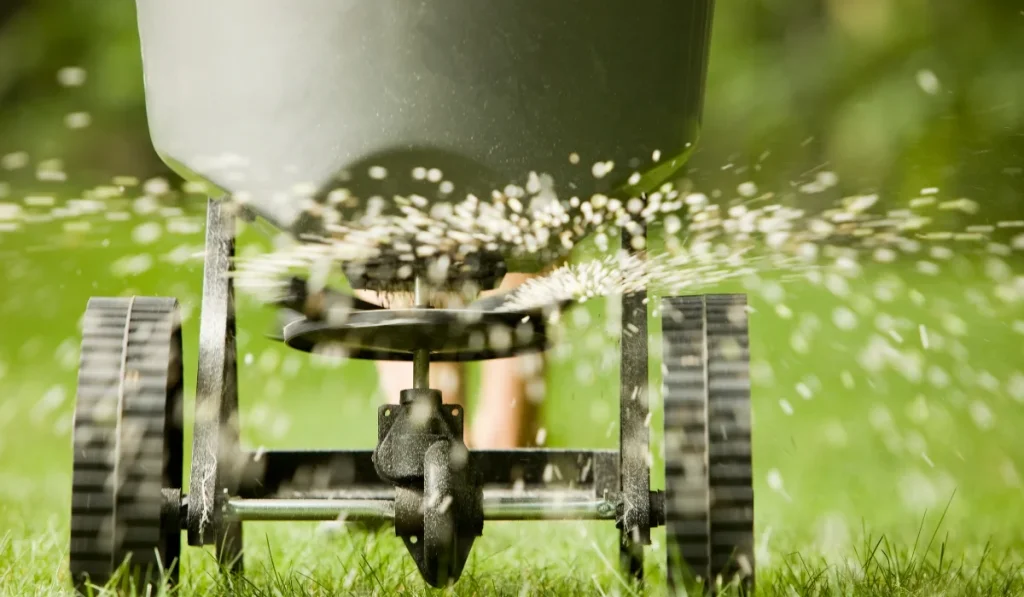
- Use a broadcast spreader to distribute fertilizer evenly across the lawn.
- Avoid overlapping passes to prevent patches or streaks.
- Water afterward to move nutrients down to the root system and rinse fertilizer off the grass blades.
- Wait at least two days before mowing so nutrients have time to settle.
If you’re using granular fertilizer, apply it on a calm day to prevent wind drift. You should spray liquid fertilizer evenly in overlapping passes. In California’s dry regions, always follow up with deep watering to prevent fertilizer burn.
For homeowners who prefer eco-friendly options, organic fertilizers slowly release nutrients and improve soil structure over time. They are safe for pets and kids and support a sustainable sod care routine.
Avoiding Overfertilizing and Fertilizer Burn
Applying too much fertilizer at once can cause yellowing, burnt patches, or crusty residue on the soil surface. Lawn care experts call this fertilizer burn, and it occurs when excess nitrogen or salts draw moisture from grass roots.
That risk increases if you skip proper watering, especially during the early establishment period when you need to follow a 4-week watering plan for new sod.
To fix this, water deeply for several days to flush out excess nutrients. Avoid mowing until new green growth appears, and skip the next fertilizer round to give the lawn time to recover.
Regular aeration prevents buildup and improves oxygen flow to roots. Aerate once or twice per year, especially in compacted California soil. Aerating before fertilizing helps nutrients reach deeper soil.
Weed, Pest, and Herbicide Management
A healthy lawn resists weeds, but new sod stays vulnerable. Wait two to three months before applying herbicides or pre-emergent weed control. Applying too early can interfere with rooting.
When using herbicides later, follow label directions to protect your lawn. Keep watering consistently and mowing regularly to limit weed growth.
Insects such as grubs and sod webworms may occur in some areas of California. Choosing grass types with natural resistance helps reduce chemical use.
Watering, Mowing, and Aerating Tips
Fertilizer alone won’t guarantee a healthy lawn. Consistent lawn maintenance supports strong sod growth.
- Watering: Deep, less frequent watering is best. Aim for one and a half inches of water per week after establishment. Adjust depending on rainfall and temperature. Avoid overwatering, which can suffocate roots and promote fungus.
- Mowing: Mow when the grass reaches about three inches tall. Use sharp blades and never remove more than one-third of the height. Frequent mowing keeps a uniform, green lawn and prevents thatch buildup.
- Aerating: Aerate in spring or fall to relieve compaction and improve nutrient flow.
When overseeding bare spots, water daily until new shoots appear. Fertilize lightly after sprouting.
These steps help lawns thrive across California’s diverse climates, from coastal areas to the heat inland.
Long-Term Fertilizing Schedule for California Lawns
Once sod establishes, follow a seasonal fertilizer plan.
- Fertilize cool-season grasses two to four times per year in spring and fall.
- Fertilize warm-season grasses every six to eight weeks from late spring through early fall
Use slow-release or balanced fertilizer in summer to support steady growth. In late fall, apply a potassium-rich fertilizer to prepare the grass for winter.
If you overseed or aerate, fertilize afterward to support root growth. This plan keeps lawns dense, drought-tolerant, and easy to maintain.
Making the Right Fertilizer Choice for Your California Sod
So, will fertilizer kill new sod? It can, if used too early or misapplied. But with the right timing, watering schedule, and sod care routine, your new lawn will grow strong and healthy.
Start with a phosphorus-rich starter fertilizer, then switch to a regular fertilizer once the roots are well developed. Always match your choice to the type of fertilizer your grass and soil need, and test your soil before heavy applications.
Whether this is your first time caring for sod or you’re maintaining a mature yard, our team at SodLawn gives you the guidance, products, and sod varieties you need to grow a lasting green lawn anywhere in California.
Contact us today to get started with the right sod and lawn care support for your property.
FAQs
When should I fertilize new sod in California?
Fertilize new sod four to six weeks after installation, once the roots have taken hold. In California, early spring and early fall are the best times of year, depending on whether you have cool-season or warm-season grasses.
Can I use regular fertilizer on new sod?
Not right away. Start with a starter fertilizer that’s rich in phosphorus. After about a month, apply a lawn fertilizer with a balanced NPK ratio, or a granular fertilizer, for long-term feeding.
How do I prevent fertilizer burn on my new lawn?
Water before and after fertilizing, apply evenly, and don’t overfertilize. In California’s dry climate, slow-release or organic fertilizers help reduce salt buildup and support safe, steady growth.