In Bakersfield, lawn problems can show up quickly. Heat, dry soil, irrigation habits, and seasonal stress all affect turfgrass health, especially on residential lawns, rental properties, storefronts, and commercial landscapes.
One issue that catches many homeowners and property managers off guard is lawn rust. At first, grass rust can look like dry grass or fading color. Once you check the grass blades up close, the signs are much easier to spot.
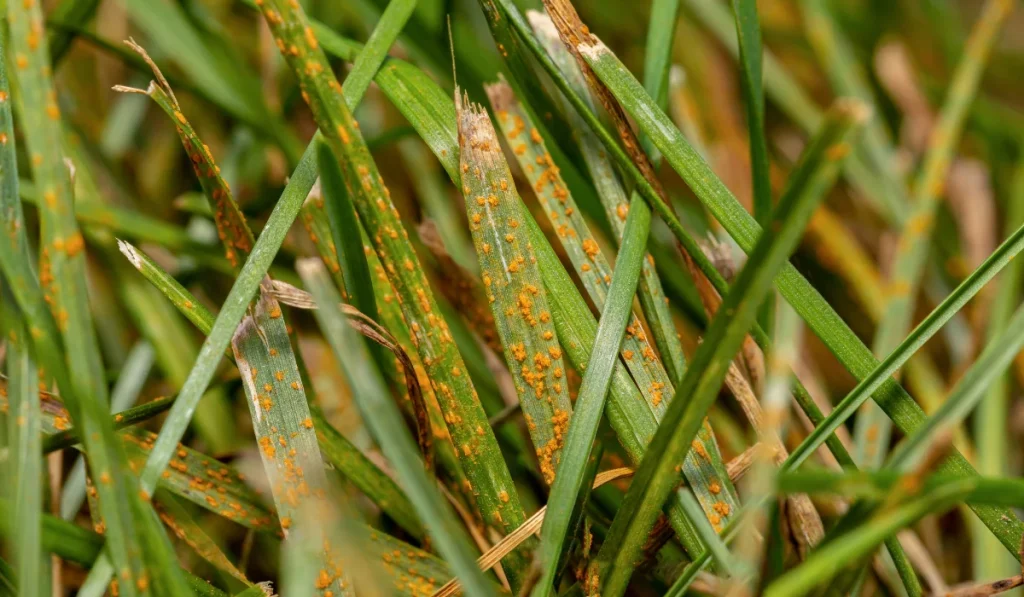
Lawn rust is a fungal disease that leaves dusty yellow-orange, orange powder, or reddish-brown residue on leaf blades, shoes, tools, clippings, and mower wheels. Knowing what to look for helps you decide when a lawn care inspection is the right next step.
Key Takeaways
- Lawn rust often leaves yellow-orange dust, orange powder, or reddish-brown residue on grass blades.
- Rust disease is common on stressed turfgrass, including tall fescue, perennial ryegrass, and Kentucky bluegrass.
- Rust outbreaks often show up in late summer or early fall when grass growth slows.
- Professional inspection helps separate lawn rust from brown patch, drought stress, leaf rust, and other turfgrass diseases.
What Grass Rust Looks Like up Close
Professionals usually start at blade level because lawn rust can look mild from a few steps away. Up close, the first signs are easier to separate from normal wear, uneven watering, or another lawn disease.
Yellow Flecks on the Leaf Surface
The first signs of lawn rust often appear as tiny yellow flecks on the leaf surface. These marks may look scattered at first, which is why many people mistake them for heat stress, foot traffic, or dry spots.
As rust development continues, yellow spots can spread along the leaf blades.
A trained lawn care technician checks the size, placement, and pattern of those marks before confirming whether you are dealing with rust disease, leaf rust, or another turfgrass issue.
Orange Pustules on Grass Blades
Orange pustules are one of the clearest signs of grass rust. These small raised spots form on grass blades and hold orange spores that can spread when the lawn is walked on, brushed, or mowed.
A simple clue is transfer.
If you rub a white cloth across affected turfgrass and see orange powder, rust fungi may be active, especially if the lawn also looks thin or slow to recover after mowing.
Reddish-Brown Dust on Shoes and Tools
As lawn rust develops, the dust may shift from yellow-orange to reddish-brown. You may notice it on shoes, pant legs, pets, garden tools, clippings, or lawn mower wheels.
That residue does not mean your lawn is ruined. It does mean rust infections are active enough to keep spreading if the stress behind the problem is not corrected.
Thin or Slow-Growing Turf
Rust disease often shows up when grass growth slows. In Bakersfield, turfgrass may struggle when it is underfed, watered unevenly, stressed by heat, or dealing with compaction.
Professionals look past the orange color and check whether the turf is growing well. Rust control may involve better nutrition, irrigation review, aeration, mowing adjustments, and other cultural practices before fungicides are considered for severe cases.
What Rust Looks Like Across the Lawn
From a distance, lawn rust can blend in with dry grass, fertilizer issues, or general fading. The lawn pattern helps narrow down what is happening and whether disease control is needed.
Patchy Yellow-Orange Areas
Across the lawn, lawn rust often creates uneven yellow-orange patches. These areas usually look dusty or washed out rather than sharply outlined.
On residential lawns in Bakersfield, the pattern may be heavier where sprinkler coverage is weak, soil is compacted, or grass stays stressed between waterings. A professional inspection checks those site conditions along with the visible orange spores.
Dust Trails After Mowing
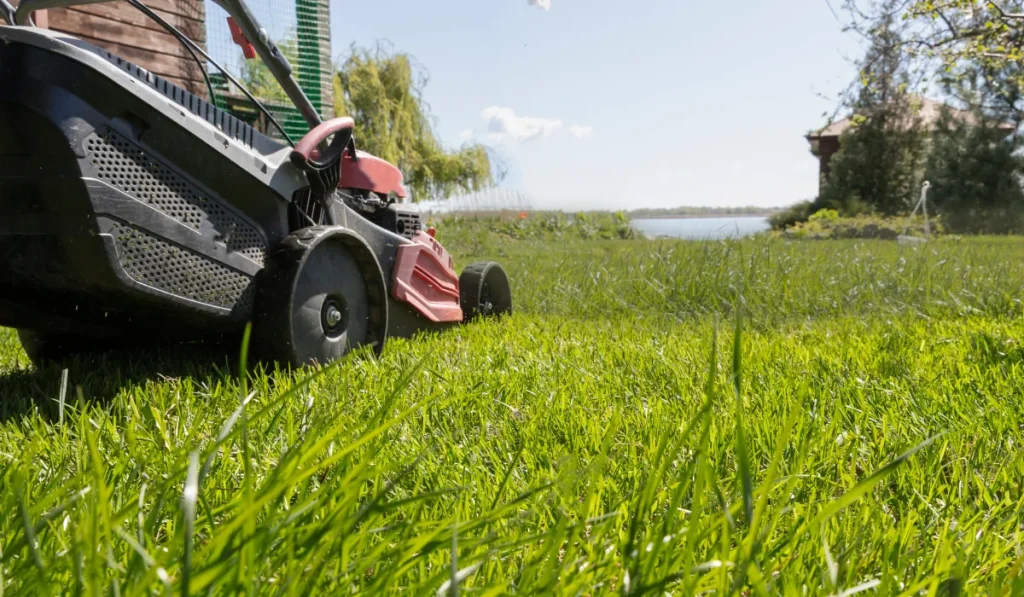
Mowing can make rust outbreaks more obvious because the mower brushes against infected leaf blades. Afterward, you may see orange residue on the lawn mower, dusty wheel marks, or discolored clippings.
Mowing does not usually cause the disease by itself. It often reveals rust fungi already active in the turfgrass canopy, which is why professionals inspect both the blades and the wider lawn pattern.
Thin Spots in High-Stress Areas
Lawn rust often appears more strongly in areas with foot traffic, shade stress, low fertility, thatch buildup, or compaction. These spots may look thin before the orange powder becomes easy to see.
The same pattern can show up on a commercial property or golf course where turf gets repeated use. In severe cases, the lawn may lose density and become more vulnerable to pathogens and other turfgrass diseases.
Different Grass Types Showing Different Symptoms
Some cultivars handle rust disease better than others. Tall fescue, perennial ryegrass, and Kentucky bluegrass can all show symptoms, but severity depends on variety, maintenance, and site conditions.
SodLawn carries sod, seeds, fertilizers, and tools suited for different California lawn needs, including fescue, ryegrass, bluegrass blends, and bermuda options.
Choosing disease-resistant cultivars can help reduce future rust outbreaks when paired with proper lawn care.
When Discoloration May Be Grass Rust
Not every yellow or thin lawn has lawn rust. A professional inspection compares the color, residue, grass type, irrigation pattern, and growing conditions before recommending rust control or another disease control plan.
The Color Rubs Off
A major clue is whether the color transfers. If orange powder rubs off on your fingers, shoes, mower, or a cloth, lawn rust becomes more likely than drought stress alone.
Brown patch, fertilizer burn, and water stress usually do not leave the same dusty residue. This quick check helps guide the inspection, but it should still be paired with a full turfgrass review.
The Lawn Looks Worse in Late Summer or Early Fall
Lawn rust often becomes easier to see in late summer and early fall. During this stretch, warm days, cooler nights, and slower grass growth can create favorable conditions for rust development.
In Bakersfield, watering habits also matter. Too little water weakens turfgrass, while poorly timed irrigation can leave leaf blades damp long enough for fungal disease pressure to build.
Fertility Seems Low or Uneven
Low nitrogen is a common stress factor tied to lawn rust. A professional may recommend the right nitrogen fertilizer when the lawn needs support, but the timing and amount need to match the turf’s condition.
Guessing can create new problems.
Too much fertilizer can push uneven growth, while too little may let rust infections continue, so the best plan starts with checking the actual lawn instead of treating the color alone.
Thatch or Compaction Is Present
Thatch and compaction can reduce air movement, weaken roots, and make turfgrass less resilient. When those conditions are present, fungicides alone may not solve the issue.
A complete plan may include aeration, irrigation correction, mowing changes, and selective fungicides when the lawn is under heavy disease pressure. The goal is to correct the conditions that allow lawn rust to keep returning.
Talk to SodLawn About Grass Rust in Bakersfield
If your Bakersfield lawn has orange dust, yellow flecks, yellow spots, or thinning turf, SodLawn can help you choose the right next step. Lawn rust is usually manageable, but the right solution depends on grass type, soil condition, irrigation, mowing height, thatch, compaction, and the severity of the rust outbreaks.
Contact SodLawn for help choosing sod, grass seed, fertilizer, or lawn care tools for your Bakersfield property. The team can help you compare options and find products that support healthier turfgrass.
FAQs
What does lawn rust look like on grass?
Lawn rust often looks like yellow-orange dust on grass blades. You may also see orange pustules, yellow flecks, yellow spots, or reddish-brown powder that rubs off on shoes, tools, pets, clippings, or mower wheels.
Is grass rust the same as brown patch?
No, grass rust and brown patch are different turfgrass diseases. Brown patch usually creates brown or tan areas, while lawn rust often leaves orange spores or orange powder on the leaf surface.
Can fungicides help with lawn rust?
Fungicides can help in severe cases, especially when rust disease continues spreading despite better lawn care. Professionals usually check mowing, irrigation, nitrogen fertilizer needs, thatch, compaction, and cultural practices before recommending treatment.
Does lawn rust kill turfgrass?
Lawn rust usually weakens turfgrass rather than killing it quickly. Repeated rust infections can thin the lawn, slow grass growth, and make turf more vulnerable to heat, traffic, pathogens, and other lawn disease problems.
When should I schedule a lawn inspection?
Schedule an inspection when orange powder appears, discoloration spreads, or the lawn keeps thinning despite normal care. A professional can confirm whether it is grass rust, leaf rust, another fungal disease, or stress from soil, water, or maintenance issues.