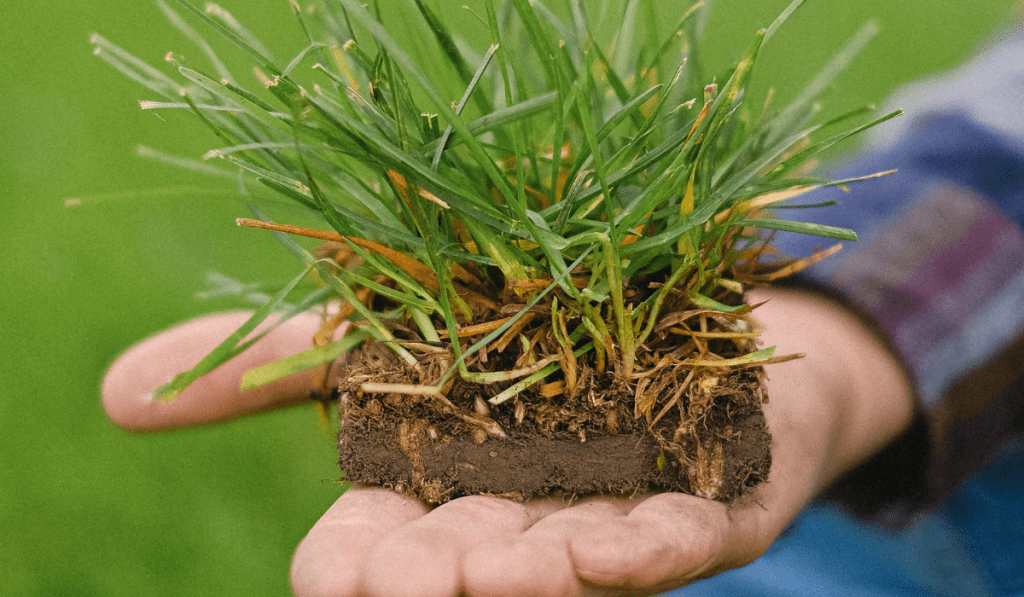
Many California yards have trees that cast heavy shade. Big oaks, redwoods, and patio trees make grass care harder. Under tree canopies, lawns often turn thin, patchy, or bare. This guide shows the best sod under trees in California and how to keep it healthy.
Grass and trees fight for the same water, nutrients, and space. Roots spread far beyond the trunk and fill the topsoil where sod needs to grow. Branches also block sunlight, which weakens the grass.
You can still grow a green lawn under trees. With the right sod and simple care changes, your lawn can blend nicely with your landscape.
This guide covers shade-tolerant sod, soil prep around roots, and simple care steps for lasting results.
Key Takeaways
- Tall fescue is the top sod under trees in California; it handles shade and traffic.
- Prep the soil: add topsoil, aerate, and amend so sod can compete with roots.
- Change care: mow higher, water deep, and overseed to keep shade areas thick.
- If shade is too heavy, use native ground covers, sedges, mulch, or artificial turf.
Choosing Sod for Shady Areas in California
Before choosing sod, it helps to understand what ‘shade’ means for lawns. Grass grows best with at least 6 hours of direct sunlight each day. Areas that get less than this are considered a deeper shade. Filtered light, such as sun passing through branches, often works for shade-tolerant sod, while deep shade with little or no direct sun makes grass growth very difficult.
To grow a healthy lawn under trees, choose sod that fits California’s climate. Many warm-season grasses, like Bermuda, grow best in full sun and won’t thrive under large trees. Instead, focus on shade-tolerant varieties.
Tall fescue is one of the best sod options for shaded areas in California. Its deep roots handle shade and foot traffic. Fine fescues (creeping red, Chewings) fit low-light, low-traffic spots and need less mowing.
A fescue-bluegrass blend can fit mixed-light yards. Bluegrass usually prefers sun, but when blended with fescue, it creates a sod mix that adapts to both sunny and shady spots. This blend works especially well in yards where some areas get direct sunlight while tree canopies shade others.
In Southern California, where drought-tolerant lawns are a priority, many homeowners are turning to water-efficient turfgrass varieties that stay green with less irrigation.
While not a traditional sod, native grass options are beneficial in shaded areas where water restrictions make turf maintenance more challenging. These options pair well with native plant landscaping, which is low-maintenance and fits California’s natural climate.
If the shade is very heavy, consider ground cover alternatives like native sedges or even mulch beds. They blend with hardscape and avoid the struggle of forcing sod where grass won’t grow.
How Tree Roots Affect Sod Growth
The biggest challenge when laying sod under trees is dealing with tree roots. Both grass and tree roots occupy the topsoil, and trees usually win. Oaks spread roots far past the drip line.
When you install new sod in these areas, it may not take root unless you prepare the soil. Adding topsoil and soil amendments gives the grass seed or new sod a better chance to establish. Aerate compacted soil near trunks so water and oxygen reach the sod’s roots.
One common issue is uneven watering, especially around large tree trunks, where foliage or trunk can block sprinkler spray, leaving those root zones less saturated than open areas. Also, tree roots compete for water.
To address this, some landscapers recommend adjusting sprinkler placement for better coverage near trees or using supplemental watering (hand watering or application from drip systems) during dry periods. While hand-watering or using drip in full lawn areas under large trees may be labor-intensive, targeting just critical areas (like close to trunks or thin patches) can help maintain moisture balance.
Tips for Maintaining Sod Under Trees
Caring for sod in shaded areas requires a few changes compared to sunny grass lawns.
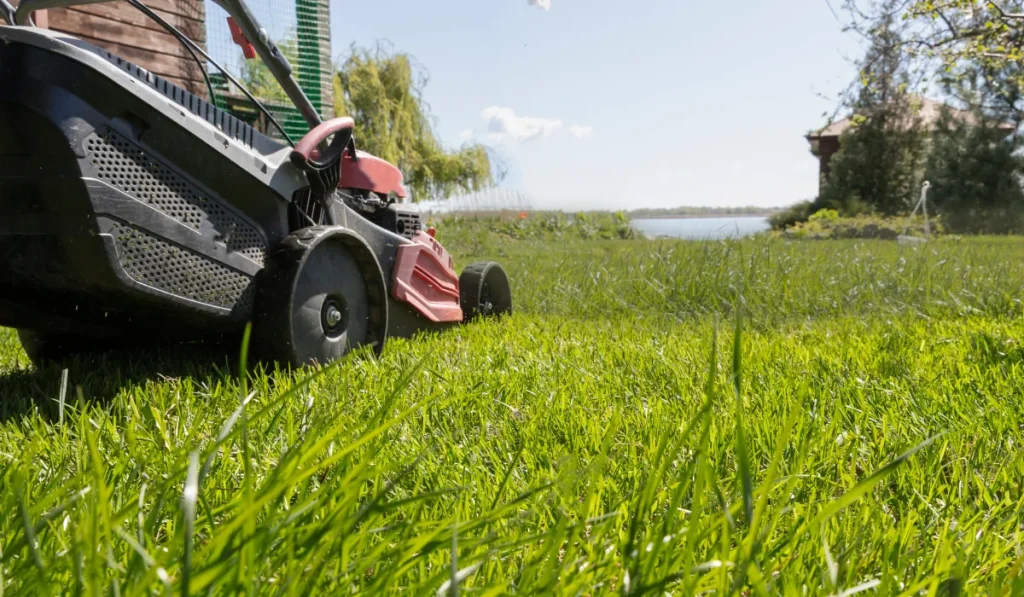
- Mowing: Shade slows growth, so mow less often. Raise the mower height to leave more leaf surface. Taller blades capture more light and help the sod stay thick.
- Watering: Trees compete heavily for water, so shaded lawns may dry out faster if sprinkler coverage is uneven. Check soil moisture around tree bases to see if these areas are getting enough water. If dry spots appear, adjust sprinklers or add occasional hand watering to supplement. A mulch ring around the trunk also helps hold moisture and protect roots.
- Fertilizing and overseeding: Overseed shady spots in fall with a shade-tolerant seed mix, such as red fescue or creeping red fescue. These varieties stay green in low light and help fill thin patches. Feed during the growing season to thicken turf and handle foot traffic.
- Aeration: Large trees often compact soil. Aerate yearly to open soil, boost water flow, and help new seed roots. This matters most with heavy foot traffic from kids or pets.
- Hardscape adjustments: In extreme shade, rethink the space. Extend walkways, add a small patio, or use decorative mulch to create a clean, low-care area.
Best Sod Choices for Different Parts of California
California’s size and climate mean that the best sod under trees can vary depending on where you live.
Northern California
Large oak trees often allow filtered sunlight to reach the ground, which makes it easier for sod to survive beneath them. In these areas, tall fescue sod usually performs best thanks to its deep roots and tolerance for moderate shade.
Fescue-bluegrass blends can also be effective, but only in areas with a minimum of 6 hours of direct sunlight per day. In areas with less than 6 hours of daylight, these blends tend to become weak and thin. However, redwoods create some of the most challenging conditions for grass, and in dense shade, it’s often better to consider alternatives, such as ground covers, mulch, or artificial turf.
Southern California
Choose drought-tolerant tall fescue. Homeowners and designers are using some native sedges as alternatives to lawns in partially shaded areas. However, they require careful site selection, occasional irrigation, and lower mowing than buffalo or Bermuda grass. These sedges use less water than many warm-season grasses and perform well where sunlight is filtered and water is available during dry spells.
Coastal Areas
With salt and fog, fescue stays a reliable pick. It tolerates partial shade but still needs at least 6 hours of daily sunlight to stay healthy. It also handles moderate foot traffic near the coast.
By choosing the right sod for your region and ensuring at least 6 hours of daily sunlight, you can maintain a green, healthy yard. In areas with a heavier shade where grass cannot thrive, alternatives such as ground covers or artificial turf may be better options.
When Sod Isn’t the Best Option
Sometimes sod won’t work. In very heavy shade or root-filled soil, use other options.
California native ground cover plants, such as low-growing sedges or shade-loving native plants, can create a lush, natural look with far less maintenance than sod. These options also support local wildlife and require less water than traditional turfgrass.
Artificial turf is a low-maintenance option under trees. It takes foot traffic, doesn’t compete with roots, and needs no mowing or watering. If sod won’t grow, it’s a practical choice.
Making the Right Sod Choice for Your California Yard
Even with shade and tree roots, you can still enjoy a green, healthy lawn in California. The key is picking sod suited to your region and goals. SodLawn provides fresh, high-quality sod delivered throughout the state.
Contact us today for expert assistance in selecting the ideal option for your yard.
FAQs
What is the best sod for shady areas under oak trees in California?
Tall fescue usually performs best under oaks in California. Its deep roots handle shade better than Bermuda or bluegrass.
Can sod grow near large tree roots?
Yes, but it requires extra care. Add topsoil, aerate the soil, and overseed with shade-tolerant grass seed to help new sod establish around tree roots.
Should I use sod or artificial turf under trees?
It depends on your goals. Sod creates a natural look that blends with the rest of your yard, but it may struggle in very shady areas. Artificial turf is low-maintenance and works well where sod won’t grow, especially around dense tree canopies.